


Solar wind
speed: 412.0 km/secdensity: 6.8 protons/cm3 more data: Met Office, DSCOVR Updated: Today at 0912 UT 
X-ray Solar Flares
6-hr max: C3 0441 UT [[monthName]] [[day]]24-hr: M1 2118 UT explanation | more data Updated: Today at 0930 UT
Daily Sun: [[day]] [[monthName]] [[year]]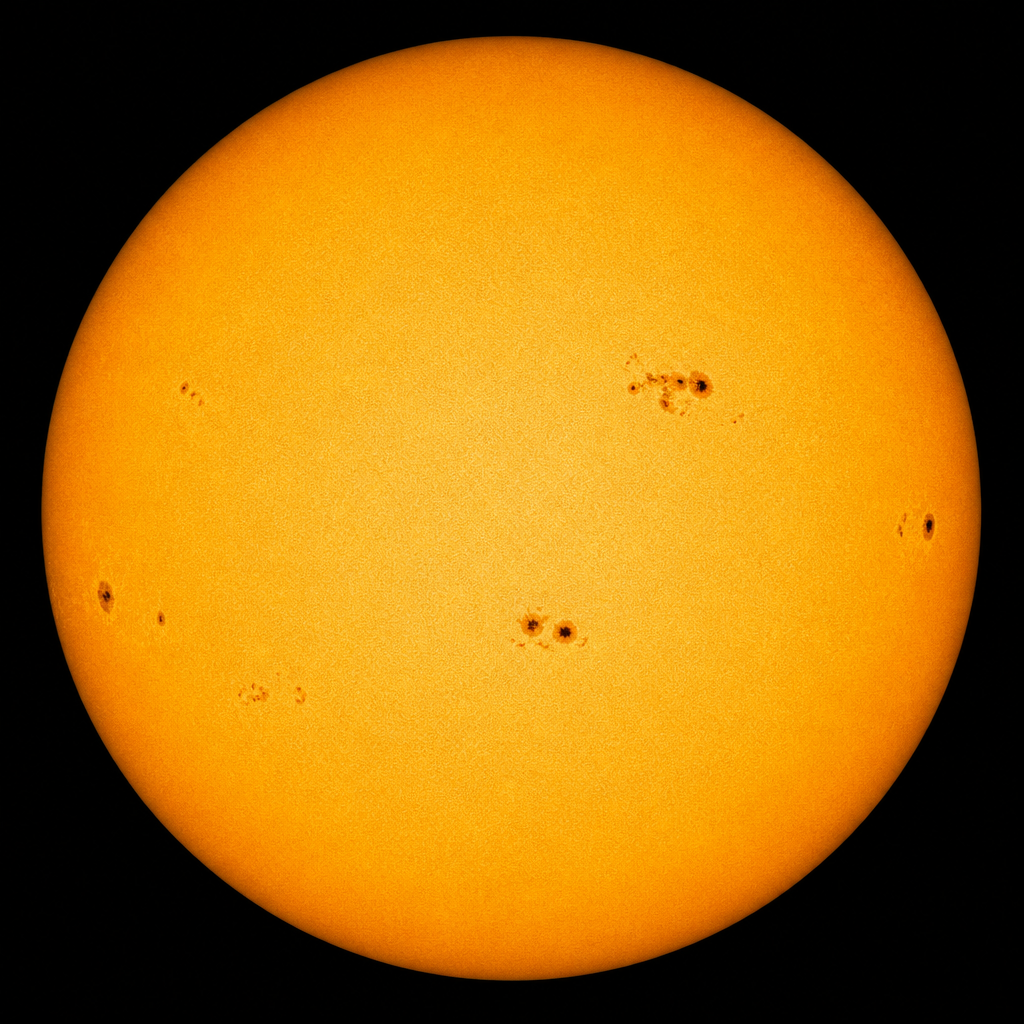 Sunspot groups on the Earth-facing disk carry mixed polarity capable of M-class flares. Credit: illustration for Scienception based on typical SDO/HMI appearance.
Sunspot number: 91 What is the sunspot number? Updated [[day]] [[monthName]] [[year]]  Current Auroral Oval:
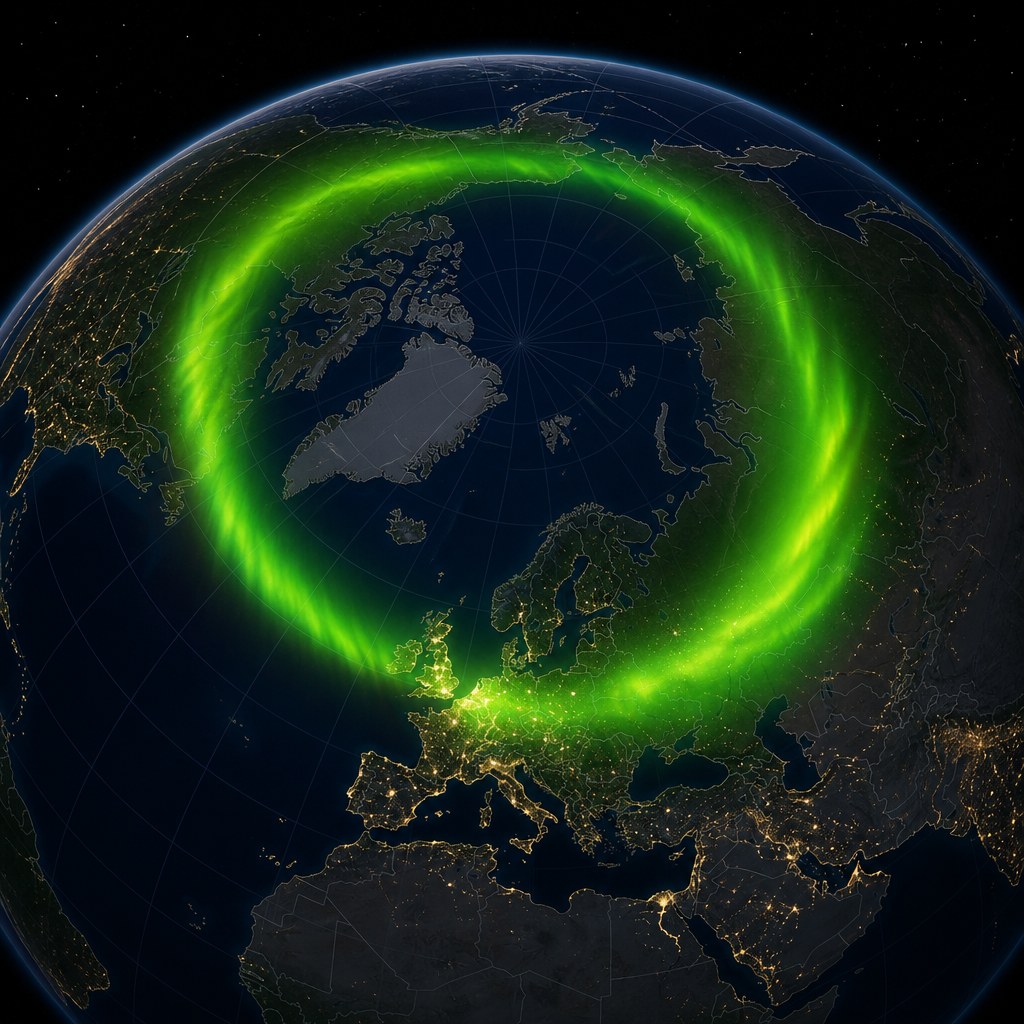 Credit: oval visualisation for Scienception. See also AuroraWatch UK
Planetary K-index
Now: Kp= 2.00 quiet24-hr max: Kp= 3.33 unsettled explanation | BGS data
Interplanetary Mag. Field
Btotal: 6.1 nTBz: -2.4 nT south more data: MOSWOC Updated: Today at 0928 UT
Coronal Holes: [[day]] [[monthName]] [[year]]
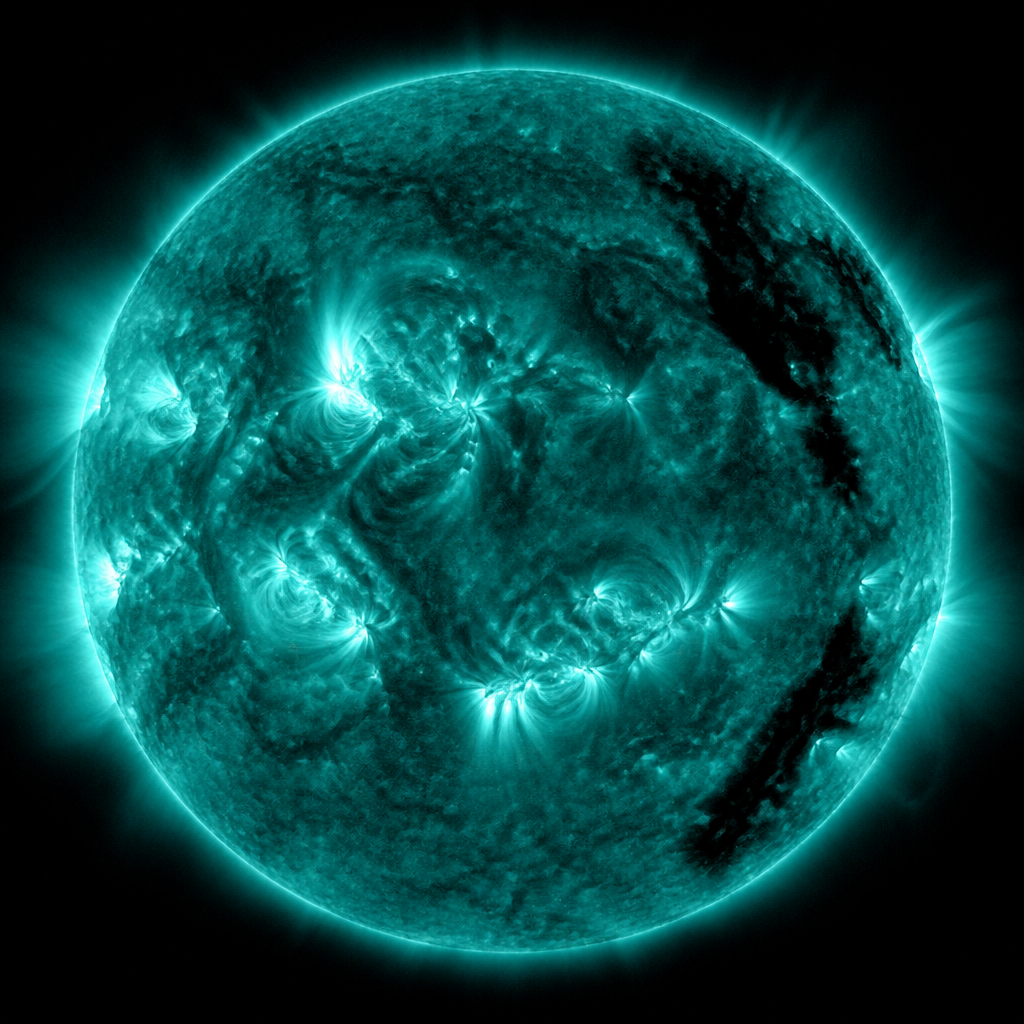 Solar wind from the marked coronal hole is expected to reach Earth in 2–3 days. Credit: illustration for Scienception.
SIDC | more
Spotless Days
Current stretch: 0 days[[year]] total: 2 days (<1%) 2025 total: 0 days (0%) 2024 total: 0 days (0%) Updated [[day]] [[monthName]] [[year]]
The Radio Sun
10.7 cm flux: 132 sfuexplanation | more data Updated [[day]] [[monthName]] [[year]]

SPACE WEATHER
Guidance styled after Met Office MOSWOC products. Updated [[day]] [[monthName]] [[year]] 0000 UTC
UK Forecasts
Mid-latitudes (England, Wales)
|
Monday, [[monthName]]. [[day]], [[year]]
The Sun from a UK deskThe daily disk on our homepage is an editorial illustration in the style of an HMI continuum image: spots, faculae, a working star. Live full-disk data live at NASA SDO and SIDC. UK hardware and science sit at RAL Space and in the Solar Orbiter magnetometer team at Imperial College London. What we care about for Britain is not only beauty. It is whether an active region can throw an M- or X-class flare, whether a coronal hole is on the Earth-facing disk, and whether a CME is likely to glance the magnetosphere. Those questions feed MOSWOC and, later, BGS magnetometers. A coronal mass ejection is a magnetic cloud, not a promise of colour over the Midlands. Sometimes it drives a G-scale storm. Sometimes it only sweeps galactic cosmic rays aside and shows up as a Forbush decrease in a neutron monitor. Report both. A desk that only files aurora will miss half the physics. Inner-heliosphere literacy also now includes BepiColombo at Mercury, where a tiny magnetosphere has almost no standoff from the same wind. Earth is the mansion. Mercury is the bedsit. The verbs are shared. Read: Solar Orbiter's UK magnetometer, coronal holes and HF, F10.7, Forbush decreases, SMILE's magnetopause camera. The left-hand rail remains an editorial snapshot, not an operational feed. Use SDO and SIDC for the live disk. |

Satellite notes
Tracked objects in orbit: 10,000+ Re-entries of interest this month: 4 visible from the UK Updated [[day]] [[monthName]] [[year]] Sources: Aerospace Corp, ESA debris
Met Office Space Weather
Official UK space-weather forecasts from MOSWOC
British Geological Survey geomagnetism
UK magnetometer network and GIC research
UK Space Agency
Civil space policy and SWIMMR programme context
RAL Space
STFC solar and heliospheric instruments
ESA Solar Orbiter
Close-up science of the Sun
Solar Dynamics Observatory
Full-disk EUV and magnetograms
UK Solar System Data Centre
Ionospheric and solar-terrestrial archives
Jodrell Bank
Radio astronomy and public outreach
|

© [[year]] Scienception LTD. All rights reserved. Scienception is a United Kingdom science publication operated by Scienception LTD, .