



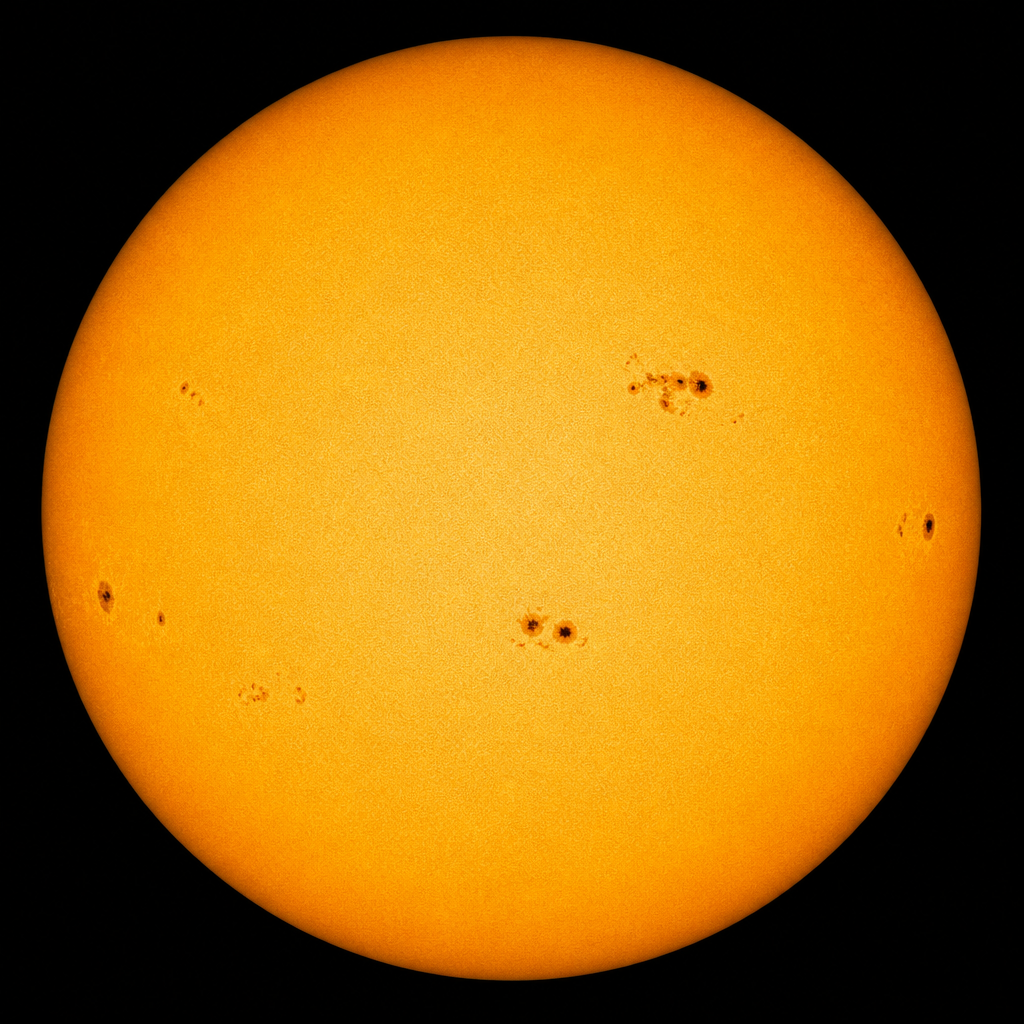
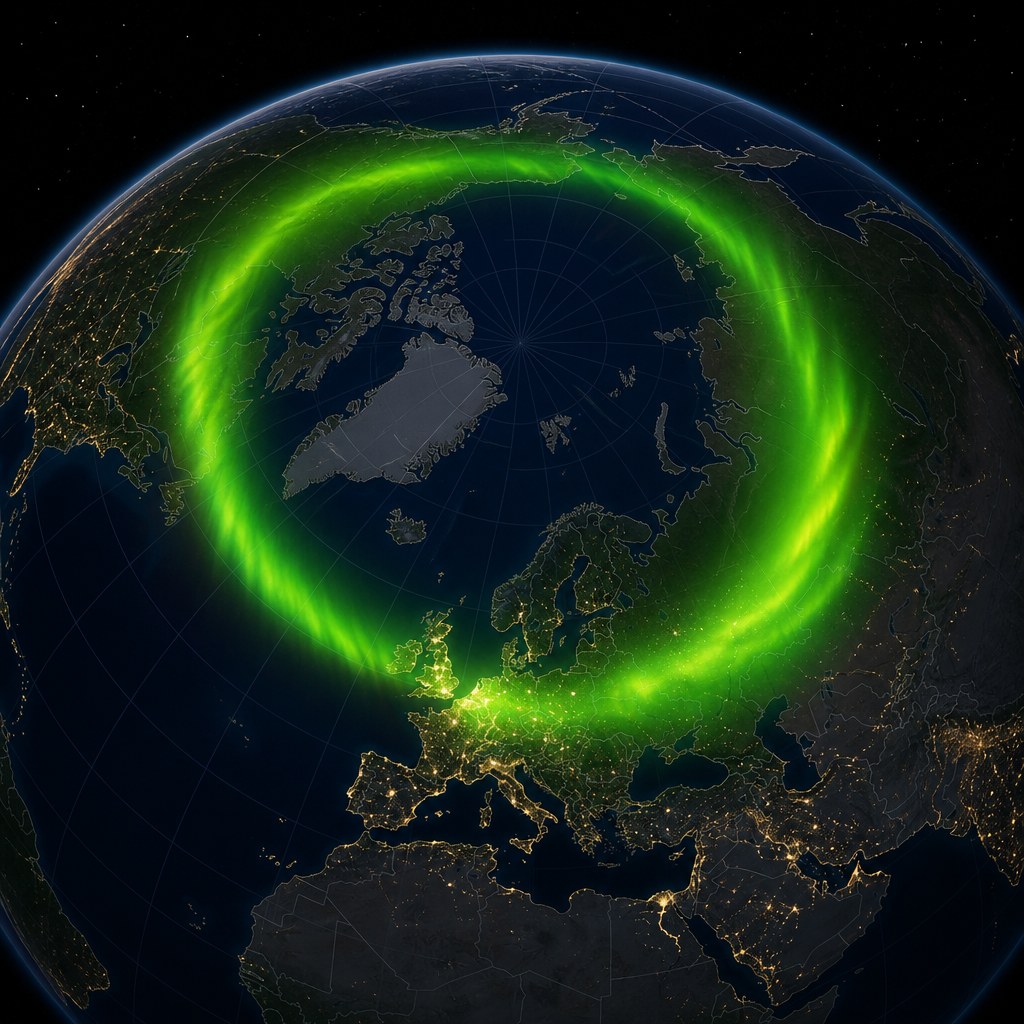
 Current Auroral Oval:


Coronal-hole streams still ruin UK amateur radio in the most educational way
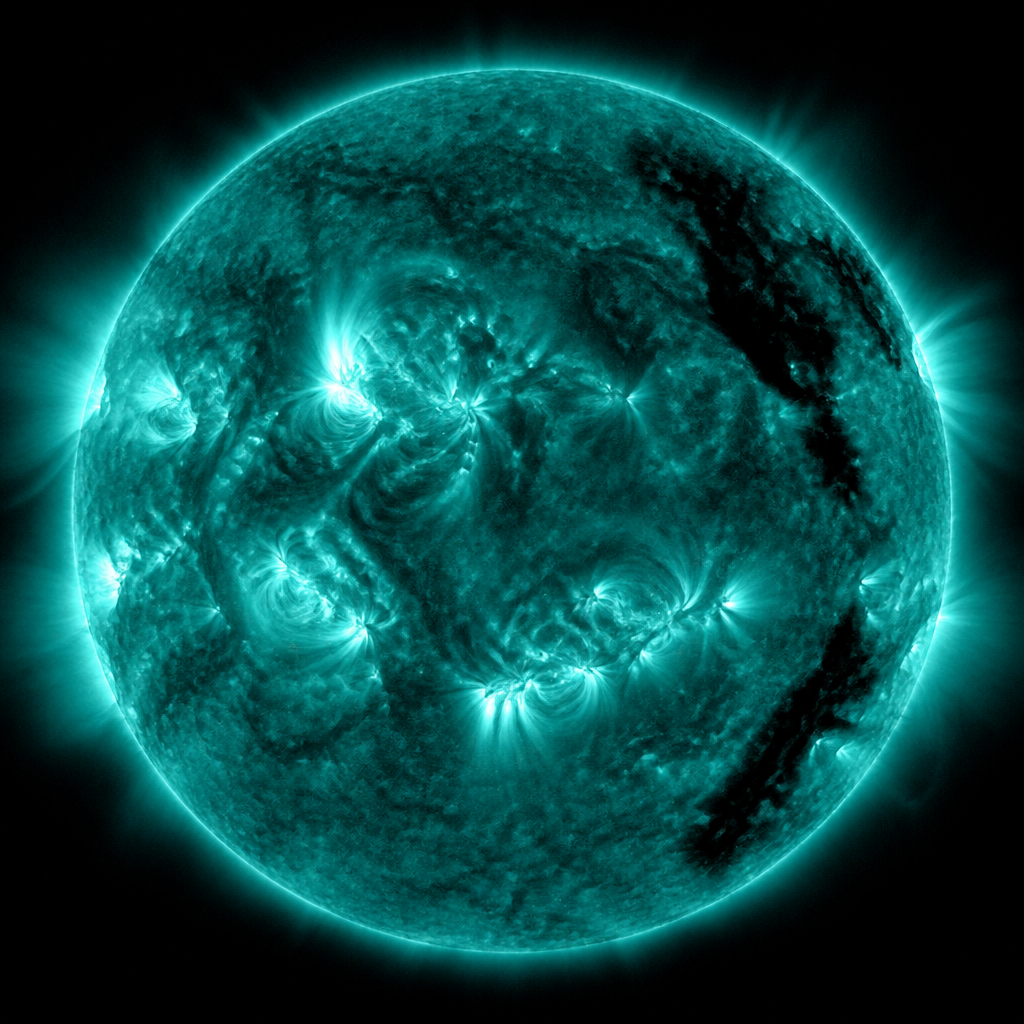
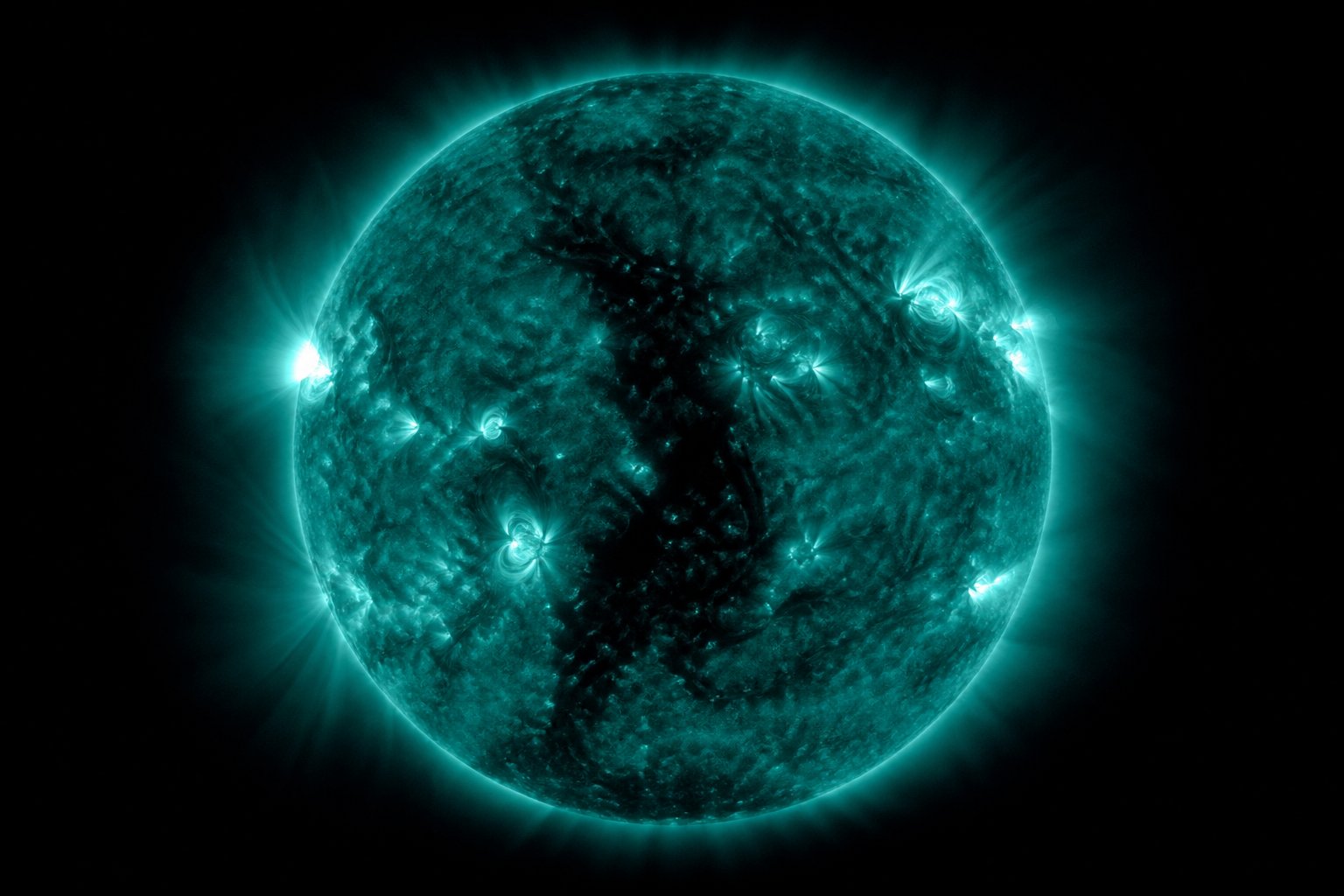
A hole in the Sun's corona looks like a dark patch in extreme ultraviolet. A few days later, HF operators in Britain hear the solar wind arrive.
Coronal holes are regions where the Sun's magnetic field opens into the heliosphere and solar wind streams away faster than usual. In extreme-ultraviolet images they look like dirty ink blots. They are not sunspots. They can persist for months and rotate back into view every 27 days, which is why old hands on the Radio Society of Great Britain forums still talk in Bartels rotations. Scienception likes coronal holes because they are predictable enough to teach and rude enough to empty a band.
When the fast stream hits slower wind, a stream interaction region piles up plasma and magnetic field. Earth's magnetosphere gets a several-day kicking that is often not a classic CME storm. Kp may sit at unsettled to active. Auroral ovals nibble north. HF paths at mid-latitudes go ragged, especially on the nightside. Amateurs call it 'conditions'. Physicists call it solar-wind coupling.
UK operators at 50 degrees geographic latitude live in a sweet spot for this lesson. They are south of the oval's usual home and north enough that a modest storm moves the absorption and the MUF around. A coronal-hole week can give you polar flutter one night and a dead 40 metres the next. Logging that against a public solar-wind plot is better amateur science than buying another gadget.
A hole is not empty. It is fast.
There is no need to mythologise. A hole on the east limb will not affect you this afternoon. Transit time is typically two to four days depending on speed. If someone posts an SDO still and says 'tonight', they are selling adrenaline. If they post the hole, a speed estimate, and a date window, they are doing space weather.
CME-driven flares steal the headlines because X-rays are instant. Coronal holes steal whole weekends. For emergency-communications volunteers who still train on HF, that distinction matters. A plan that only considers flares is half a plan.
If your 20-metre band dies two days after a coronal hole faces Earth, congratulations: you have detected the solar wind with a wire.
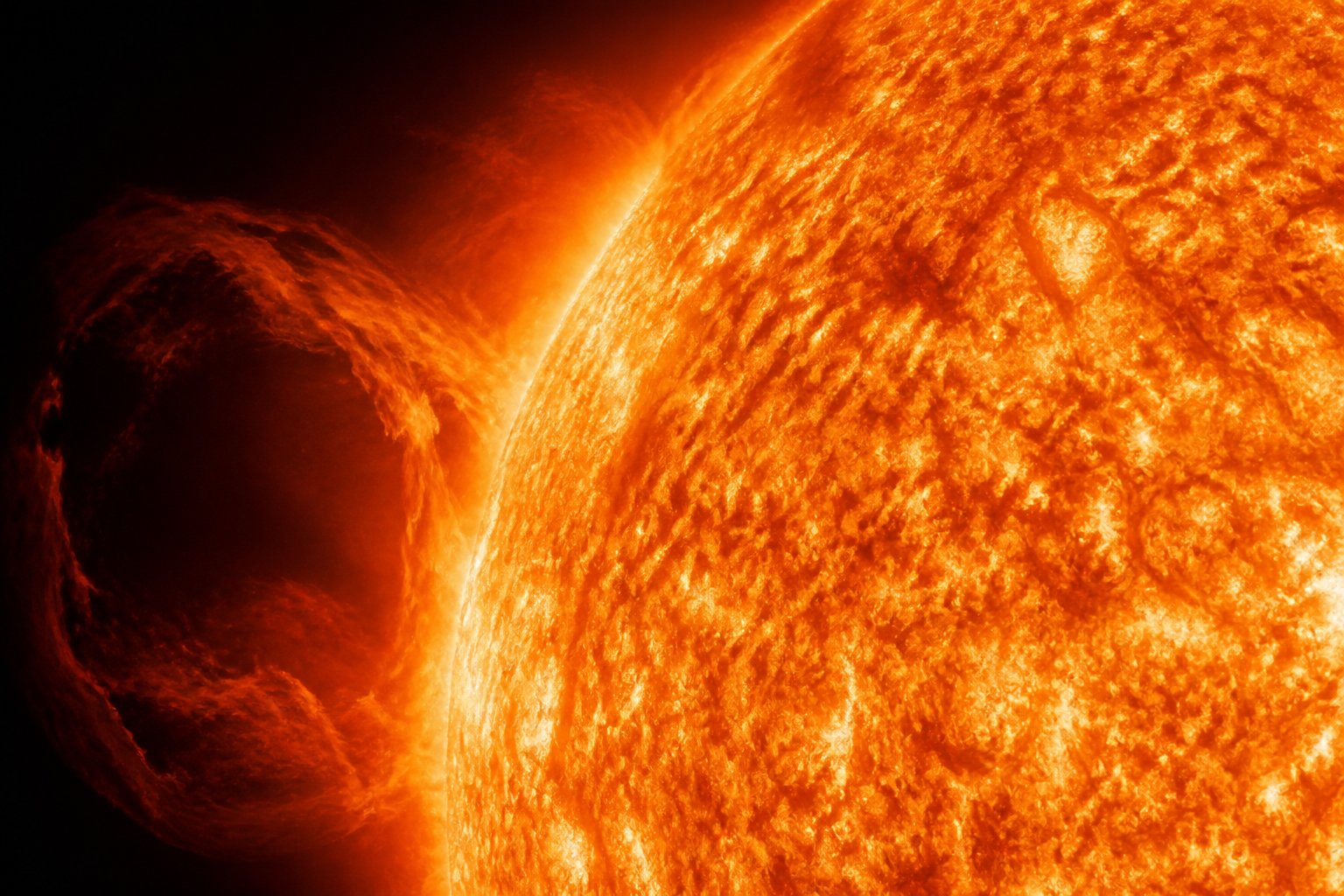
Schools with a club station can turn a recurrent hole into a mini scheme of work: image on Monday, solar-wind arrival Thursday, band chart Friday. Scienception would like more of that and fewer generic 'STEM ambassador' slogans.
What a British operator should actually log
Satellite operators care too. High-speed streams enhance outer-belt electron fluxes that charge dielectrics. The amateur radio fade is the public cousin of a charging alert. Same wind, different customer.
Look at the current disk. If a hole is crossing the centre, put a reminder in the calendar two days out. Then actually listen. The ionosphere is not an app. It is a plasma you can hear.
Recurrence is a gift. A hole that survives three rotations is a laboratory with a lunch timetable. Miss it once and it may still be there next month, slightly evolved, like a weather front that learned new tricks.
The Sun has been punching holes in itself for longer than Britain has had a licence class. We are late to the lesson, and the lesson is still free.
Further context for UK readers
The Radio Society of Great Britain still publishes propagation notes that would not disgrace a university tutorial. More professionals should read them. More amateurs should read a magnetogram. The handshake is the culture we want.
Recurrent holes are how you teach 27-day periodicity without a slide of the solar interior. Put the image on the club wall. Put the arrival window in the calendar. Then listen. Pedagogy is that cheap.
Summer sporadic-E and a coronal-hole stream can collide in a logbook and produce chaos. Attribution is a skill. Not every dead band is the Sun being open. Sometimes it is a thunderstorm on the horizon.
Data from ACE and DSCOVR at L1 give about an hour. Amateurs who set alarms on a solar-wind speed jump are doing nowcasting. That is closer to MOSWOC than they think.
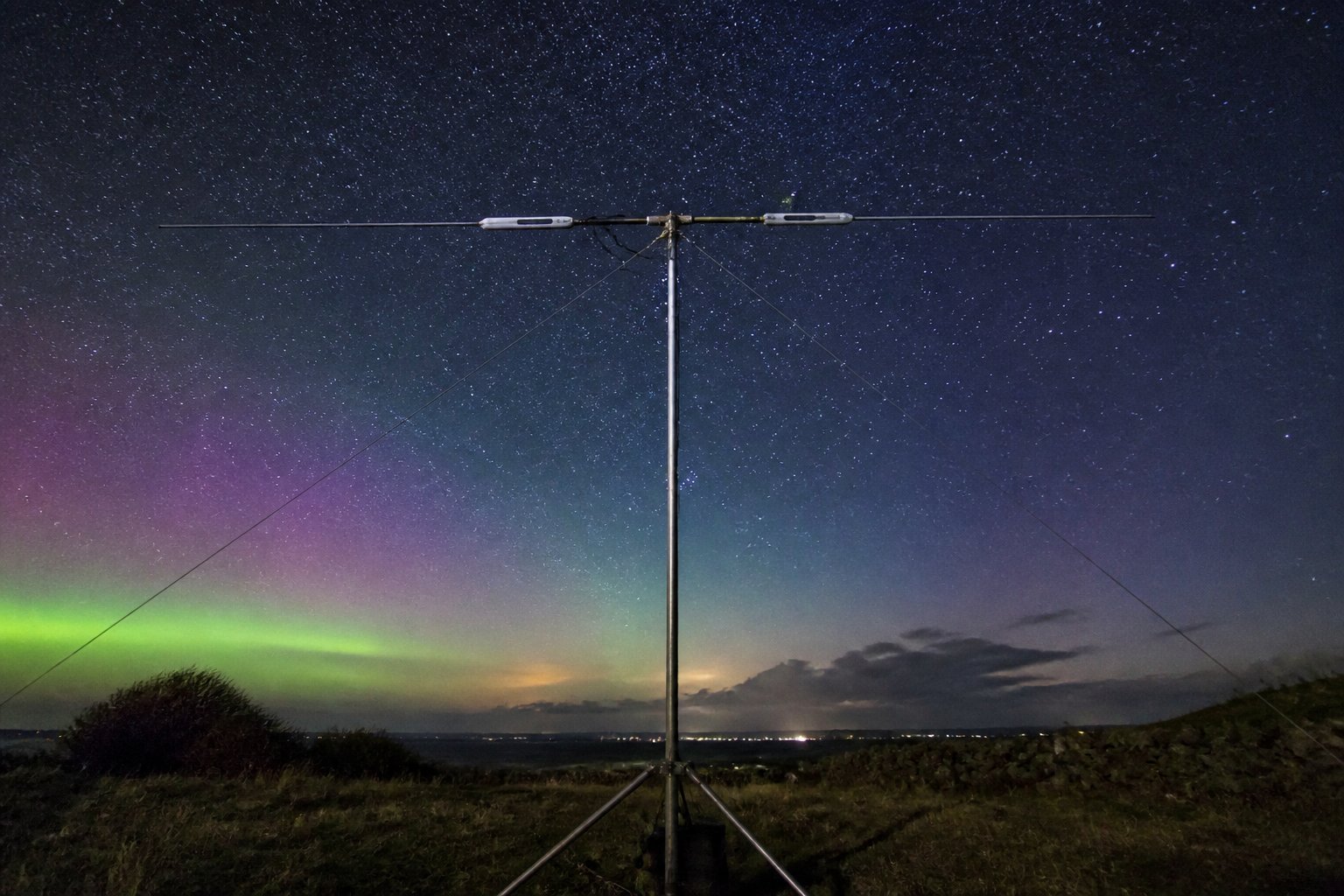
VHF aurora is a prize on some nights the HF bands hate. The oval can be a reflector. British operators in Scotland have known this longer than Twitter. Listen north.
A dipole in the rain is a national instrument. Treat it with the same respect you treat a visitor-centre telescope. It hears the solar wind.
Club logbooks digitised against BGS K-indices would be a paper. Someone should write it. The data are already in biscuit tins.
When the hole rotates away, the band comes back. That sentence is the whole lesson in delayed causation. Physics GCSE would be luckier if it used it.
How to read this on a UK science desk
What a careful UK reader should actually do with this story is slower than a social feed wants. The live wires are: 27-day recurrence, stream interaction regions, RSGB notes, VHF auroral scatter, L1 hour warning. If a paragraph does not touch one of those wires, it is probably colour. Colour is allowed. It is not a substitute for a product page at the Met Office, BGS, UKRI, ESA, the UK Space Agency, NATS, the CAA, Ofcom, UKAEA, NHS England or the laboratory named in the sources list. Scienception prints editorial snapshots on the left-hand rail so the homepage feels like a conditions desk in the old space-weather style. Those figures are not a live operational feed. If you are making a decision about aviation, the grid, a licence, a clinical pathway or a launch commit, leave this tab and go to the authority, then come back for the argument.
British geography keeps deciding supposedly global science. Magnetic latitude, Atlantic cloud, a coal switchyard, a dark-sky park, a Clyde clean room, a synchrotron on a former airfield, an ice-shelf station, a parish lighting rule: these are not decorations on coronal hole radio amateurs. They decide whether a result is operational for this country or merely interesting. A model that cannot be checked against a UK sensor is tourism. A policy that cannot be walked to a protocol is speech. We will keep dragging the global noun back to a named place.
There is a records problem in the background of this beat. Time series die when programmes end, when students leave, and when a dashboard is funded instead of a person who knows a sensor's quirks. The cheap way to look modern is a new visualisation. The expensive way that works is to keep the ugly log alive. Magnetograms, ionosondes, light curves, beam-test files, trusted research environments, licence PDFs and anomaly reports are how a democracy stays in the measurement business when the solar cycle, the debris environment or a carbon budget stops being polite.
The public conversation still swings between panic and shrug. Hold two true sentences at once. A minor geomagnetic watch is not a national blackout. A stored tonne of carbon is not a groundbreaking party. A nova that has not erupted is not a failure. A satellite train is not an invasion. Scienception will keep writing as if readers can cope with a caveat, a map, a table and a link. That is the minimum adult form of UK science news, and it is the house style for this article as much as for the conditions rail.
If you work in a school, use the primary links as a single homework: open the Met Office or BGS or ESA page, write down what the official product actually says, and compare it with our kicker. If you work in a control room, steal only the method: name the sensor, name the failure mode, name the British place that would feel it. If you only wanted a picture, look at the figures, then look at the sources. The figures are illustrations. The sources are how you check us. Corrections remain info@scienception.com at Scienception LTD.
Related on Scienception: Perseids over Northumberland still beat a phone screen, if the Moon allows · UKMON fireballs are turning casual streaks into orbits · Armagh Observatory still does the unfashionable work of following near-Earth objects

