



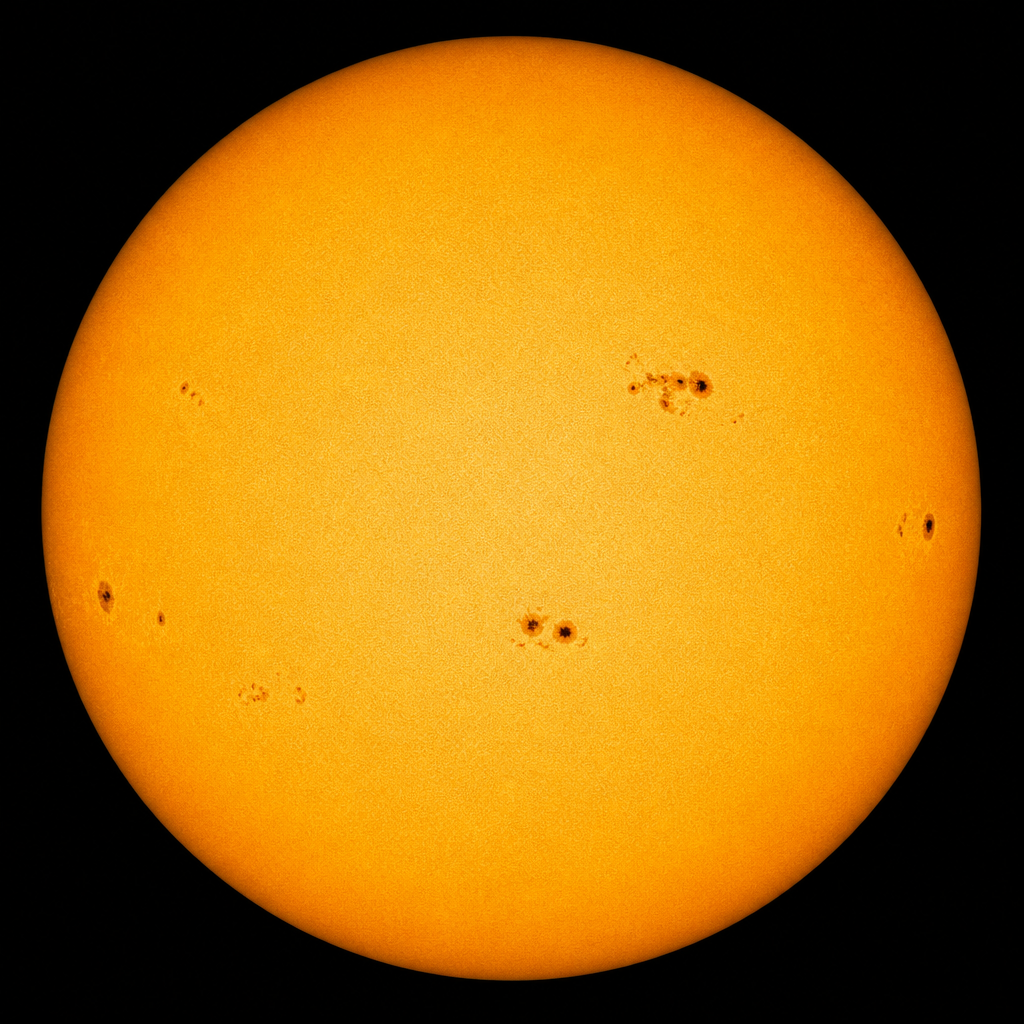
 Current Auroral Oval:
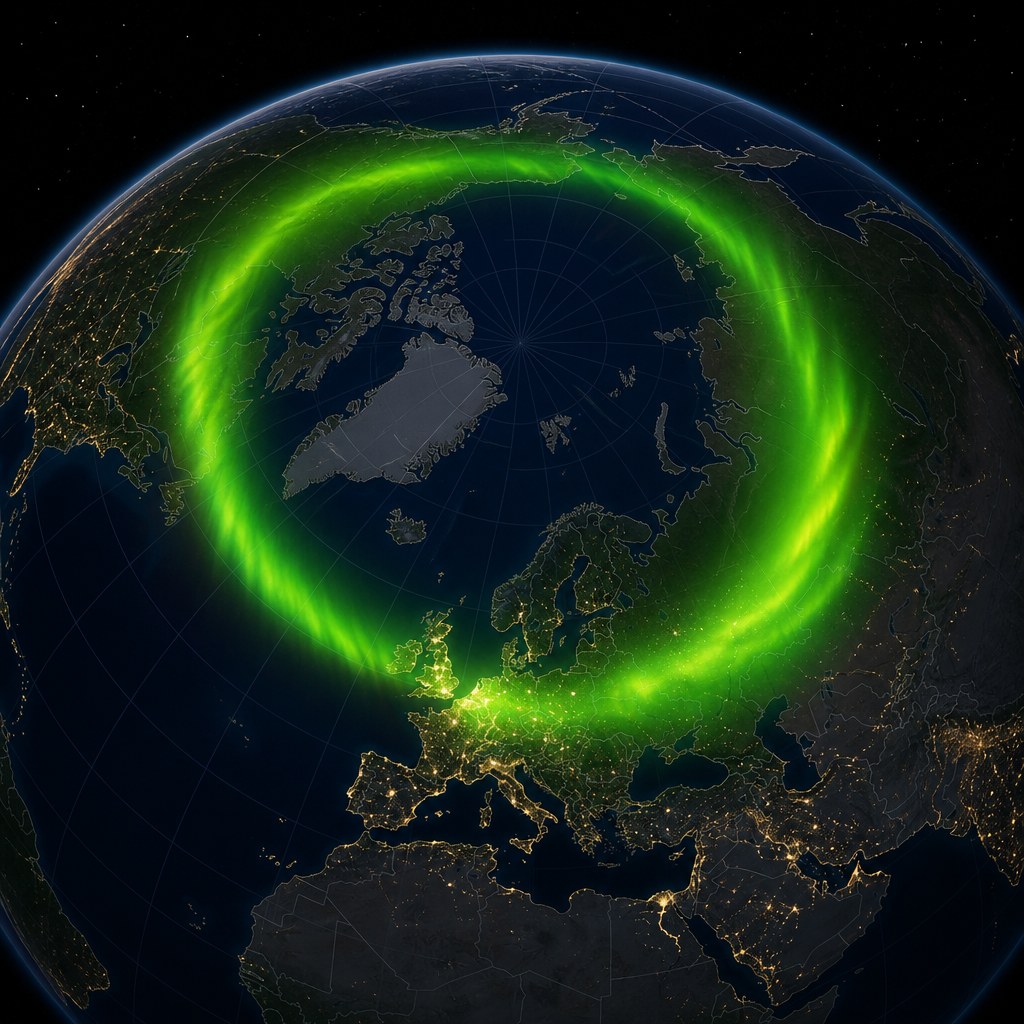
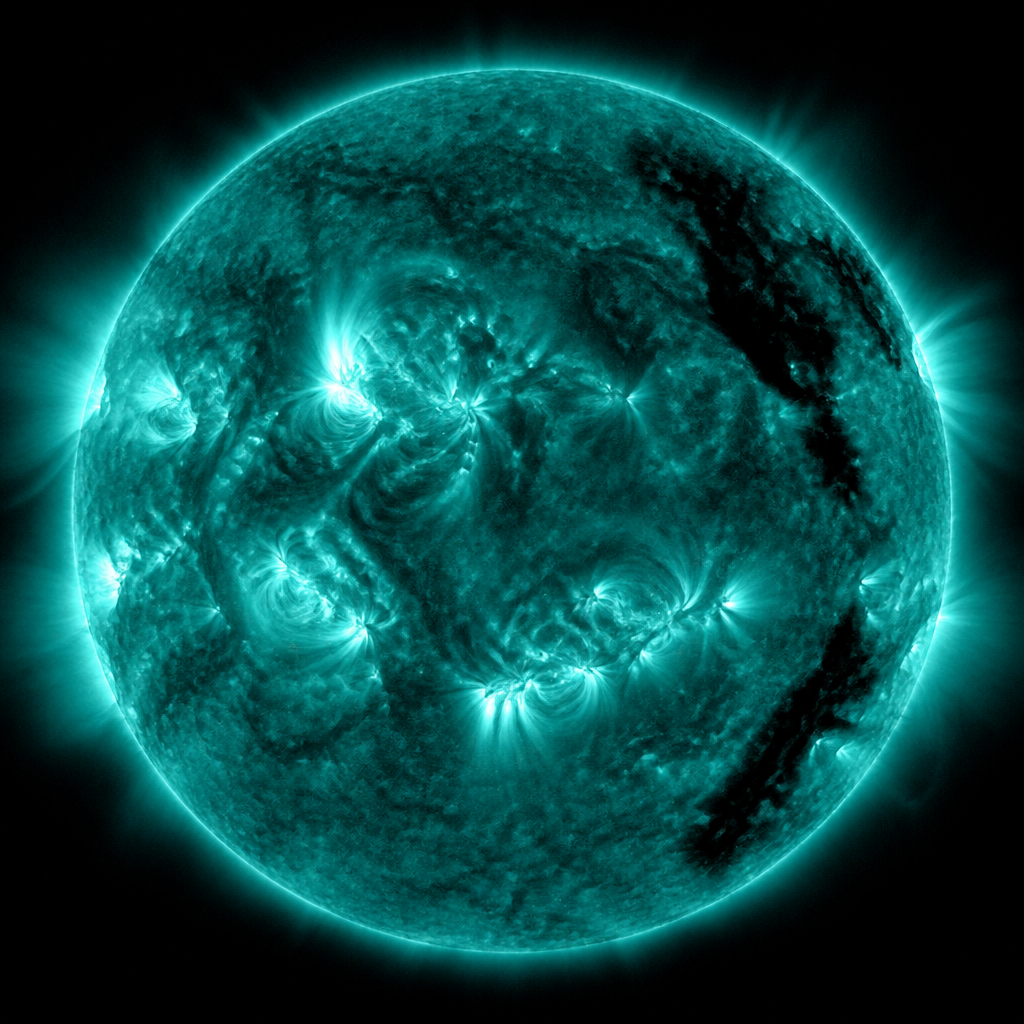


A Forbush decrease is the solar storm you measure with cosmic rays, not with aurora
When a coronal mass ejection sweeps aside galactic cosmic rays, ground muon and neutron counts drop. UK detectors and aviation dose models should treat that drop as news.
A Forbush decrease is named for the physicist who noticed that cosmic-ray intensity at the ground sometimes falls when the Sun has been rude. The mechanism is a magnetic cloud that shields Earth from part of the galactic rain. Aurora chasers may see nothing. Neutron monitors and muon telescopes see a step down that can last days. Scienception is filing this as solar-terrestrial news that does not require a green sky over Shetland.
Aviation already lives in the residual cosmic-ray field. A Forbush decrease can cut dose for a few days, which sounds like good news and is actually a calibration event: if your model cannot see the decrease, it cannot be trusted when a solar energetic particle event does the opposite and raises dose. Unions and airlines should like a detector that can say 'the galactic background just blinked'.
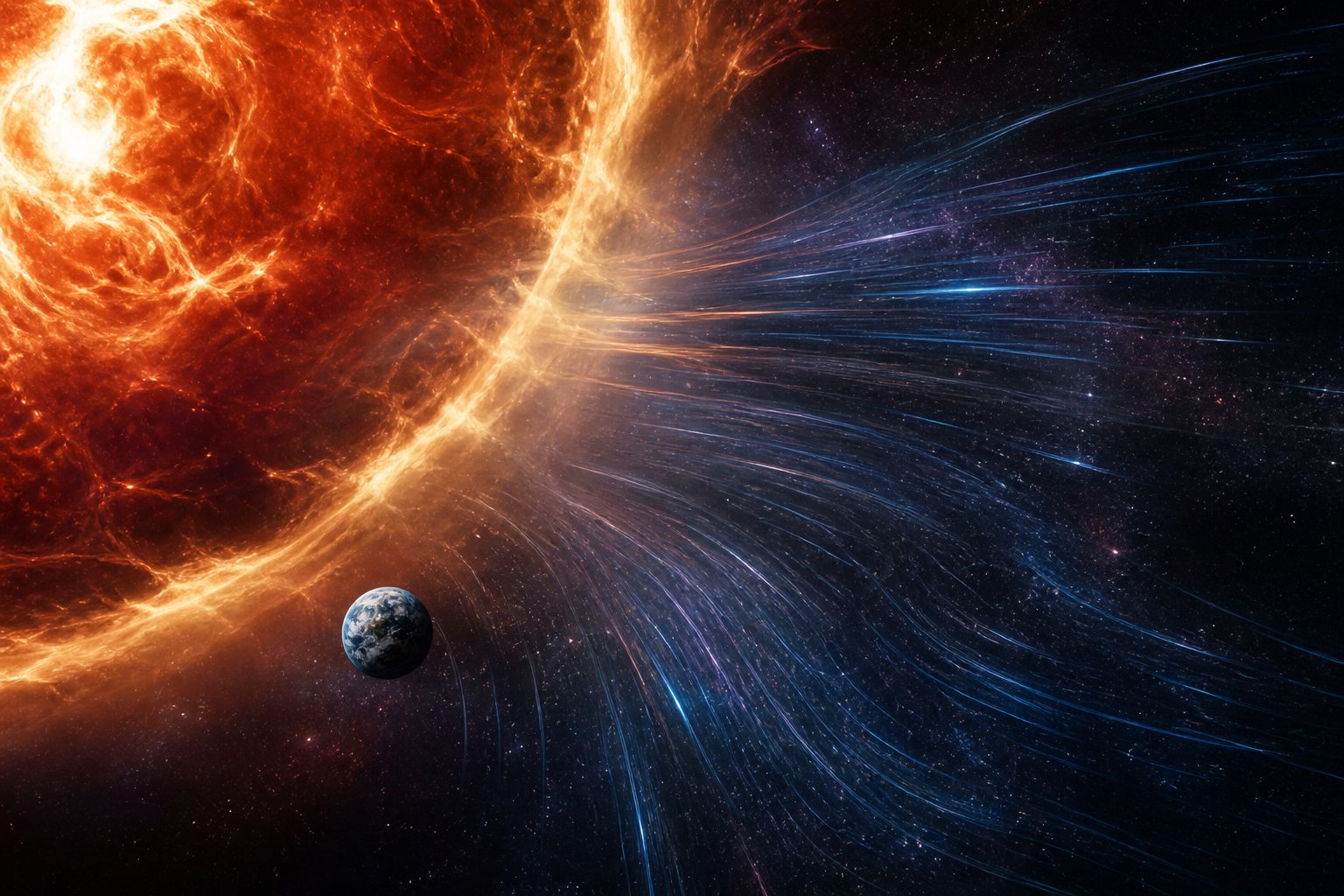
The same CME might also drive a geomagnetic storm. It might not. Geometry is cruel. A cloud can be magnetically well connected for cosmic-ray shielding and poorly connected for a British oval. Reporting only the aurora is how you miss half the storm.
What a UK detector is for
Neutron monitor networks are international. Britain should remain a node, not a reader of other people's plots. A muon telescope or a well-run monitor on these islands is how you timestamp a decrease in UT and compare it with MOSWOC's CME arrival window. If those two clocks disagree, that disagreement is a story.
University groups that treat cosmic-ray detectors as outreach toys are leaving science on the table. A school that plots counts against a Met Office watch has a better STEM week than a cardboard rocket.
Not every solar storm is a light show. Some of them are a missing fraction of the galactic rain, measured in a hut.
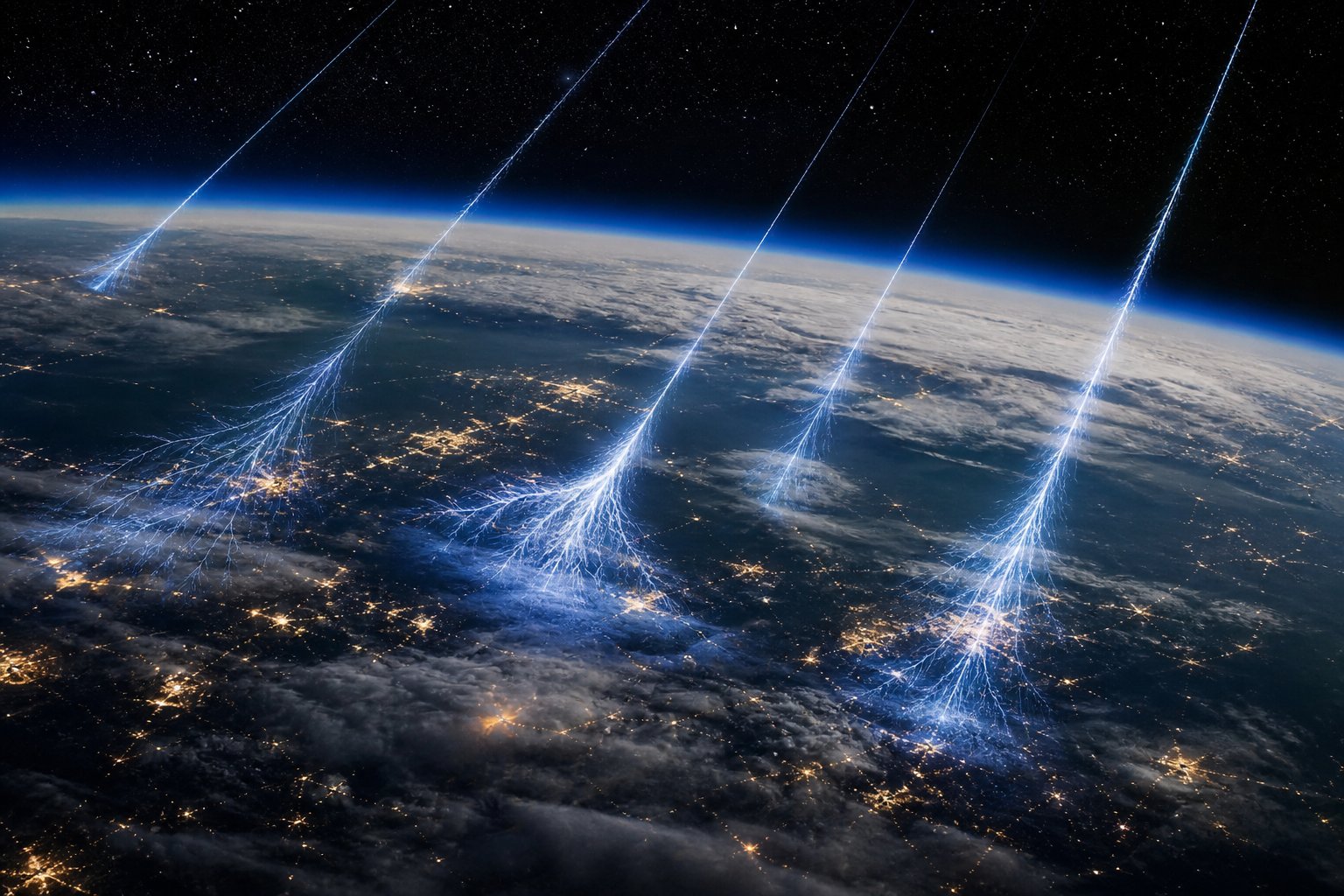
Solar energetic particles are the other beast. They raise dose, threaten polar routes, and belong in a different paragraph from Forbush. Mixing them is how you get a reader who thinks 'storm' means one number. It does not. Kp, F10.7, neutron counts and HF blackouts are four instruments.
How this sits next to MOSWOC
Exeter's watch language is built for operators of grids and skies. A Forbush decrease is a scientist's confirmation that a magnetic cloud really did engulf the Earth. Put it on the same page as the watch. Do not bury it in a cosmic-ray society newsletter that operators never open.
Scienception will keep asking whether aviation radiation procedures ingest neutron-monitor data as more than a monthly PDF. If they do not, a decrease is just a curiosity and a solar particle event is a surprise. Surprises are expensive at cruise altitude.
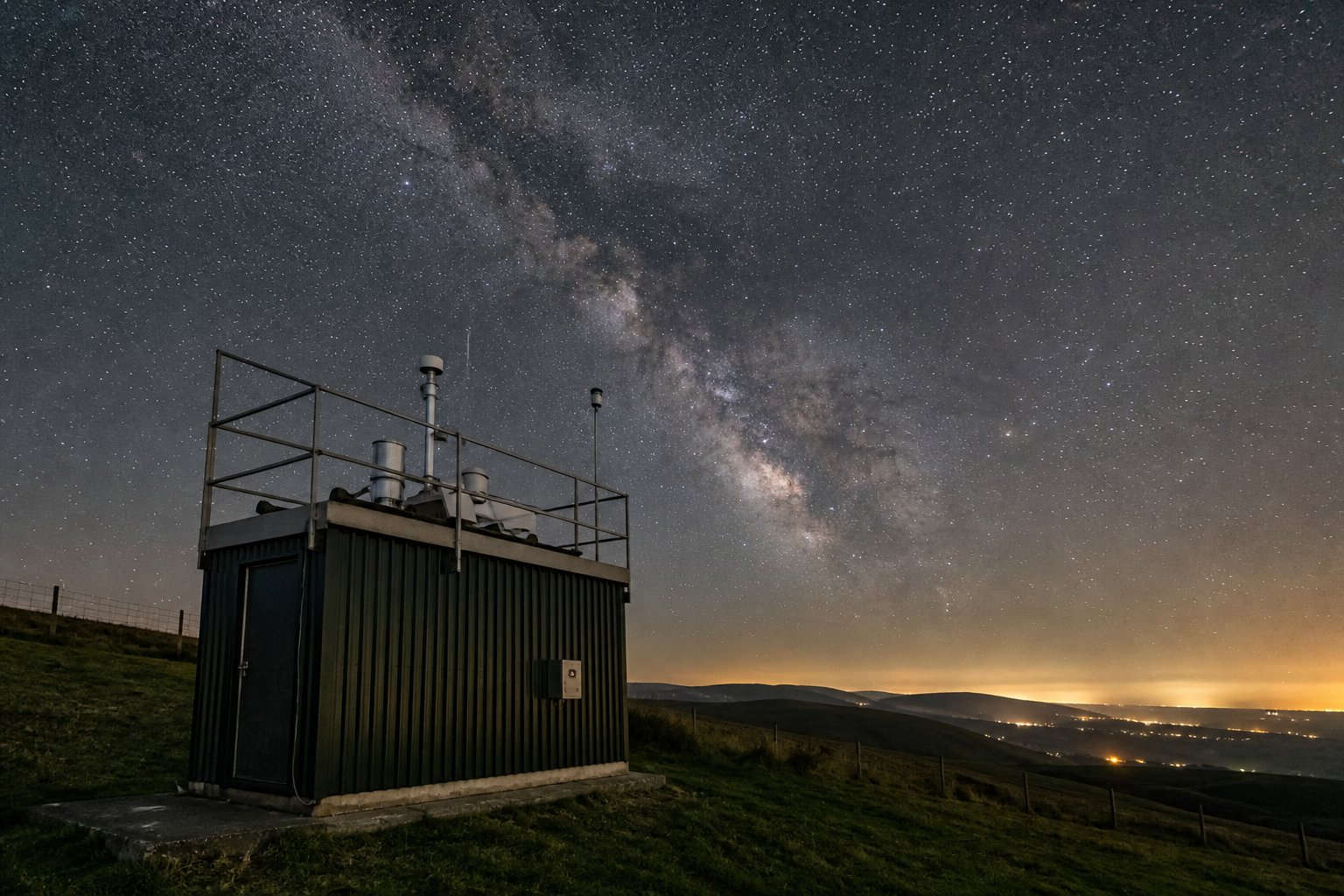
Historical Forbush events sit in archives that look like seismograms of the galaxy. They are how you know Solar Cycle 25 is not only a sunspot cartoon. Print the plot when the next clean decrease arrives, even if Shetland stayed cloudy and dark.
If you work in a classroom, assign the neutron-monitor stack for a CME week and the AuroraWatch stack for the same week. Students who can hold both have started to understand space weather as a system.
Further context for UK readers
Scott Forbush's original work is a reminder that this field is older than Twitter aurora alerts. Respect the age. Use modern networks.
Ground level enhancements are the opposite headline: solar particles punching all the way to the surface. Rare, serious for aviation, easy to confuse with Forbush if you only remember 'cosmic rays moved'. They moved in different directions.
Muon tomography and particle-physics outreach sometimes share detectors with space-weather monitoring. Good. Do not let the outreach programme become the only reason the detector is on. Calibration is the reason.
A decrease during a quiet oval week is pedagogically perfect. It breaks the false equation storm equals lights. Break it on purpose.
Data from NMDB and related networks should be linked in every MOSWOC-adjacent explainer. We have done so in the sources. Steal that habit.
If UK funding treats neutron monitors as someone else's problem, we will be tenants in a solar cycle we used to help measure.
A storm with the lights off
File Forbush next to G1 watches, not instead of them. One is an oval. One is a broom in the galactic cosmic-ray field. Britain has reasons to care about both: grids, polar flights, and the simple wish to know whether a CME actually arrived.
When counts drop, say so in English. When they do not, say the cloud missed. Either sentence is adult.
Corrections: info@scienception.com at Scienception LTD. Figures are illustrations for Scienception.
Dose models that can see a broom
A Forbush decrease that shows up in NMDB and does not show up in an airline radiation product is a discrepancy worth a phone call. Products that only wake for solar particle events are half-awake. Galactic background is the floor. If the floor moves and you do not see it, your ceiling is a guess.
UK research aircraft and high-altitude balloon groups sometimes carry dosimeters. Pair those flights with neutron-monitor traces or you have an expensive anecdote. Pairing is the method on this desk for aviation, grid and HF alike.
Teachers can plot a CME week as three lines: Kp, F10.7, neutron counts. If students can say which line is the oval, which is the solar atmosphere, and which is the galactic rain, they have a better model of space weather than most comment threads.
When the next clean decrease arrives without a British aurora, lead with the decrease. Resist the urge to apologise for a lack of green. The physics did something. Report the thing it did.
Related on Scienception: Cosmic-ray dose on UK long-haul crews · G1 watch for Shetland · The 10.7 cm radio Sun

