



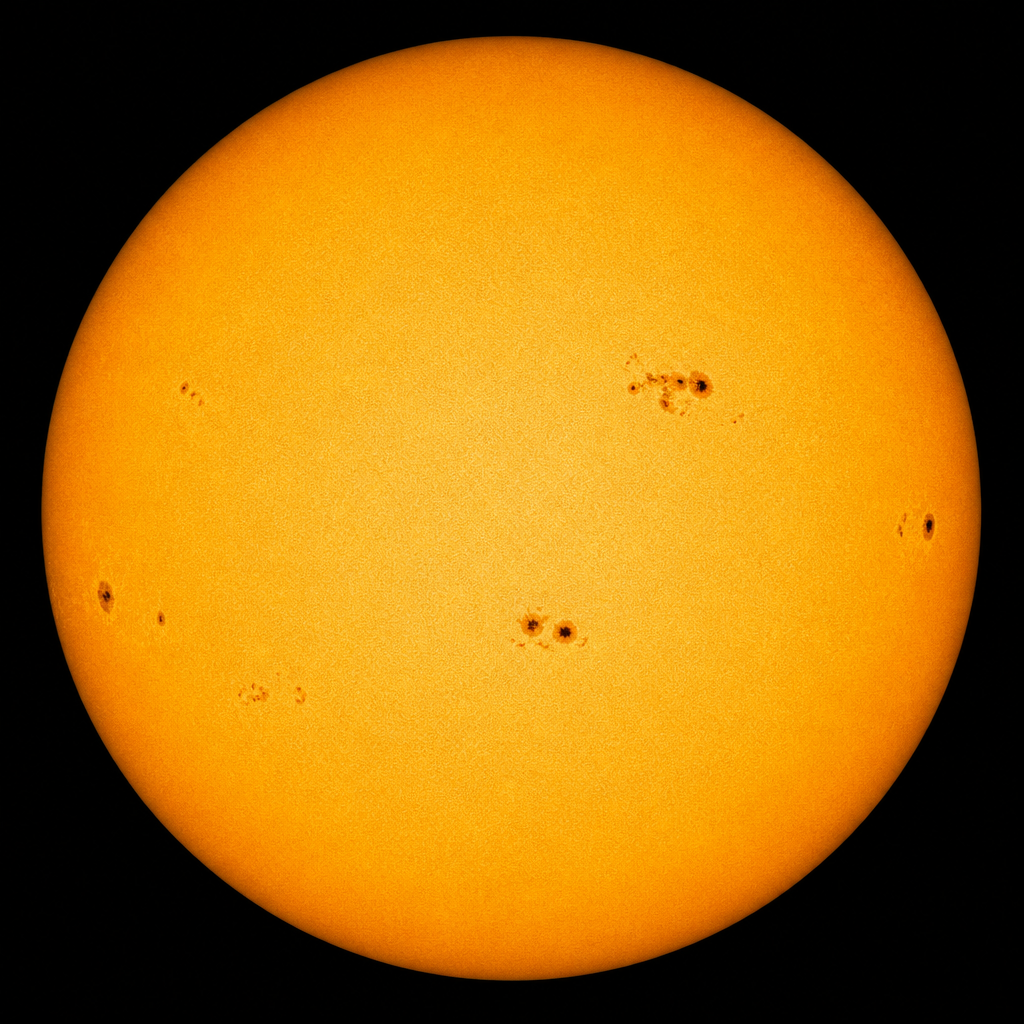
 Current Auroral Oval:


T Coronae Borealis is the nova UK variable-star observers refuse to ignore
A recurrent nova in the Northern Crown has the British Astronomical Association's variable-star section watching a ten-thousand-year-old clock that might yet tick.
T Coronae Borealis is a recurrent nova: a white dwarf stealing gas from a red giant until the pile detonates on the dwarf's surface. It did so in 1866 and 1946. Comparisons with those eruptions led some astronomers to suggest another outburst was due in the mid-2020s. The star has since declined to play along on a journalist's timetable. Scienception is with the British Astronomical Association's variable-star observers on this: watch, measure, do not schedule fireworks.
The physics is thermonuclear, not a supernova. The white dwarf remains. The system brightens by many magnitudes as ejected material and a fireball do their work, then fades. Recurrence means the fuse can reset. That is rare and precious. It is also why a Northern Hemisphere constellation you can see from a UK back garden became a global campaign.
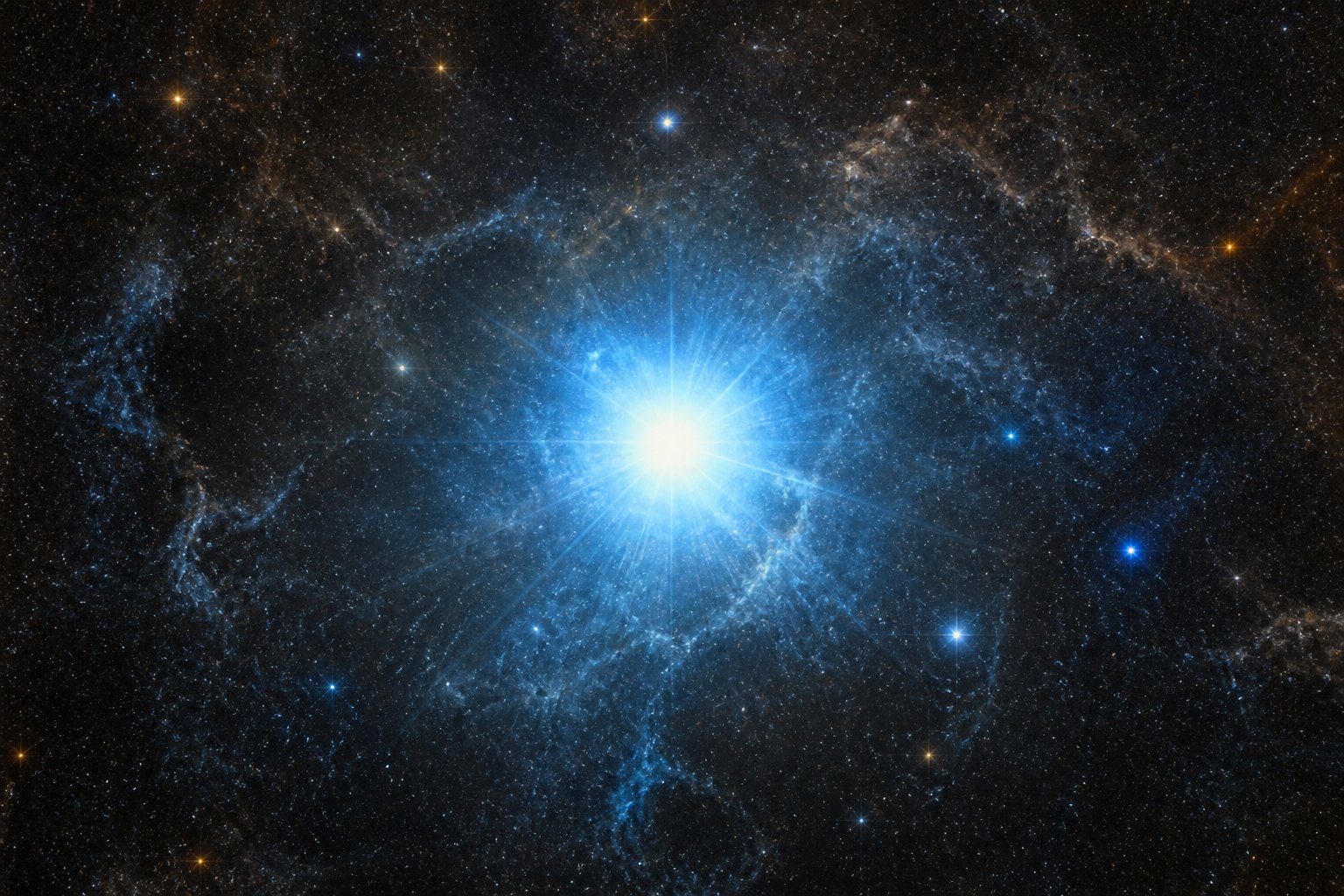
AAVSO and BAA photometry through the waiting years is the dataset that will make the eventual outburst scientifically fat. Professionals cannot stare at one binary every clear night. Amateurs can, in the aggregate. That is a division of labour worth defending against the idea that only space telescopes do astronomy.
A red giant, a white dwarf, a fuse
Magnitude estimates with binoculars still count if they are done carefully. CCD and CMOS photometry count more. The enemy is the observer who posts 'it looks brighter tonight' under a light-polluted sky without comparison stars. Please do not be that observer.
When the nova does erupt, the public story will last a week and the spectroscopic story will last months. UK university teams will want spectra. The window will be weather-limited. Planning the follow-up now is more useful than another explainer about 'the Blaze Star' nickname.
When T CrB goes, it will jump from binocular faintness toward the brightness of a modest familiar star. Until then, the scientific behaviour is to keep measuring the quiet.
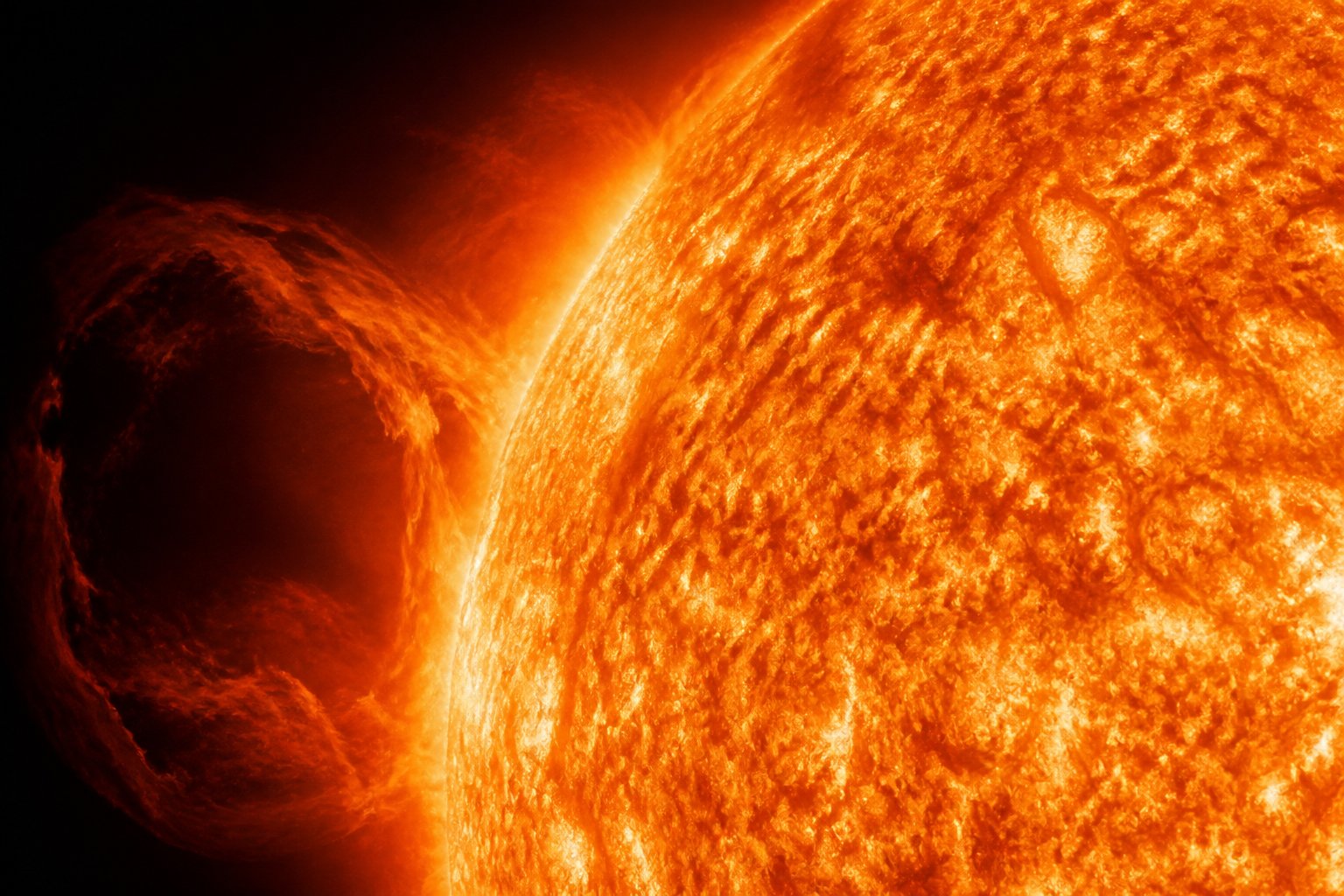
There is a space-weather metaphor that is only slightly cheap: we are good at waiting for the Sun to explode in our direction and impatient with a star that might go off in our constellation. Both are plasma. Only one will redden a Yorkshire twilight.
How to observe without inventing an explosion
Corona Borealis is high in summer evenings. That is a gift. You can point a newcomer at the crown and say: one of those points is a bomb that has already gone off twice in modern history. Then you can admit we do not know the night.
Scienception will keep a small nova watch in the right-hand rail because it is honest unfinished science, not because we need traffic on a quiet Sun day.
If T CrB erupts during a run of British cloud, overseas photometry will save the curve. If it erupts in a clear spell, a thousand UK backyard observers will finally be on time. Either way the binary will not ask our permission.
Variable-star astronomy is patience with error bars. In a culture of alerts, that patience is itself a result.
Further context for UK readers
The BAA variable-star section is one of those UK institutions that looks Victorian until you see the database. It is a modern instrument wearing tweed. Fund the database.
Comparison stars exist so that your eye has a ruler. Ignoring them is how you detect a nova that did not happen. Pride is a filter.
If the eruption comes in British murk, congratulate Chile and keep the spectroscopy email list warm. Nationalism about photons is silly.
Recurrent novae are laboratories for accretion. That sentence belongs in a university module that currently skips to supernovae because supernovae are louder. Loud is not the same as instructive.
Public planetarium talks should show a light curve with a flat year. Anticipation is a scientific emotion. Instant gratification is a different industry.
AAVSO's international character is the point. A British observer is a node. Nodes do not need to be famous. They need to be calibrated.
When it goes, Scienception will not write that the star 'exploded into a supernova'. We will write magnitudes, and we will mean them.
Waiting is the observation. Culture hates that. Variable-star people do not. That is why they still find things.
How to read this on a UK science desk
What a careful UK reader should actually do with this story is slower than a social feed wants. The live wires are: BAA section, comparison stars, 1866 and 1946, AAVSO, magnitudes not supernovae. If a paragraph does not touch one of those wires, it is probably colour. Colour is allowed. It is not a substitute for a product page at the Met Office, BGS, UKRI, ESA, the UK Space Agency, NATS, the CAA, Ofcom, UKAEA, NHS England or the laboratory named in the sources list. Scienception prints editorial snapshots on the left-hand rail so the homepage feels like a conditions desk in the old space-weather style. Those figures are not a live operational feed. If you are making a decision about aviation, the grid, a licence, a clinical pathway or a launch commit, leave this tab and go to the authority, then come back for the argument.
British geography keeps deciding supposedly global science. Magnetic latitude, Atlantic cloud, a coal switchyard, a dark-sky park, a Clyde clean room, a synchrotron on a former airfield, an ice-shelf station, a parish lighting rule: these are not decorations on t crb nova bvaa. They decide whether a result is operational for this country or merely interesting. A model that cannot be checked against a UK sensor is tourism. A policy that cannot be walked to a protocol is speech. We will keep dragging the global noun back to a named place.
There is a records problem in the background of this beat. Time series die when programmes end, when students leave, and when a dashboard is funded instead of a person who knows a sensor's quirks. The cheap way to look modern is a new visualisation. The expensive way that works is to keep the ugly log alive. Magnetograms, ionosondes, light curves, beam-test files, trusted research environments, licence PDFs and anomaly reports are how a democracy stays in the measurement business when the solar cycle, the debris environment or a carbon budget stops being polite.
The public conversation still swings between panic and shrug. Hold two true sentences at once. A minor geomagnetic watch is not a national blackout. A stored tonne of carbon is not a groundbreaking party. A nova that has not erupted is not a failure. A satellite train is not an invasion. Scienception will keep writing as if readers can cope with a caveat, a map, a table and a link. That is the minimum adult form of UK science news, and it is the house style for this article as much as for the conditions rail.
If you work in a school, use the primary links as a single homework: open the Met Office or BGS or ESA page, write down what the official product actually says, and compare it with our kicker. If you work in a control room, steal only the method: name the sensor, name the failure mode, name the British place that would feel it. If you only wanted a picture, look at the figures, then look at the sources. The figures are illustrations. The sources are how you check us. Corrections remain info@scienception.com at Scienception LTD.
Related on Scienception: Coronal-hole streams still ruin UK amateur radio in the most educational way · Perseids over Northumberland still beat a phone screen, if the Moon allows · UKMON fireballs are turning casual streaks into orbits

