



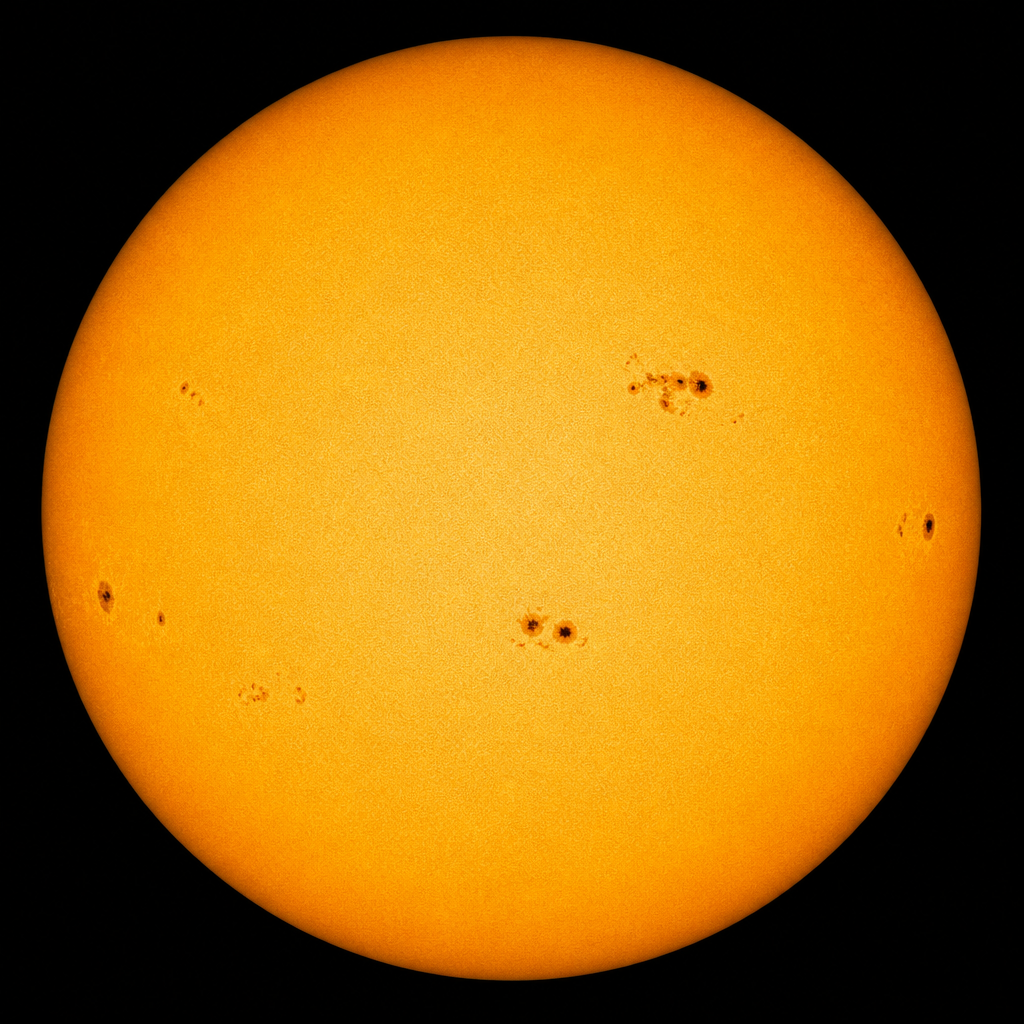
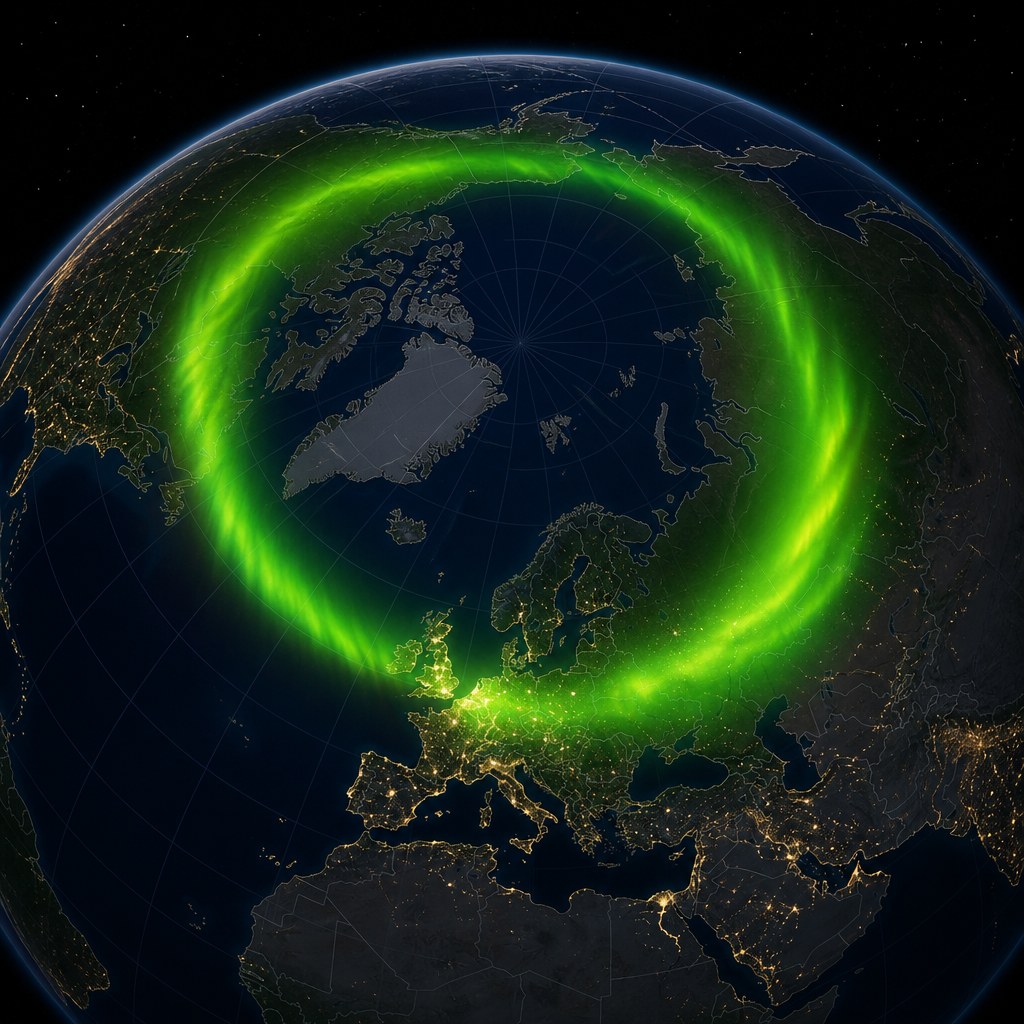
 Current Auroral Oval:


Perseids over Northumberland still beat a phone screen, if the Moon allows
England's first International Dark Sky Park remains one of the sanest places in Britain to watch the August meteor shower without a motorway orange fog.
The Perseid meteor shower is the one British families still attempt. The radiant in Perseus climbs after midnight in mid-August, the rates are friendly, and the branding is established. What has changed is the quality of the night. Southern and midland skies have brightened. Northumberland National Park, with Kielder Forest, remains a place where a meteor is a line of frozen nitrogen and rock, not a rumour in the glow of a fulfilment centre. Scienception still sends readers north for that reason.
Meteors are space weather in the original sense: the Earth ploughing through comet 109P/Swift-Tuttle's debris. Typical Perseids hit the atmosphere at around 59 kilometres per second and vaporise above the mesosphere. The bright ones leave trains. The physics is the same whether you watch from a designated dark-sky park or a back garden in Slough. The difference is photon competition.
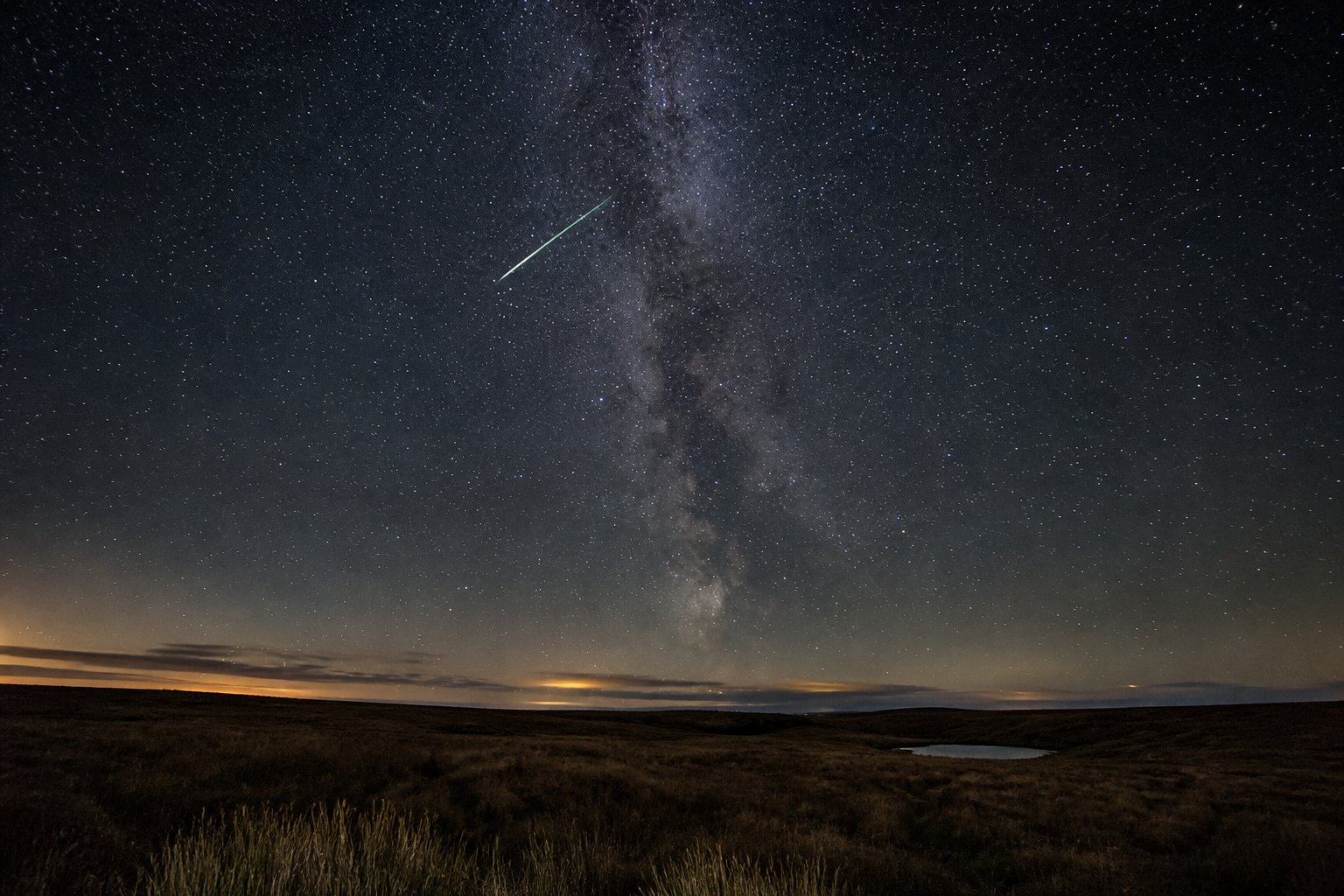
International Dark Sky status is a bureaucratic poem. It means lighting codes, community buy-in, and a refusal to treat darkness as unused land. CPRE's night-blight maps show why that refusal is rarer than it should be. A meteor shower is the annual argument for keeping it.
A park that treats darkness as infrastructure
Moonlight is the other enemy. A bright Moon in Perseid week can halve what a casual observer thinks they saw. Check the lunar phase before you drive three hours. Check the cloud. Then go anyway if there is a clear slot, because a handful of Perseids over a black horizon is worth more than a livestream.
Rates quoted as 'a hundred an hour' assume perfect skies and a dedicated observer looking at the right time. You will not see a hundred from a picnic blanket while talking. You may see twenty good ones if you are patient. Honesty keeps people coming back. Hype produces one disappointed school trip and a decade of 'we tried astronomy'.
If you need a motorway service station to feel safe in the dark, you will not see the Perseids. If you can stand in a car park at Kielder and let your eyes settle, you might.
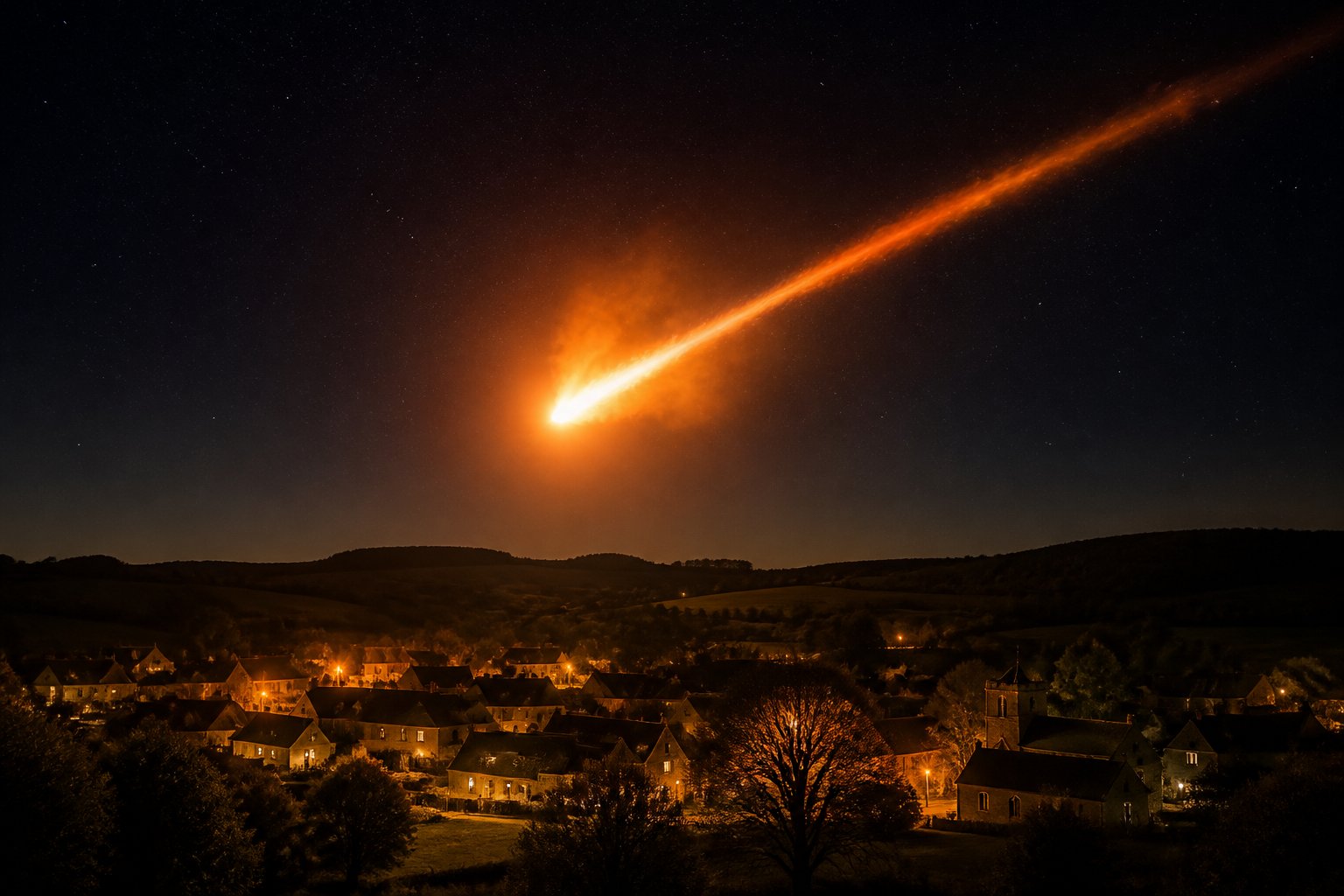
Photographers should not use the shower as an excuse to leave the landscape unrecognisable. A recognisable silhouette of a Northumberland crag plus one meteor is a better document than a stacked fantasy. Scienception is a science site, not a wallpaper shop.
Meteors are space weather you can count
There is a mild radio story too. Meteor scatter bounces VHF. Some UK amateurs still run schedules during Perseids. It is a charming overlap of hobby cultures: the same dust that makes a streak can carry a callsign.
If you cannot travel, a deckchair as far from your own security light as possible still works. Turn the light off. That sentence would improve British astronomy more than another visitor centre.
The shower will peak whether or not anyone watches. Watching is how a country remembers it lives in a solar system, not only in a logistics network.
Next August the Moon will be different and the clouds will be different. The park, if we keep the lighting codes, will still be dark. That is the long game.
Further context for UK readers
Kielder Observatory's public nights are booked because darkness became scarce. That scarcity is a policy failure elsewhere, not a triumph of marketing here. Come if you can. Then vote like lighting is ecology.
Swift-Tuttle's debris is not evenly sprinkled. Filaments make some years ruder. IMO rates are the grown-up source. A Facebook claim of 'storm' is almost always a cloud gap plus excitement.
The Pennine edge and Northumberland's interior are not the same sky. Drive the extra minutes. A meteor shower is a reason to leave the well-lit visitor car park if staff allow a darker pull-off safely.
Children remember a Perseids night if you let them get cold and quiet. They do not remember a phone video. Scienception is pro-cold.
Military low-fly and satellite trains will photobomb. Log them. Do not call them meteors. Labelling is civility to the data.
August dew kills eyepieces and enthusiasm. Bring a towel. This is the British technical appendix to every shower preview.
If the Moon is bright, watch anyway for the fireballs. Rates of faint dust will suffer. The bright ones still punch. Manage expectations in the first sentence, not the last.
Dark-sky status can be lost. Lighting creep is patient. A shower is an annual audit of whether the park still means it.
How to read this on a UK science desk
What a careful UK reader should actually do with this story is slower than a social feed wants. The live wires are: Kielder, Swift-Tuttle filaments, IMO rates, dew, lighting codes. If a paragraph does not touch one of those wires, it is probably colour. Colour is allowed. It is not a substitute for a product page at the Met Office, BGS, UKRI, ESA, the UK Space Agency, NATS, the CAA, Ofcom, UKAEA, NHS England or the laboratory named in the sources list. Scienception prints editorial snapshots on the left-hand rail so the homepage feels like a conditions desk in the old space-weather style. Those figures are not a live operational feed. If you are making a decision about aviation, the grid, a licence, a clinical pathway or a launch commit, leave this tab and go to the authority, then come back for the argument.
British geography keeps deciding supposedly global science. Magnetic latitude, Atlantic cloud, a coal switchyard, a dark-sky park, a Clyde clean room, a synchrotron on a former airfield, an ice-shelf station, a parish lighting rule: these are not decorations on perseids northumberland dark sky. They decide whether a result is operational for this country or merely interesting. A model that cannot be checked against a UK sensor is tourism. A policy that cannot be walked to a protocol is speech. We will keep dragging the global noun back to a named place.
There is a records problem in the background of this beat. Time series die when programmes end, when students leave, and when a dashboard is funded instead of a person who knows a sensor's quirks. The cheap way to look modern is a new visualisation. The expensive way that works is to keep the ugly log alive. Magnetograms, ionosondes, light curves, beam-test files, trusted research environments, licence PDFs and anomaly reports are how a democracy stays in the measurement business when the solar cycle, the debris environment or a carbon budget stops being polite.
The public conversation still swings between panic and shrug. Hold two true sentences at once. A minor geomagnetic watch is not a national blackout. A stored tonne of carbon is not a groundbreaking party. A nova that has not erupted is not a failure. A satellite train is not an invasion. Scienception will keep writing as if readers can cope with a caveat, a map, a table and a link. That is the minimum adult form of UK science news, and it is the house style for this article as much as for the conditions rail.
If you work in a school, use the primary links as a single homework: open the Met Office or BGS or ESA page, write down what the official product actually says, and compare it with our kicker. If you work in a control room, steal only the method: name the sensor, name the failure mode, name the British place that would feel it. If you only wanted a picture, look at the figures, then look at the sources. The figures are illustrations. The sources are how you check us. Corrections remain info@scienception.com at Scienception LTD.
Related on Scienception: Coronal-hole streams still ruin UK amateur radio in the most educational way · UKMON fireballs are turning casual streaks into orbits · Armagh Observatory still does the unfashionable work of following near-Earth objects

