



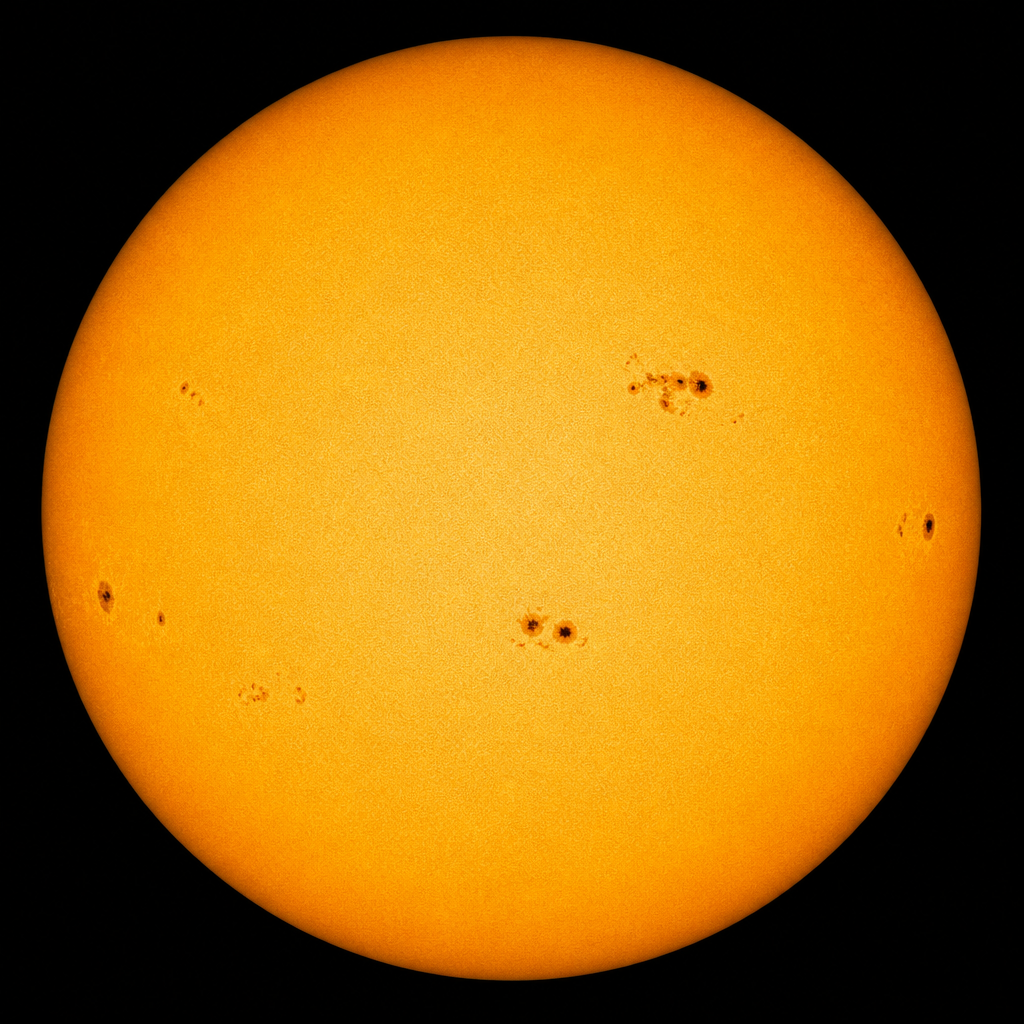
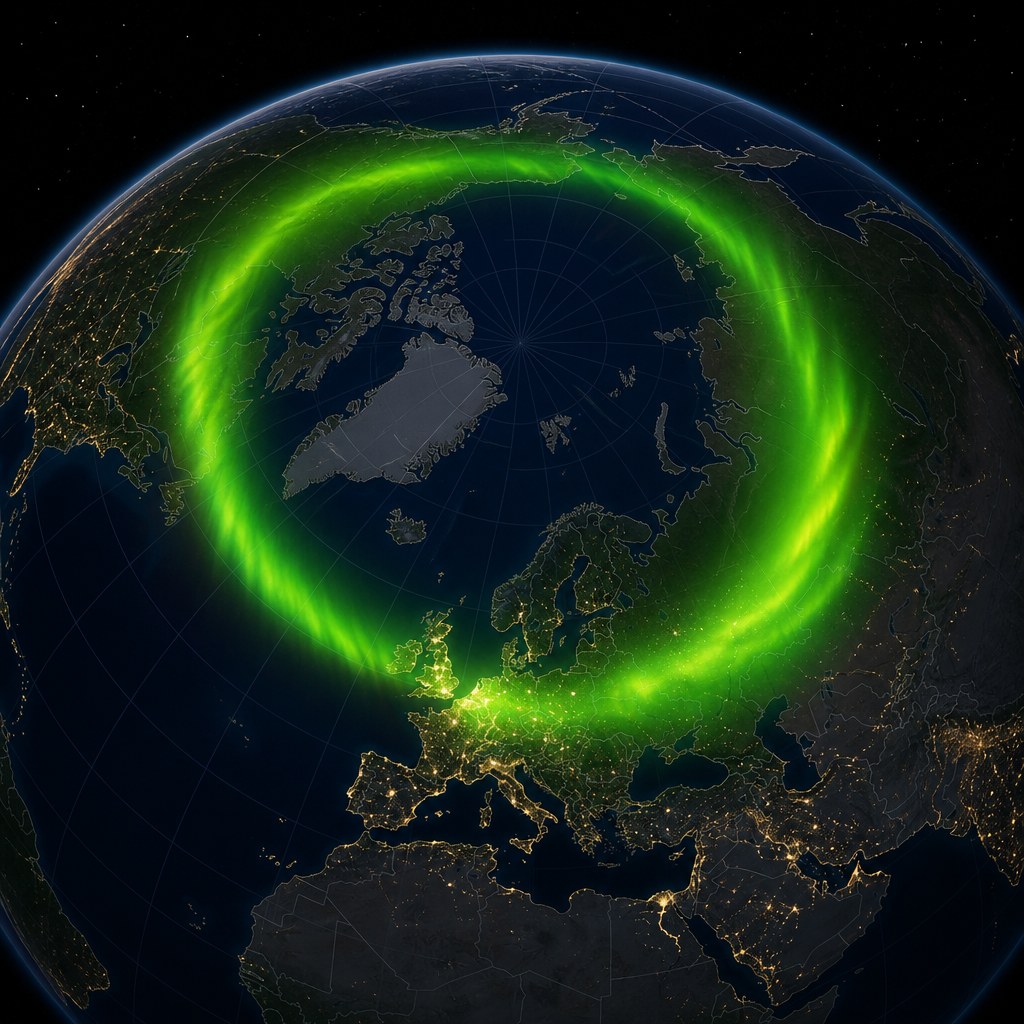
 Current Auroral Oval:
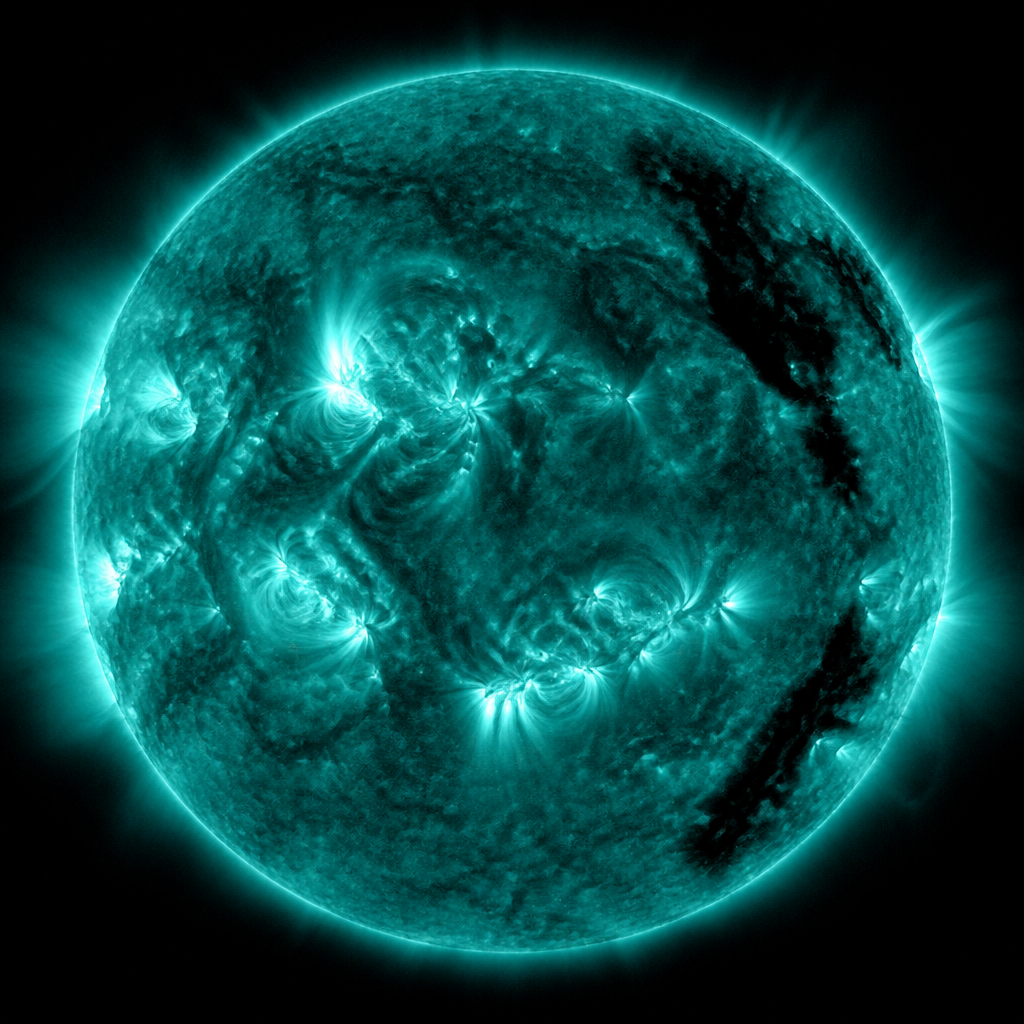


SWIMMR is the quiet programme that taught Britain to model storms
UKRI's Space Weather Instrumentation, Measurement, Modelling and Risk programme pulled universities, the Met Office and industry into one pipeline. The models are now the story.
SWIMMR — Space Weather Instrumentation, Measurement, Modelling and Risk — never had the public glamour of a launch. It did something more useful. Funded through UK Research and Innovation, with the Met Office as a core partner, it paid for instruments, magnetospheric models, radiation-belt codes and the unglamorous work of turning research output into something a forecaster can open on a night shift. Scienception treats it as the spine of Britain's space-weather literacy.
Before SWIMMR, UK excellence existed in pieces: a magnetometer here, a radiation paper there, a Met Office desk that still had to lean on overseas products. The programme's bet was that the gap was integration. If universities, STFC laboratories and operators shared metrics, a CME arriving on a Sunday would not be a surprise built from screenshots. That bet is only half won, which is still a win.
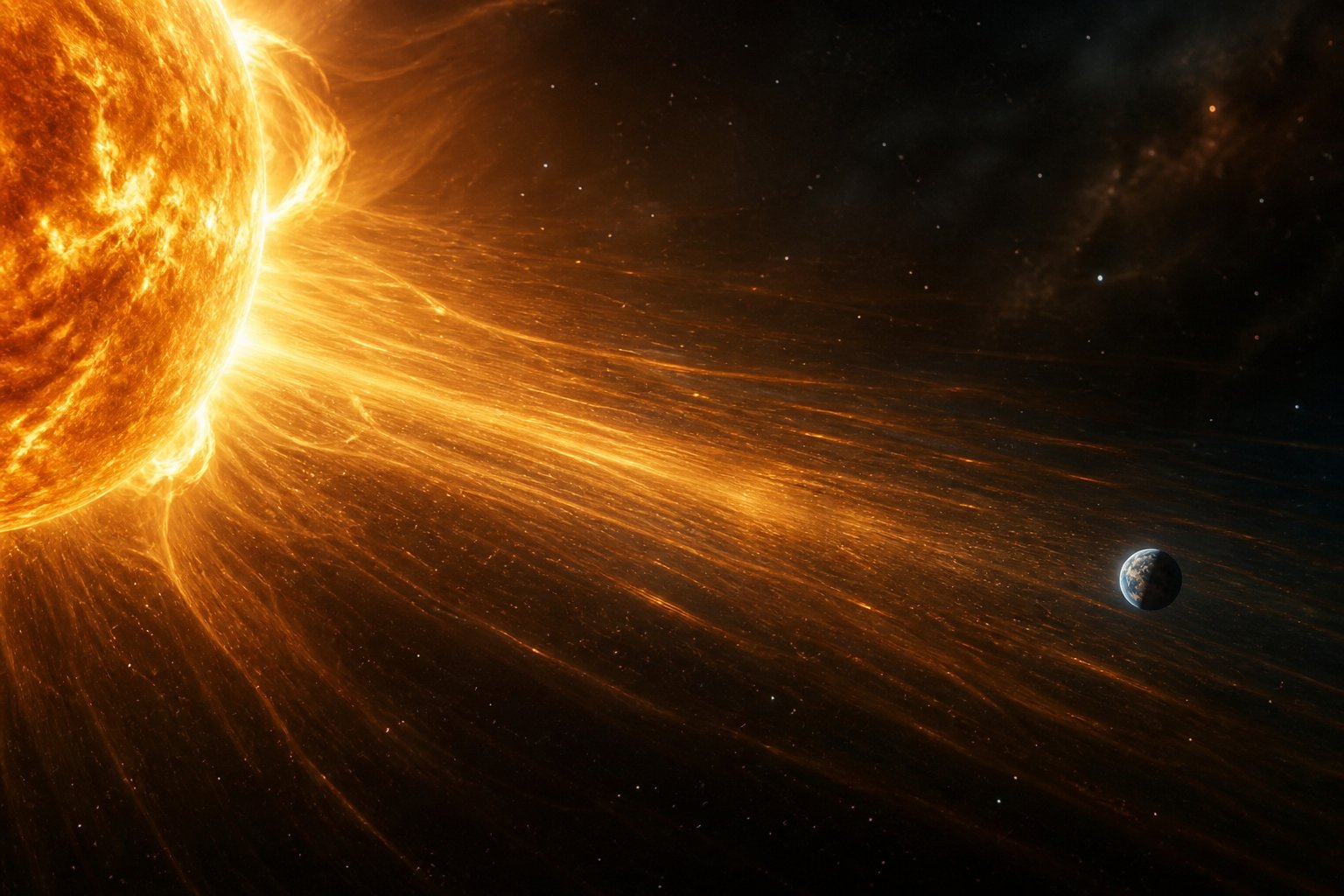
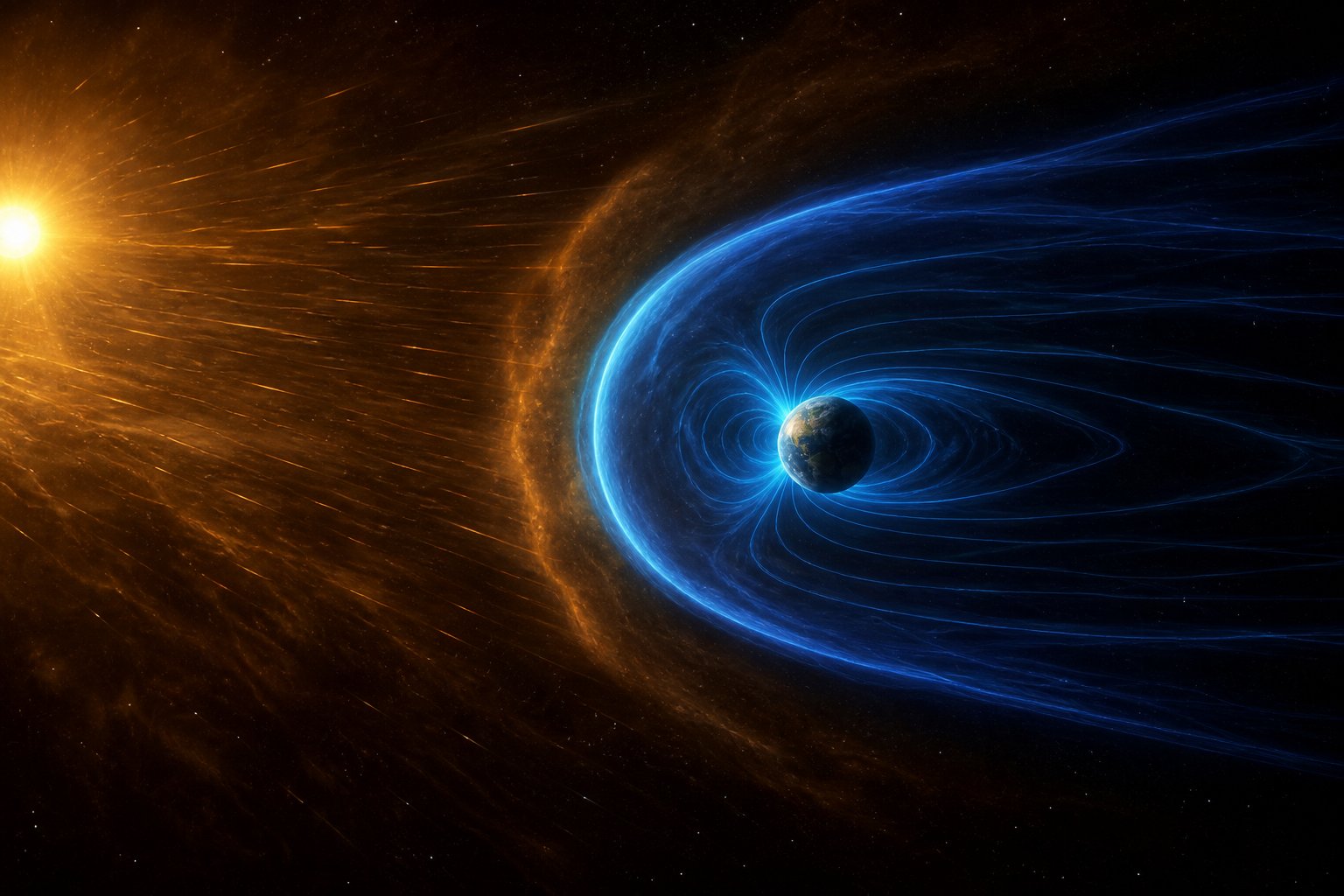
Modelling the solar wind from the Sun to magnetopause remains a chain of compromises. Photospheric magnetograms are incomplete. Heliospheric models smear structure. Magnetospheric codes disagree on how much energy enters when Bz turns south. SWIMMR projects did not magically solve those problems. They did force UK groups to quantify them in the same units operators use: Kp probabilities, high-frequency absorption, GNSS loss-of-lock, aircraft radiation.
From grants to an operational culture
Instrumentation mattered as much as code. Radiation monitors, ionospheric sounders and ground magnetometers are how you find out the model was wrong. A country that only consumes NASA imagery is a spectator. A country that measures its own ionosphere can argue with a forecast. The UK Solar System Data Centre and the ionosonde heritage at places such as Chilton are part of that argument.
Industry sat in the room, sometimes awkwardly. Insurers wanted return periods. Satellite operators wanted nowcasts of charging. Airlines wanted a number they could put in a dispatch pack. Researchers wanted another year of computer time. SWIMMR's administrative achievement was keeping those tribes in one programme long enough to share vocabularies.
A model that cannot say it does not know is a hazard. SWIMMR's better papers are the ones that publish the miss as carefully as the hit.
What still cannot be forecast is flare timing. Active regions can look ugly for a week and do nothing, or quietly produce an X-class flare. CME arrival windows of plus or minus six hours are a success, not a failure, and should be reported that way. Scienception will keep saying so even when a missed aurora watch generates complaints.
What still cannot be forecast
The successor question is political. Programmes end. Desks remain. If MOSWOC is to stay world-class, the modelling pipeline needs a permanent home in public funding, not a sequence of clever acronyms. Space weather is not a start-up. It is more like flood forecasting: unloved until the night it is not.
Students coming through SWIMMR-linked doctoral work are now the people writing the next operational upgrades. That human capital is the real return. You cannot buy it in a panic after a severe storm. You grow it while the Sun is only moderately rude.

For readers, the practical takeaway is to distrust any UK story that cites only an American dashboard. Ask whether a British magnetometer, a British ionosonde or a British radiation model is in the paragraph. If not, the article is tourism.
SWIMMR will be a footnote in launch-culture coverage. On this desk it is the main text. Britain decided, briefly, to take space weather as seriously as weather. The Sun will test whether that decision stuck.
Further context for UK readers
UKRI programme names are designed to die. The science is designed not to. SWIMMR's test is whether MOSWOC still runs a model that a named university group still updates after the last invoice. If the answer is a shrug, the programme was a firework. If the answer is a version number, it was infrastructure.
Radiation-belt modelling for the slot region and for GEO satellites is one of the quieter SWIMMR-adjacent crafts. Airlines care about the atmosphere. Operators care about electrons that live for days. Both are space weather. Only one makes a pretty oval.
Verification against events is how you retire a code. A model that is never wrong in public is a model that is never scored. Britain should publish hit-and-miss tables the way flood forecasting does. Pride is the enemy of a Brier score.
The Met Office already knows how to do ensembles for rain. Solar-wind ensembles are younger and ruder. They should look ugly. A single deterministic CME cartoon on social media is not a Met Office product even when it is colourful.
Instrumentation funded in the same breath as modelling is the anti-vanity clause. A new code with old magnetometers is still a guess. A new magnetometer with no model is a diary. SWIMMR's bet was the pair.
European partners still run some of the best heliospheric codes. Association politics made UK groups miss meetings. Modelling is a social sport. Isolation is a scientific risk even when the Git repository is public.
PhD students who split time between Exeter and a campus learned a bilingualism: journal English and ops English. That bilingualism is the deliverable. Keep hiring it.
Scienception will treat the next named programme as guilty until it shows a data policy. Acronyms are easy. Continuity is the scarce element.
How to read this on a UK science desk
What a careful UK reader should actually do with this story is slower than a social feed wants. The live wires are: Met Office ensembles, radiation belts versus ovals, verification tables, PhD bilingualism, programme continuity. If a paragraph does not touch one of those wires, it is probably colour. Colour is allowed. It is not a substitute for a product page at the Met Office, BGS, UKRI, ESA, the UK Space Agency, NATS, the CAA, Ofcom, UKAEA, NHS England or the laboratory named in the sources list. Scienception prints editorial snapshots on the left-hand rail so the homepage feels like a conditions desk in the old space-weather style. Those figures are not a live operational feed. If you are making a decision about aviation, the grid, a licence, a clinical pathway or a launch commit, leave this tab and go to the authority, then come back for the argument.
British geography keeps deciding supposedly global science. Magnetic latitude, Atlantic cloud, a coal switchyard, a dark-sky park, a Clyde clean room, a synchrotron on a former airfield, an ice-shelf station, a parish lighting rule: these are not decorations on swimmr uk space weather modelling. They decide whether a result is operational for this country or merely interesting. A model that cannot be checked against a UK sensor is tourism. A policy that cannot be walked to a protocol is speech. We will keep dragging the global noun back to a named place.
There is a records problem in the background of this beat. Time series die when programmes end, when students leave, and when a dashboard is funded instead of a person who knows a sensor's quirks. The cheap way to look modern is a new visualisation. The expensive way that works is to keep the ugly log alive. Magnetograms, ionosondes, light curves, beam-test files, trusted research environments, licence PDFs and anomaly reports are how a democracy stays in the measurement business when the solar cycle, the debris environment or a carbon budget stops being polite.
The public conversation still swings between panic and shrug. Hold two true sentences at once. A minor geomagnetic watch is not a national blackout. A stored tonne of carbon is not a groundbreaking party. A nova that has not erupted is not a failure. A satellite train is not an invasion. Scienception will keep writing as if readers can cope with a caveat, a map, a table and a link. That is the minimum adult form of UK science news, and it is the house style for this article as much as for the conditions rail.
If you work in a school, use the primary links as a single homework: open the Met Office or BGS or ESA page, write down what the official product actually says, and compare it with our kicker. If you work in a control room, steal only the method: name the sensor, name the failure mode, name the British place that would feel it. If you only wanted a picture, look at the figures, then look at the sources. The figures are illustrations. The sources are how you check us. Corrections remain info@scienception.com at Scienception LTD.
Related on Scienception: RAL Space still builds the UK's eyes on the solar wind · Ariel is the UK's next long stare at other atmospheres · JWST's British fingerprints are still in the data, not only in the history

