



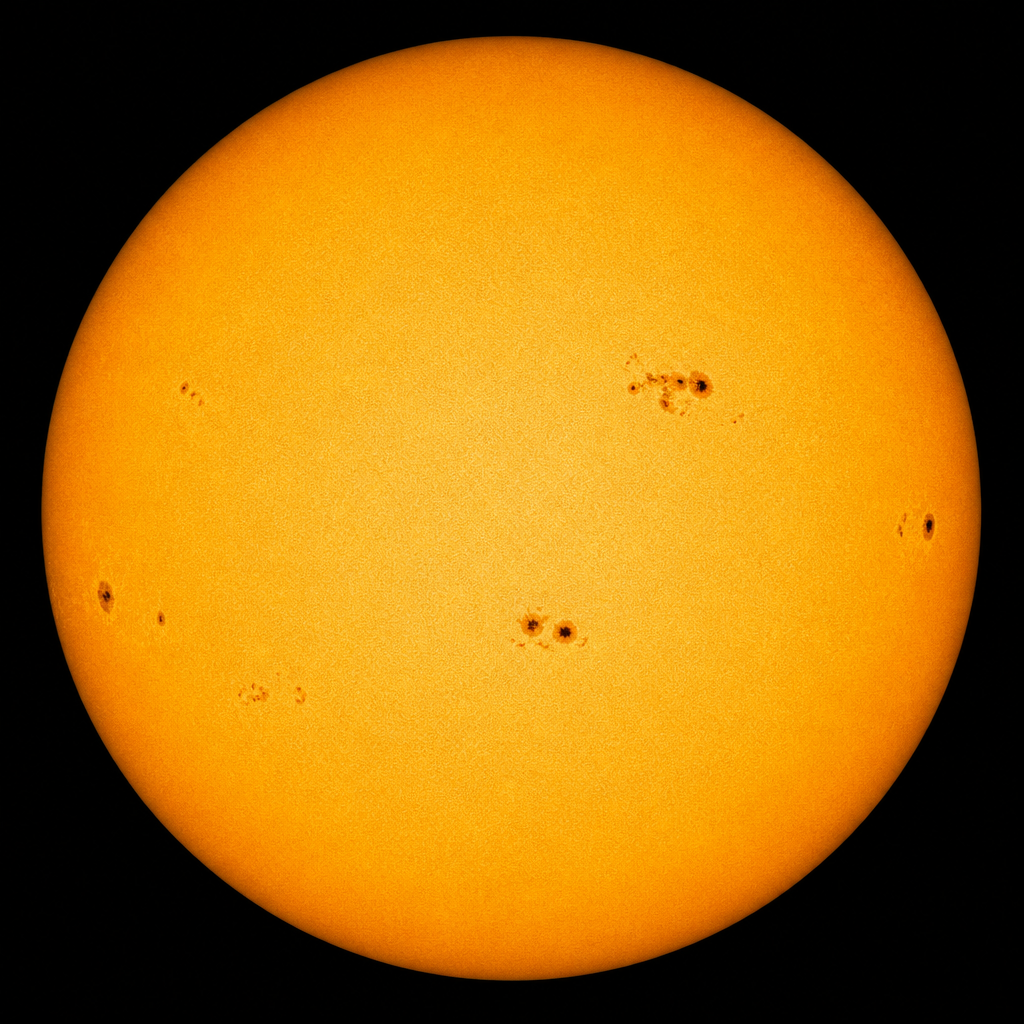
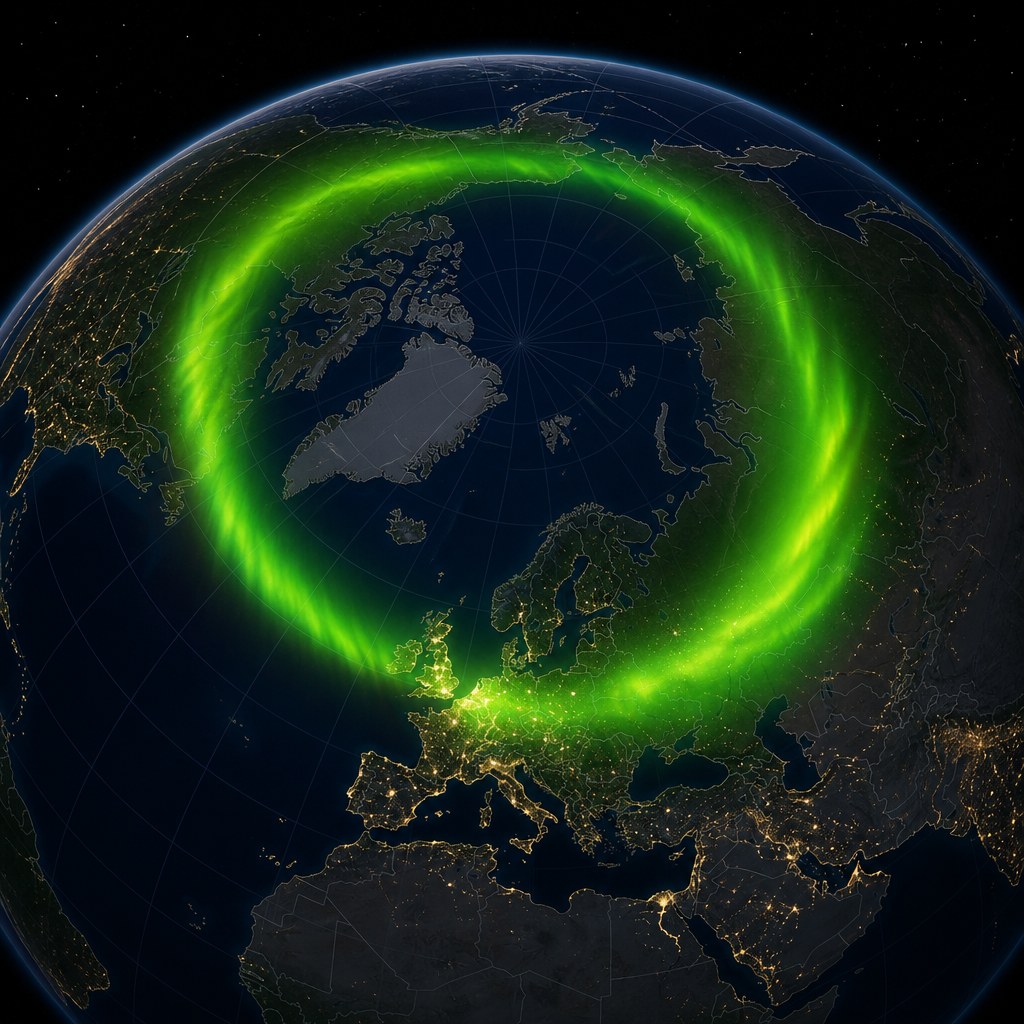
 Current Auroral Oval:


JWST's British fingerprints are still in the data, not only in the history
From MIRI to the people reducing spectra, the UK remains inside the James Webb Space Telescope's scientific present.
The James Webb Space Telescope is often told as an American story with a European sidecar. That is lazy. MIRI, the mid-infrared instrument, carried a major UK role through a long, occasionally painful development. Those detectors and that cryogenic courage are why some of the most interesting spectra exist. Scienception will keep saying MIRI when a story would rather say only NASA.
Mid-infrared is where dust, warm molecules and certain exoplanet features live. It is also hard. The UK teams who delivered hardware had to live with slip and scrutiny. The reward is a working instrument at L2, which is a ridiculous sentence if you think about it for more than a second.
The scientific present is proposals, archives and arguments about oversubscription. UK astronomers are in those queues with everyone else. A heritage story that stops at launch is fan mail. A heritage story that reads this month's papers is journalism.
An instrument that had to work
Webb has already complicated simple tales of early galaxies. Good. Complexity is the product. Outreach that still says 'first galaxies, full stop' is out of date on purpose.
There is a space-weather irrelevance that is worth a smile: Webb sits far enough away that a G1 storm in Britain's grid is not its problem. Solar activity still matters to spacecraft operations in general. L2 is not Narnia. It is a Lagrange point with a thermal design.
Heritage is not a plaque. Heritage is a pipeline you still know how to run.
Students in UK departments now write theses on public Webb data. That is the democratisation that actually happened, more than any livestream. Keep the archive funded. Keep the tutorials boring and excellent.
What UK scientists do with the archive now
Industry lessons from MIRI — detectors, cryogenics, project control — leak into other missions if we let them. A country that treats each payload as a unique snowflake pays twice.
Scienception will not recap the unfolding of the sunshield again unless someone asks. We will recap a spectrum that changes a distance ladder or a chemistry claim.

If a UK-led programme uses Webb to nail a result on exoplanet atmospheres ahead of Ariel, that is a relay race, not a rivalry. Print it as a relay.
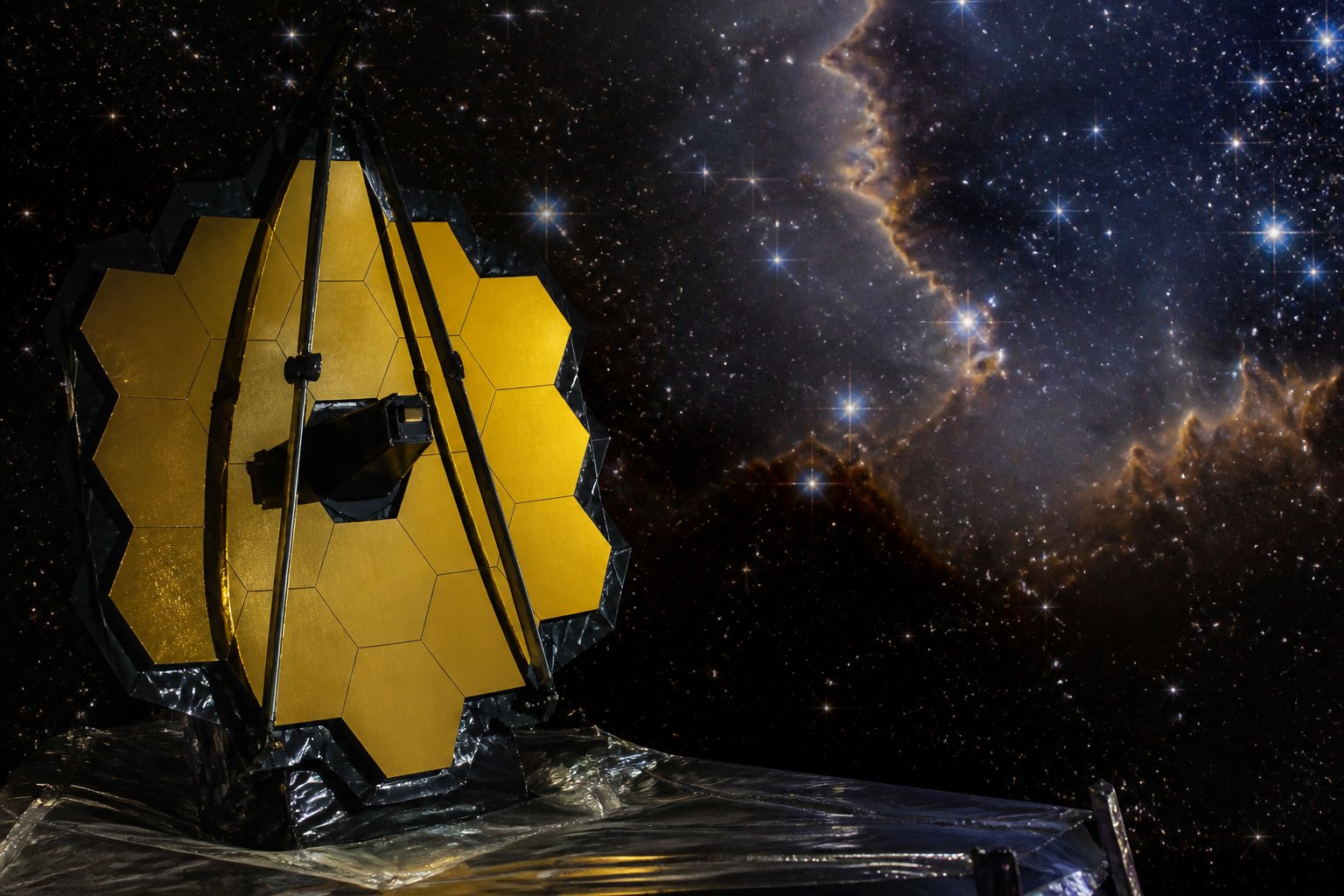
The telescope is history. The data are this afternoon. British fingerprints are in both, if you bother to look past the gold hexagons.
Further context for UK readers
MIRI's mid-infrared is where dust stops being a nuisance and becomes a subject. UK fingerprints on that instrument are a reason to keep detector groups alive, not a reason to stop funding them because the launch happened.
Oversubscription is a sign of health and a sign of pain. UK proposals will lose often. That is not a snub. It is a telescope.
L2 is quiet in the geomagnetic sense and still solar in the thermal sense. Do not tell children Webb is 'beyond weather'. It is beyond our weather.
Archive science is how a medium country keeps winning after the hardware flew. Fund the people who live in the archive. They are the heritage.
Press titles that say 'first galaxies' in year four of operations are out of date as a ritual. Update the ritual.
Detector knowledge leaks into other missions if you let engineers talk across corridors. Forcing them into competitive silence is how you pay twice.
A spectrum changed a claim. Print the claim and the change. Do not print only the gold hexagons again.
Heritage is a pipeline you can still run. If you cannot run it, you had a souvenir.
How to read this on a UK science desk
What a careful UK reader should actually do with this story is slower than a social feed wants. The live wires are: MIRI detectors, archive postdocs, L2 thermal, oversubscription, hexagons versus spectra. If a paragraph does not touch one of those wires, it is probably colour. Colour is allowed. It is not a substitute for a product page at the Met Office, BGS, UKRI, ESA, the UK Space Agency, NATS, the CAA, Ofcom, UKAEA, NHS England or the laboratory named in the sources list. Scienception prints editorial snapshots on the left-hand rail so the homepage feels like a conditions desk in the old space-weather style. Those figures are not a live operational feed. If you are making a decision about aviation, the grid, a licence, a clinical pathway or a launch commit, leave this tab and go to the authority, then come back for the argument.
British geography keeps deciding supposedly global science. Magnetic latitude, Atlantic cloud, a coal switchyard, a dark-sky park, a Clyde clean room, a synchrotron on a former airfield, an ice-shelf station, a parish lighting rule: these are not decorations on jwst uk heritage. They decide whether a result is operational for this country or merely interesting. A model that cannot be checked against a UK sensor is tourism. A policy that cannot be walked to a protocol is speech. We will keep dragging the global noun back to a named place.
There is a records problem in the background of this beat. Time series die when programmes end, when students leave, and when a dashboard is funded instead of a person who knows a sensor's quirks. The cheap way to look modern is a new visualisation. The expensive way that works is to keep the ugly log alive. Magnetograms, ionosondes, light curves, beam-test files, trusted research environments, licence PDFs and anomaly reports are how a democracy stays in the measurement business when the solar cycle, the debris environment or a carbon budget stops being polite.
The public conversation still swings between panic and shrug. Hold two true sentences at once. A minor geomagnetic watch is not a national blackout. A stored tonne of carbon is not a groundbreaking party. A nova that has not erupted is not a failure. A satellite train is not an invasion. Scienception will keep writing as if readers can cope with a caveat, a map, a table and a link. That is the minimum adult form of UK science news, and it is the house style for this article as much as for the conditions rail.
If you work in a school, use the primary links as a single homework: open the Met Office or BGS or ESA page, write down what the official product actually says, and compare it with our kicker. If you work in a control room, steal only the method: name the sensor, name the failure mode, name the British place that would feel it. If you only wanted a picture, look at the figures, then look at the sources. The figures are illustrations. The sources are how you check us. Corrections remain info@scienception.com at Scienception LTD.
Related on Scienception: SWIMMR is the quiet programme that taught Britain to model storms · RAL Space still builds the UK's eyes on the solar wind · Ariel is the UK's next long stare at other atmospheres

