



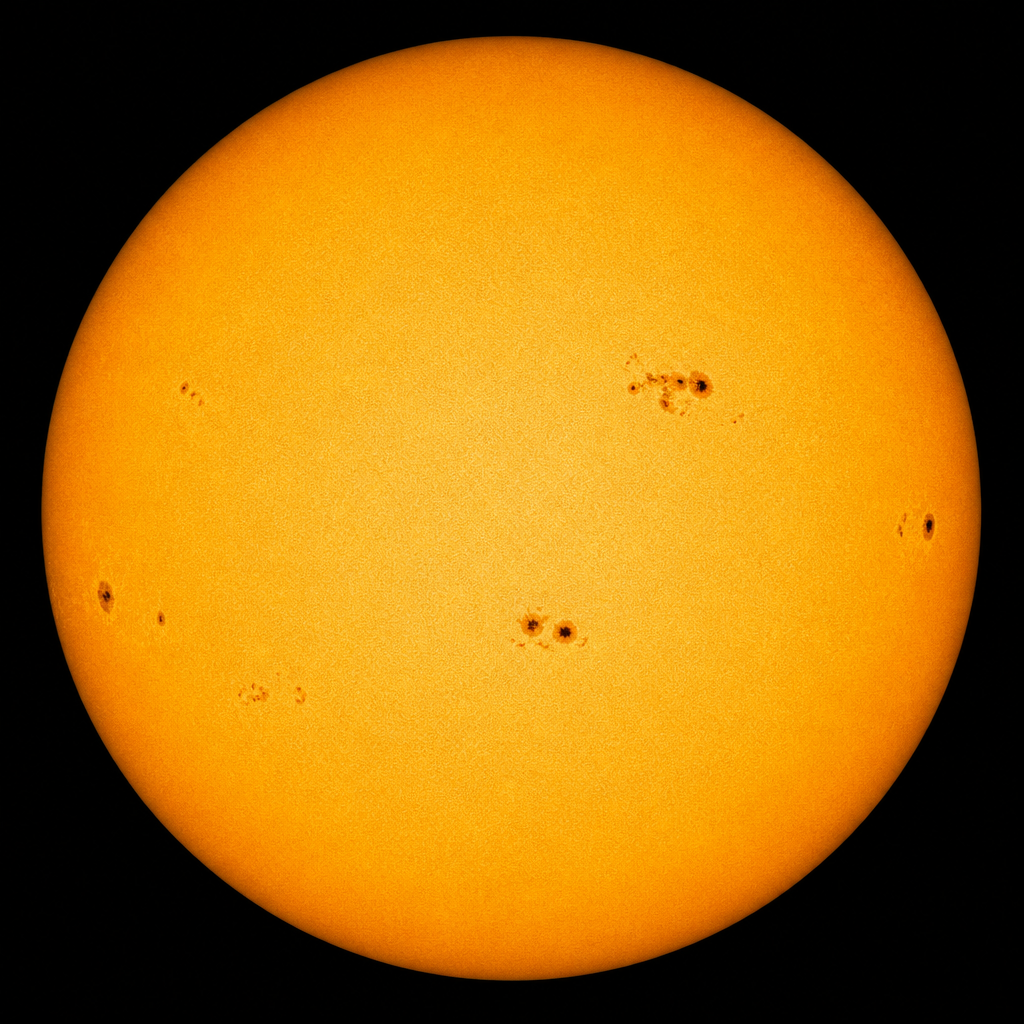
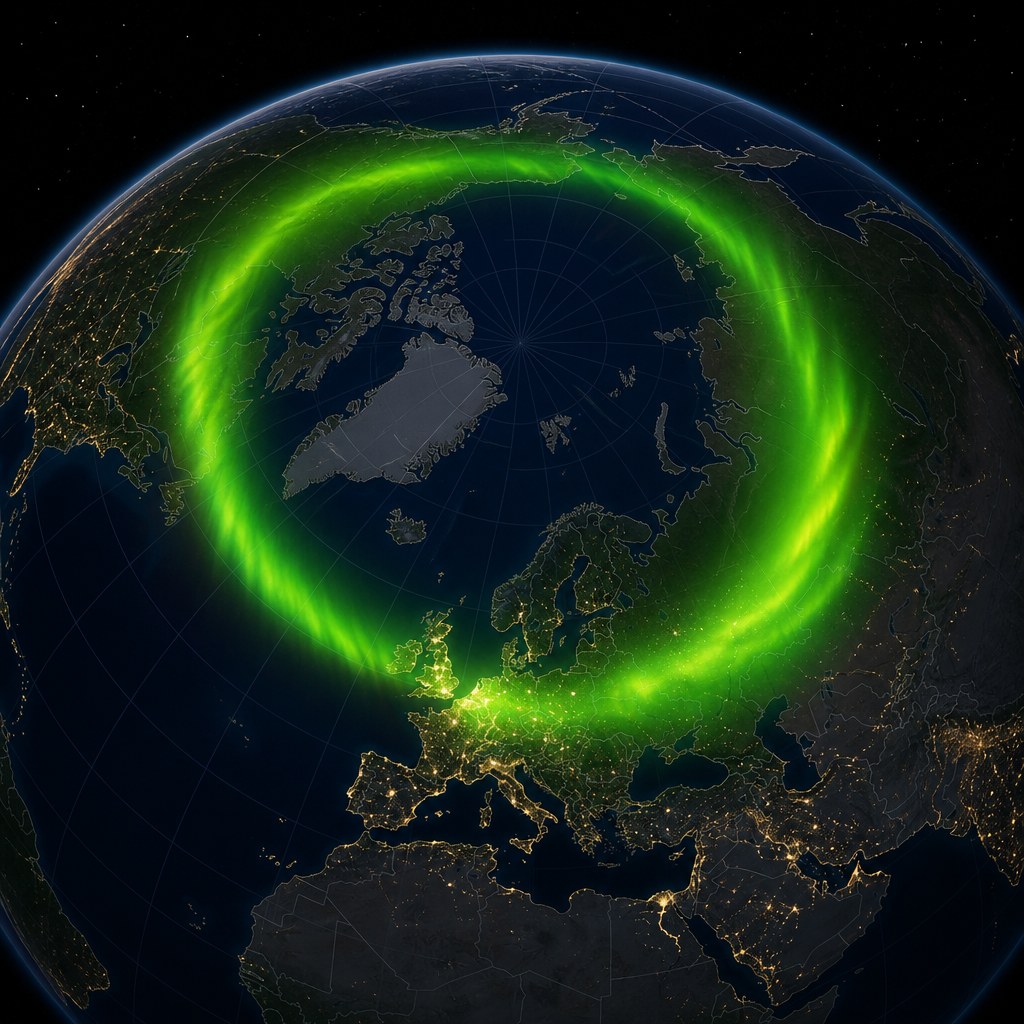
 Current Auroral Oval:


Starlink trains are now part of British weather, and the forecast is crowded
Low-Earth-orbit constellations draw bright strings across UK skies. Dark-sky reserves are where the collision with astronomy is visible to the naked eye.
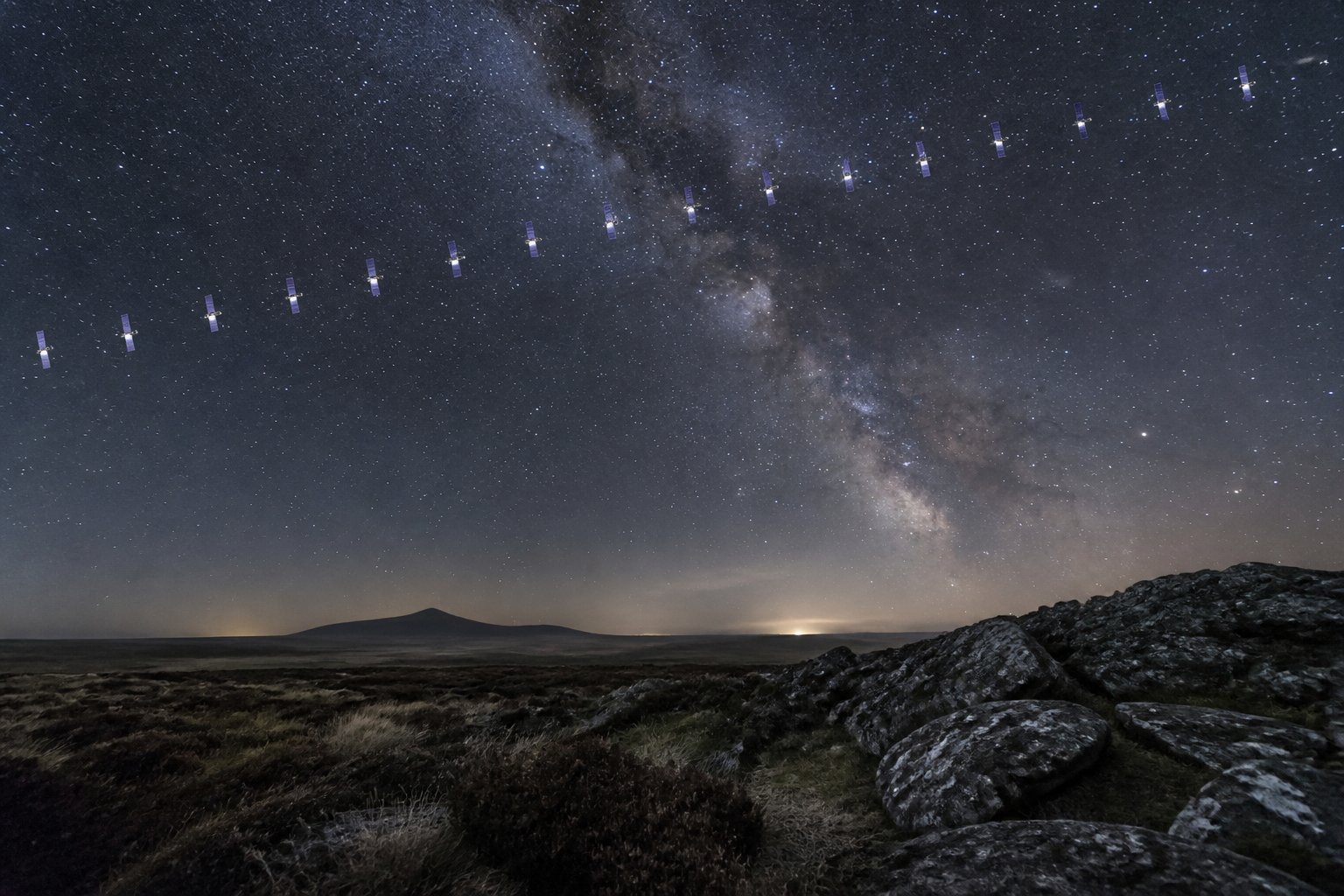
On some UK evenings a string of bright points rises out of the west and slides toward the east, evenly spaced like a punctured dotted line. They are Starlink satellites, or one of the rival constellations now filling low Earth orbit, still in a tightly packed orbit shortly after launch. From a city they compete with sodium. From a dark-sky reserve they are a weather system. Scienception will not pretend this is only an American story. The photons land here.
Astronomers' objections are specific. Wide-field surveys lose pixels. Spectrometers pick up solar reflection. Radio astronomy picks up a different kind of interference. None of that is solved by a darker coating that makes the satellites merely less insulting. Mitigation is real and insufficient at the same time, which is the most annoying kind of true.
Britain's planning system can regulate a barn light in Northumberland. It cannot regulate a satellite registered abroad. That mismatch is the policy story. The RAS and IAU have spent years saying so. Ofcom's licensing of ground stations and the UK's voice in international coordination are the remaining levers. They are not nothing. They are not a dimmer switch.
A new moving weather
Public reaction splits on class lines that make journalists lazy. Rural communities want connectivity. Astronomers want the sky they were promised as children. Both groups pay tax. A serious article names the trade rather than picking a mascot.
Re-entries are rising as constellations refresh. Most burn. Some scatter. The Aerospace Corporation and ESA track the statistics. A bright re-entry over the UK is now a plausible summer evening event. It is not an alien. It is logistics.
You can love rural broadband and still measure the loss of a spectrograph exposure. Grown-up countries hold both thoughts.
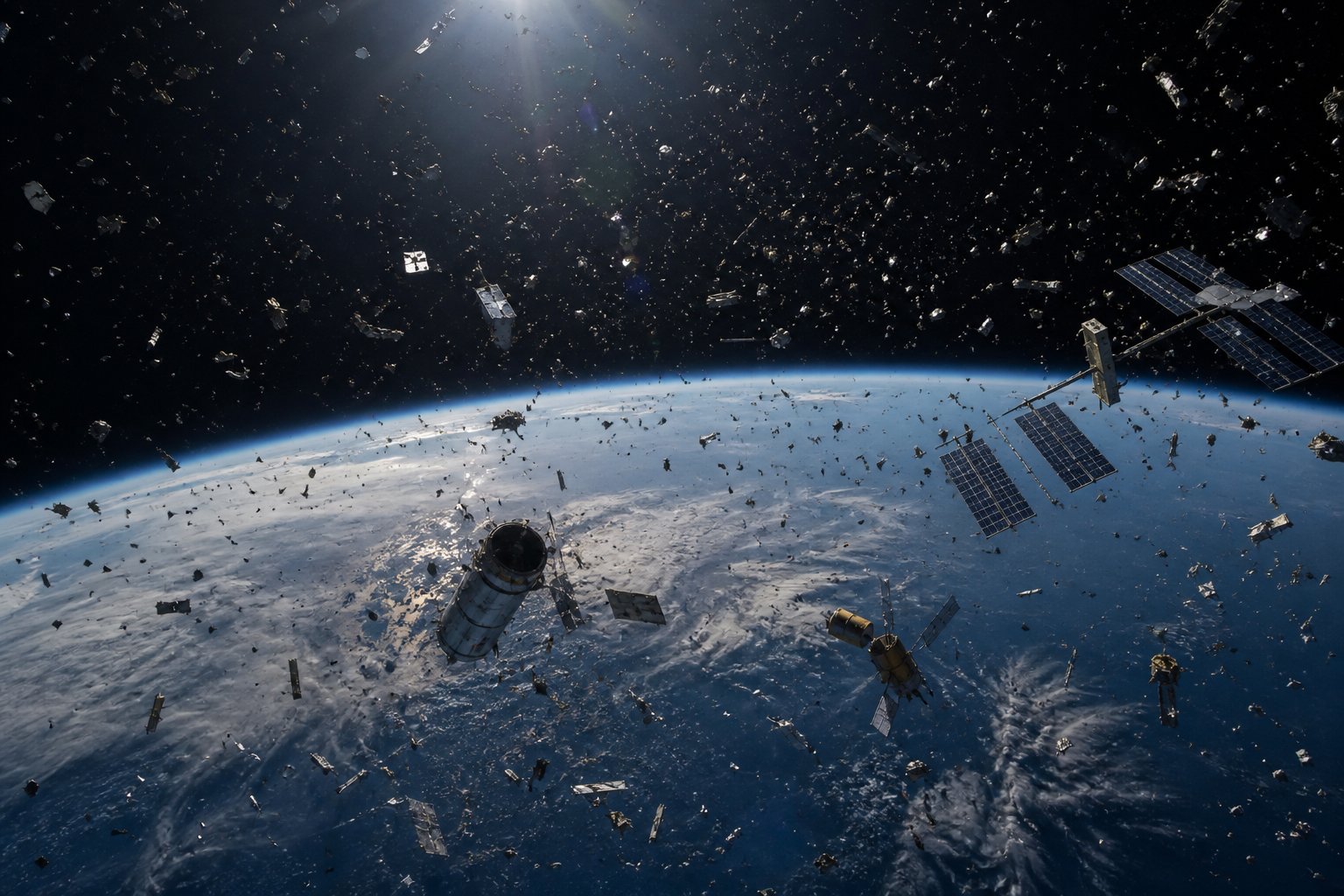
Amateur photographers have started treating trains as a subject. Fine. Science desks should treat them as a cumulative brightness problem. One pretty picture is not a trend. A year of spoiled twilight flats is a trend.
Policy lags the launch cadence
There are dimming technologies and brightness limits being discussed in industry and at the IAU. Scienception will report those without awarding medals until survey scientists say the data improved.
If you watch from Exmoor or Kielder, log the trains as you would log aircraft. They are part of the sky's economy now. Denial is not a observing strategy.
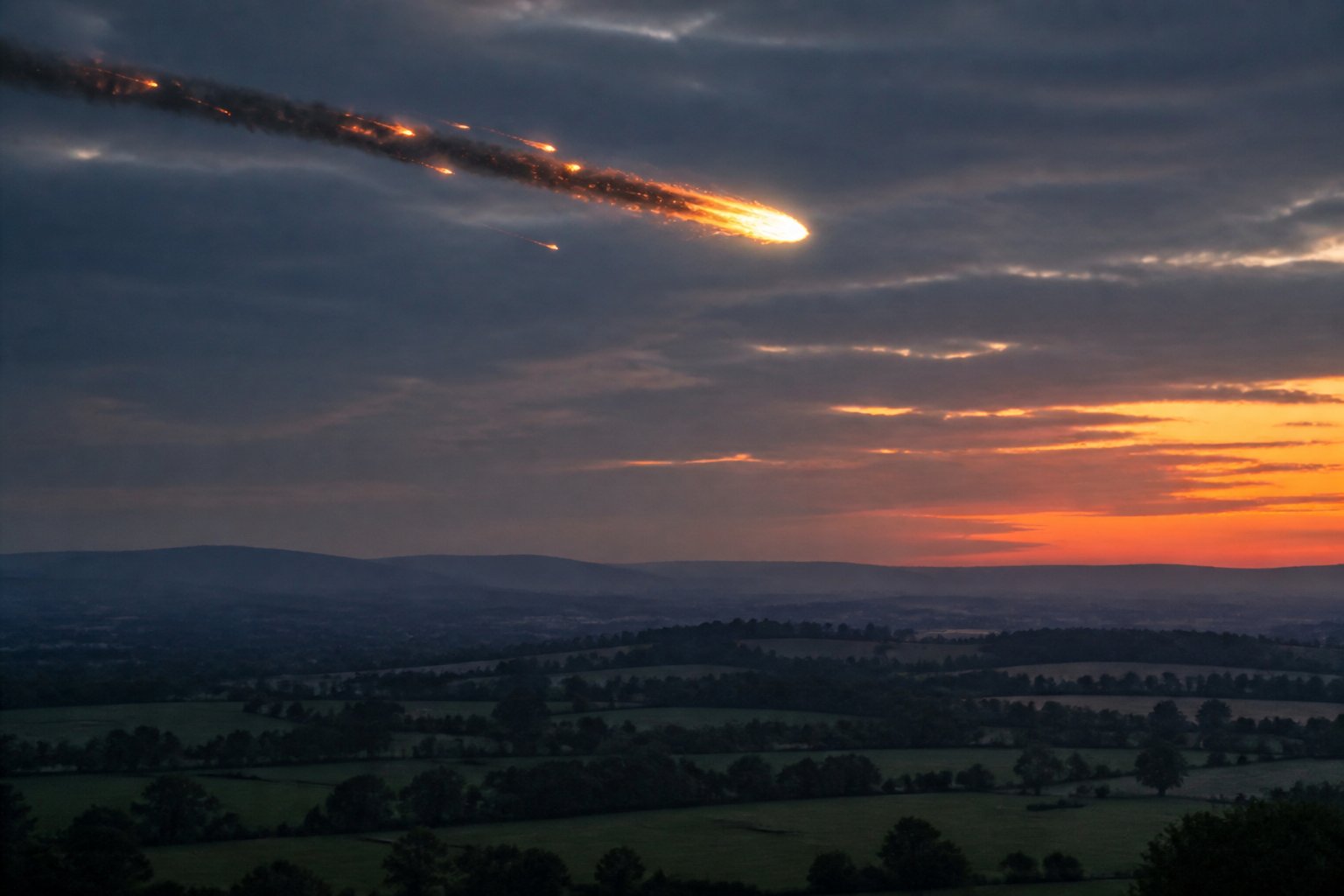
The solar cycle makes drag rise and fall, which changes how quickly low satellites decay. Space weather and megaconstellations are therefore not separate beats. The Sun helps clean the sky and also helps crowd the replacement launches. That loop belongs on this site.
Britain cannot veto a constellation. It can measure, regulate what it touches, and refuse to call a degraded night 'progress' without a sentence of cost.
Further context for UK readers
Exmoor, Snowdonia, the Galloway Forest and Northumberland now share a new seasonal weather: freshly launched trains after dusk. Observers should log batch numbers if they can. Industry should not pretend the logs are hostility.
Radio astronomy at Jodrell and at smaller UK sites lives with a different harm: transmissions. Optical and radio harms are both real. Collapsing them into one complaint helps nobody's lawyer.
Ofcom consultations are where a citizen can still speak. Astronomy societies that only post memes and skip the consultation are choosing folklore over power.
Dimmer satellites are progress and not enough. Survey scientists will say when it is enough. Until they do, do not print a victory.
Rural broadband remains a just demand. A just demand can still have a cost. Politics is naming both. Scienception will name both.
Re-entry counts by month belong on a space-weather site because drag is solar. The constellation is a solar-cycle story wearing a corporate logo.
Astrophotographers stacking hundreds of frames already paint out trails. Professional surveys cannot always do that in the same way. Do not generalise a hobby fix into a science fix.
The sky is becoming an industrial estate. Zoning is the metaphor regulators need. Licensing is the zoning.
How to read this on a UK science desk
What a careful UK reader should actually do with this story is slower than a social feed wants. The live wires are: launch trains, IAU brightness, Ofcom consultations, solar-cycle drag, radio versus optical harm. If a paragraph does not touch one of those wires, it is probably colour. Colour is allowed. It is not a substitute for a product page at the Met Office, BGS, UKRI, ESA, the UK Space Agency, NATS, the CAA, Ofcom, UKAEA, NHS England or the laboratory named in the sources list. Scienception prints editorial snapshots on the left-hand rail so the homepage feels like a conditions desk in the old space-weather style. Those figures are not a live operational feed. If you are making a decision about aviation, the grid, a licence, a clinical pathway or a launch commit, leave this tab and go to the authority, then come back for the argument.
British geography keeps deciding supposedly global science. Magnetic latitude, Atlantic cloud, a coal switchyard, a dark-sky park, a Clyde clean room, a synchrotron on a former airfield, an ice-shelf station, a parish lighting rule: these are not decorations on starlink uk dark skies. They decide whether a result is operational for this country or merely interesting. A model that cannot be checked against a UK sensor is tourism. A policy that cannot be walked to a protocol is speech. We will keep dragging the global noun back to a named place.
There is a records problem in the background of this beat. Time series die when programmes end, when students leave, and when a dashboard is funded instead of a person who knows a sensor's quirks. The cheap way to look modern is a new visualisation. The expensive way that works is to keep the ugly log alive. Magnetograms, ionosondes, light curves, beam-test files, trusted research environments, licence PDFs and anomaly reports are how a democracy stays in the measurement business when the solar cycle, the debris environment or a carbon budget stops being polite.
The public conversation still swings between panic and shrug. Hold two true sentences at once. A minor geomagnetic watch is not a national blackout. A stored tonne of carbon is not a groundbreaking party. A nova that has not erupted is not a failure. A satellite train is not an invasion. Scienception will keep writing as if readers can cope with a caveat, a map, a table and a link. That is the minimum adult form of UK science news, and it is the house style for this article as much as for the conditions rail.
If you work in a school, use the primary links as a single homework: open the Met Office or BGS or ESA page, write down what the official product actually says, and compare it with our kicker. If you work in a control room, steal only the method: name the sensor, name the failure mode, name the British place that would feel it. If you only wanted a picture, look at the figures, then look at the sources. The figures are illustrations. The sources are how you check us. Corrections remain info@scienception.com at Scienception LTD.
Related on Scienception: Greenwich can still teach the sky, if CPRE's night-blight maps are taken seriously · STEP at West Burton is a power-station ghost being asked to become a torus · UKRI's next heliophysics grants will decide whether Britain still measures the Sun

