



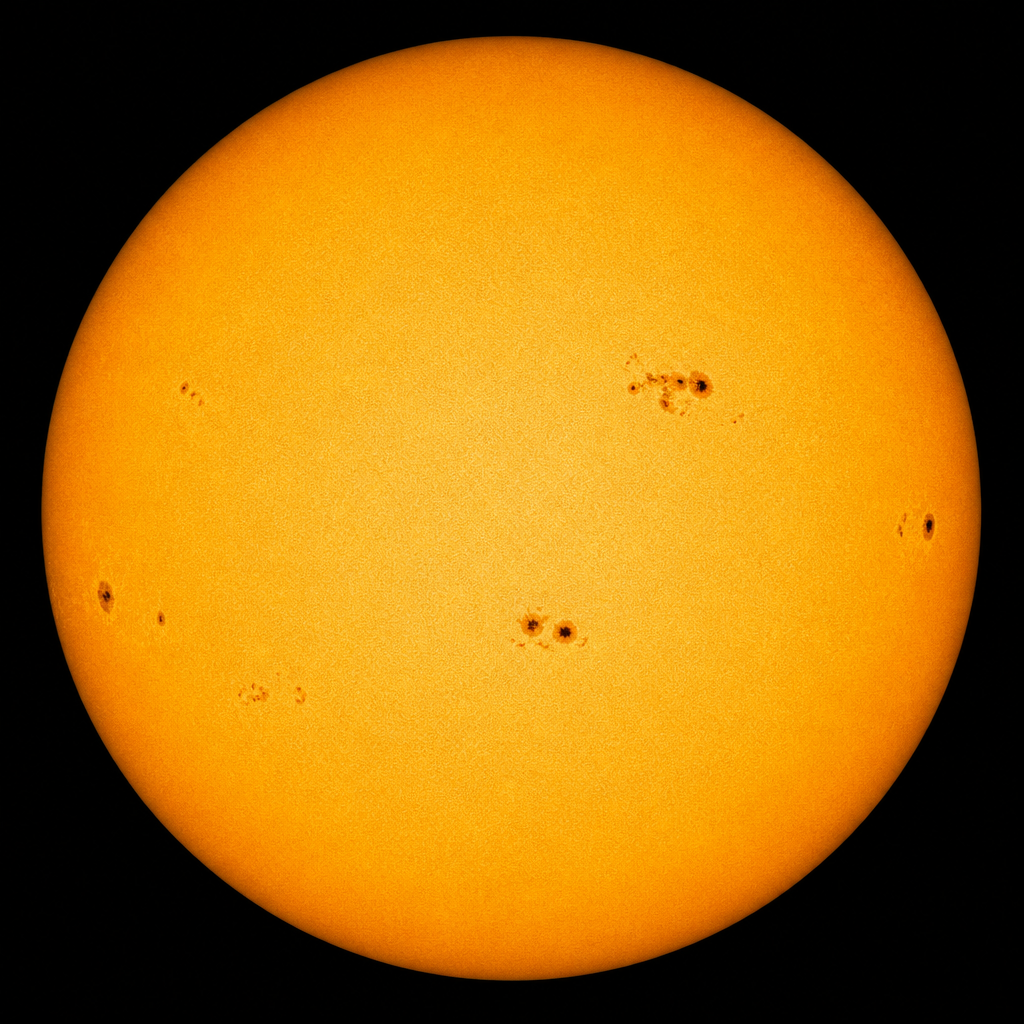
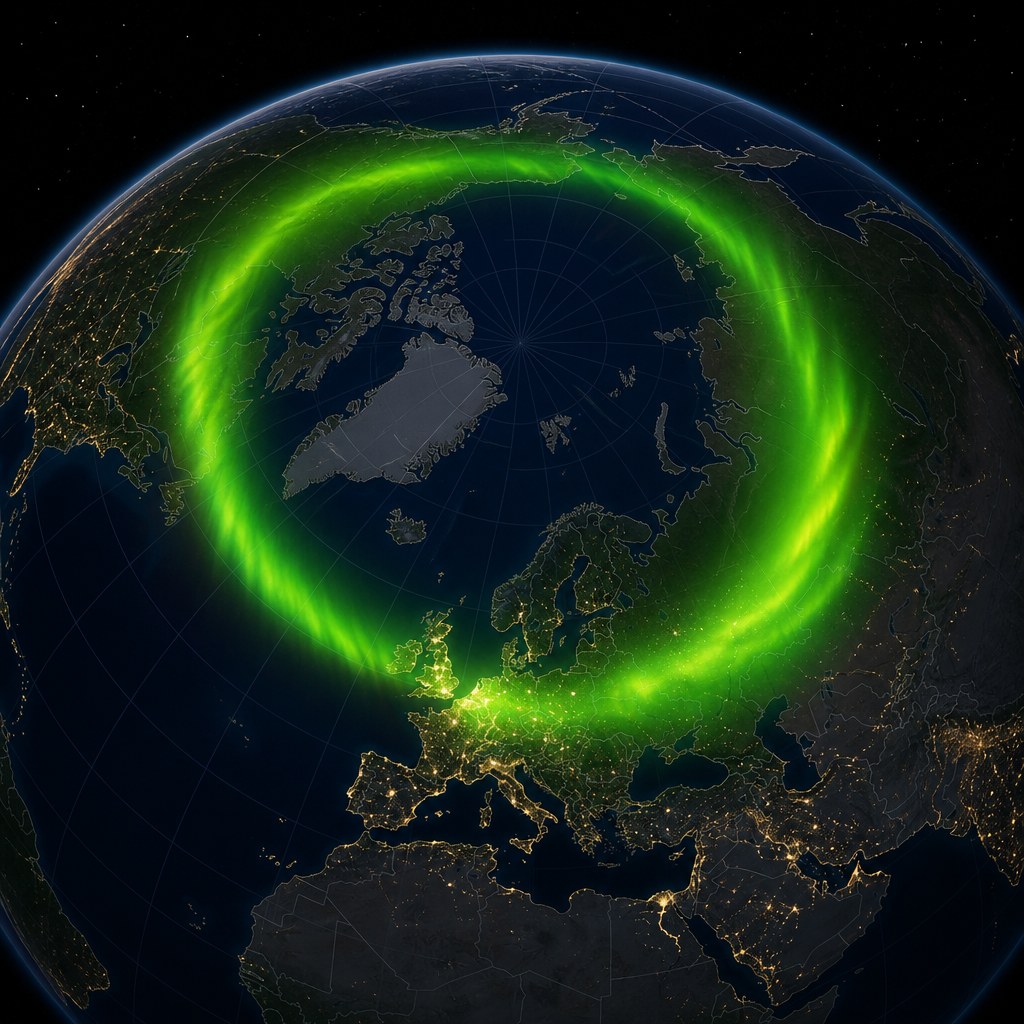
 Current Auroral Oval:


SSTL's Earth-observation buses still have to live in a rude plasma
Surrey Satellite Technology made small EO ordinary. The space environment around those buses is now a product requirement, not a footnote.
SSTL grew up on the University of Surrey's refusal to treat spacecraft as cathedral projects. Small Earth-observation satellites, exported and flown in constellations, became a British industrial fact. The science desk's current interest is not nostalgia for SNAP-1. It is the space-environment sensors and design rules that keep a bus taking pictures while the ionosphere and the solar wind try to charge it. Scienception still files SSTL under industry and under heliophysics, because those files have merged.
Surface charging and internal charging are different failure poems. One lives on the skin in sunlight and shadow. The other lives in dielectrics as energetic electrons bury themselves. Both can look like a mysterious reset to a tired operator. Environment sensors — magnetometers, particle detectors, even simple potential monitors — turn poems into timestamps.
EO customers buy revisit and resolution. They do not like buying radiation models. The companies that survive solar maximum are the ones that smuggled the model into the design review anyway. Guildford's culture, at its best, is that smuggling.
Cameras that cannot ignore charging
There is a UK supply-chain story: detectors, wheels, and software from a radius of a few counties. Space weather does not respect that radius. A storm is global. The response is local engineering.
University of Surrey's academic side still publishes on plasma and spacecraft interaction. That link between a company and a department is easy to break with a clumsy spin-out story. It should be protected like a magnetometer network: unfashionable, national.
You can have a beautiful imager and still lose a week to a surface-charging event you did not budget.
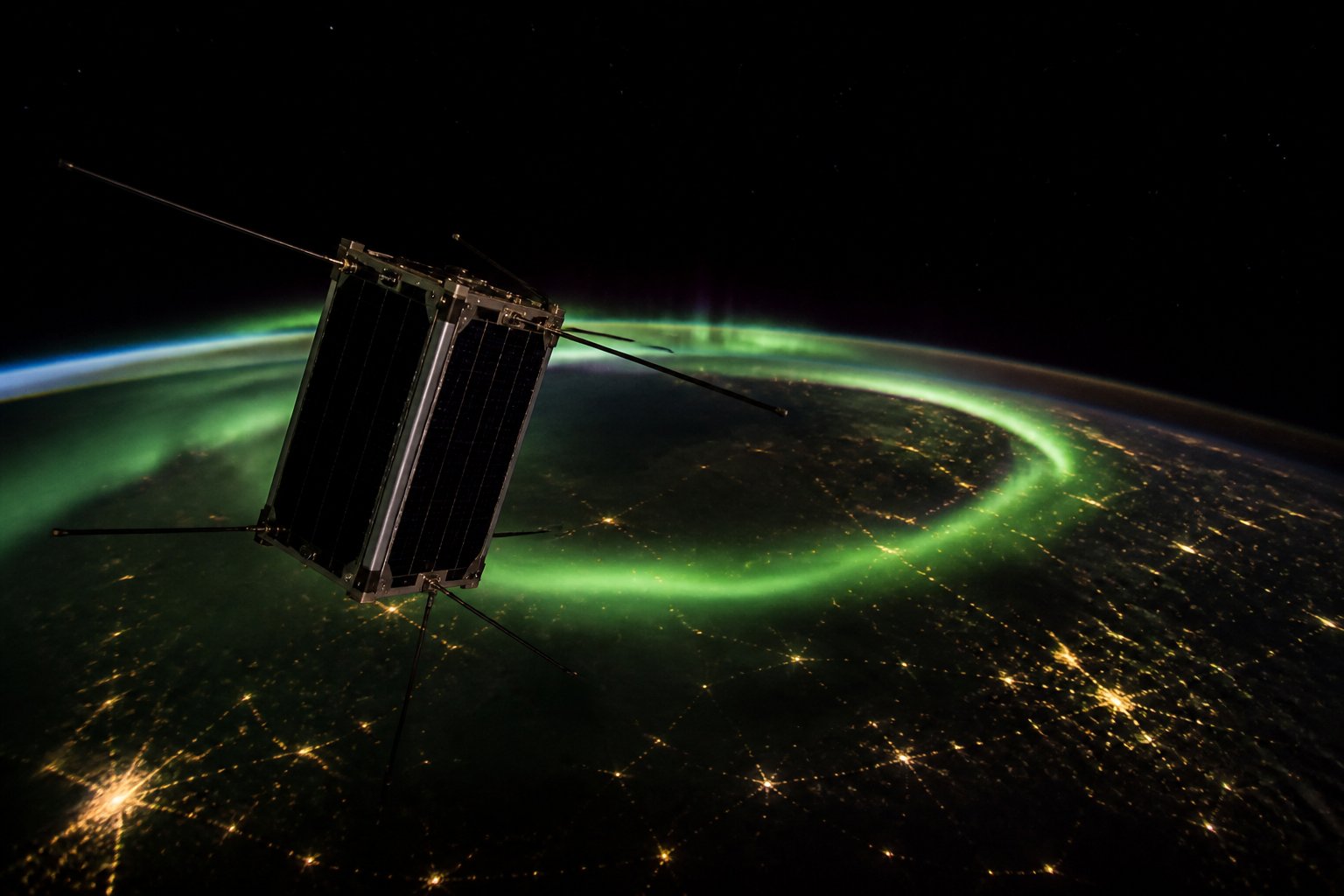
Optical payloads add thermal stability requirements that make eclipse seasons and aurora-induced atmospheric drag second-order villains. Drag at solar maximum lowers orbits. Constellation maintenance burns fuel. That is space weather as an operations cost.
A Guildford habit of flying anyway
Export customers in regions with weaker space-weather services still fly British buses. Documenting anomalies in the open would help them more than a glossy failure-free brochure. Scienception will keep asking.
If you teach engineering, an SSTL-class bus is a better case study than a flagship observatory. Students will meet charging, jitter, and a procurement officer in the same week. That is the job.
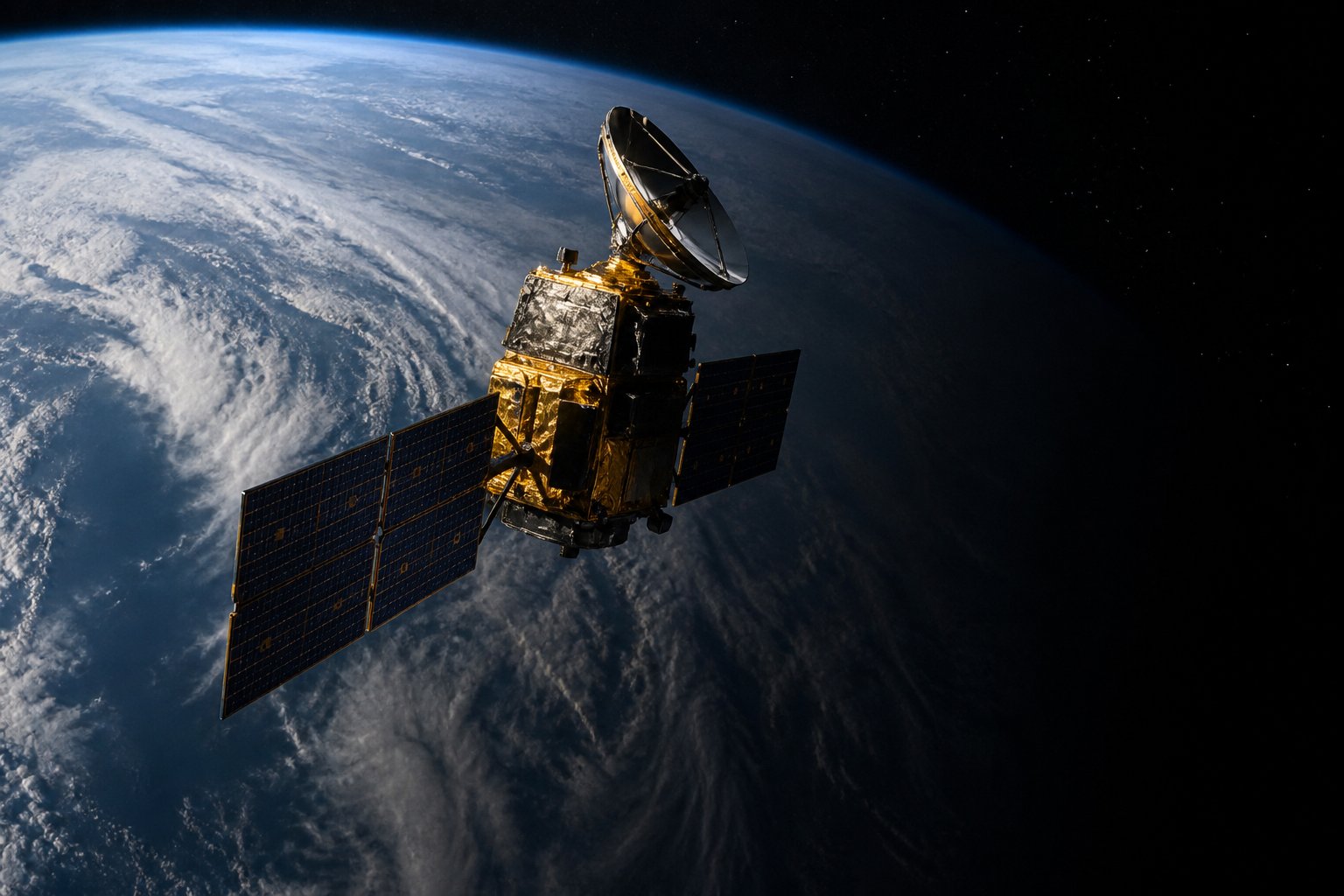
The next decade of EO is hyperspectral, more crowded, and more legally watched. Environment awareness will be part of licence conversations, not only of anomaly reports.
Surrey taught the world that small satellites work. The solar cycle is teaching the world that they work in a weather system. SSTL's remaining trick is to look unsurprised.
Further context for UK readers
Guildford to the world was a real export story. The next chapter is whether the buses still tell the truth about charging when the customer is a government that wants only good news.
Earth observation at solar maximum is a drag story: more atmosphere, more fuel, more decay. Constellation design that ignored F10.7 is now paying. That bill is space weather even if the invoice says propulsion.
University of Surrey's plasma work should remain walking distance from the factory. Spin-outs that move the conversation to a slide deck in London are how craft dies.
Optical payloads fog, ice, and misbehave for thermal reasons more often than for solar protons. Keep the villains straight in the anomaly report.
Export customers deserve the same environment appendix as a UK customer. A double standard will leak.
Potential monitors are cheap compared with a lost week of imaging. Fly them. Scienception will nag.
SSTL's history includes student spacecraft that actually flew. That pedagogical stubbornness is the culture to protect, not a logo.
A plasma does not know it is looking at Surrey. It will charge the bus anyway. Design as if it were rude. It is.
How to read this on a UK science desk
What a careful UK reader should actually do with this story is slower than a social feed wants. The live wires are: Guildford exports, charging timestamps, F10.7 drag, Surrey plasma walking distance, potential monitors. If a paragraph does not touch one of those wires, it is probably colour. Colour is allowed. It is not a substitute for a product page at the Met Office, BGS, UKRI, ESA, the UK Space Agency, NATS, the CAA, Ofcom, UKAEA, NHS England or the laboratory named in the sources list. Scienception prints editorial snapshots on the left-hand rail so the homepage feels like a conditions desk in the old space-weather style. Those figures are not a live operational feed. If you are making a decision about aviation, the grid, a licence, a clinical pathway or a launch commit, leave this tab and go to the authority, then come back for the argument.
British geography keeps deciding supposedly global science. Magnetic latitude, Atlantic cloud, a coal switchyard, a dark-sky park, a Clyde clean room, a synchrotron on a former airfield, an ice-shelf station, a parish lighting rule: these are not decorations on sstl space environment sensors. They decide whether a result is operational for this country or merely interesting. A model that cannot be checked against a UK sensor is tourism. A policy that cannot be walked to a protocol is speech. We will keep dragging the global noun back to a named place.
There is a records problem in the background of this beat. Time series die when programmes end, when students leave, and when a dashboard is funded instead of a person who knows a sensor's quirks. The cheap way to look modern is a new visualisation. The expensive way that works is to keep the ugly log alive. Magnetograms, ionosondes, light curves, beam-test files, trusted research environments, licence PDFs and anomaly reports are how a democracy stays in the measurement business when the solar cycle, the debris environment or a carbon budget stops being polite.
The public conversation still swings between panic and shrug. Hold two true sentences at once. A minor geomagnetic watch is not a national blackout. A stored tonne of carbon is not a groundbreaking party. A nova that has not erupted is not a failure. A satellite train is not an invasion. Scienception will keep writing as if readers can cope with a caveat, a map, a table and a link. That is the minimum adult form of UK science news, and it is the house style for this article as much as for the conditions rail.
If you work in a school, use the primary links as a single homework: open the Met Office or BGS or ESA page, write down what the official product actually says, and compare it with our kicker. If you work in a control room, steal only the method: name the sensor, name the failure mode, name the British place that would feel it. If you only wanted a picture, look at the figures, then look at the sources. The figures are illustrations. The sources are how you check us. Corrections remain info@scienception.com at Scienception LTD.
Related on Scienception: Spaceport Cornwall is still a science story about horizontal payloads, not a postcard of a runway · Saxavord's latitude is a launch asset and a space-weather classroom · Glasgow's smallsat factories now sell radiation hardness as a feature

