



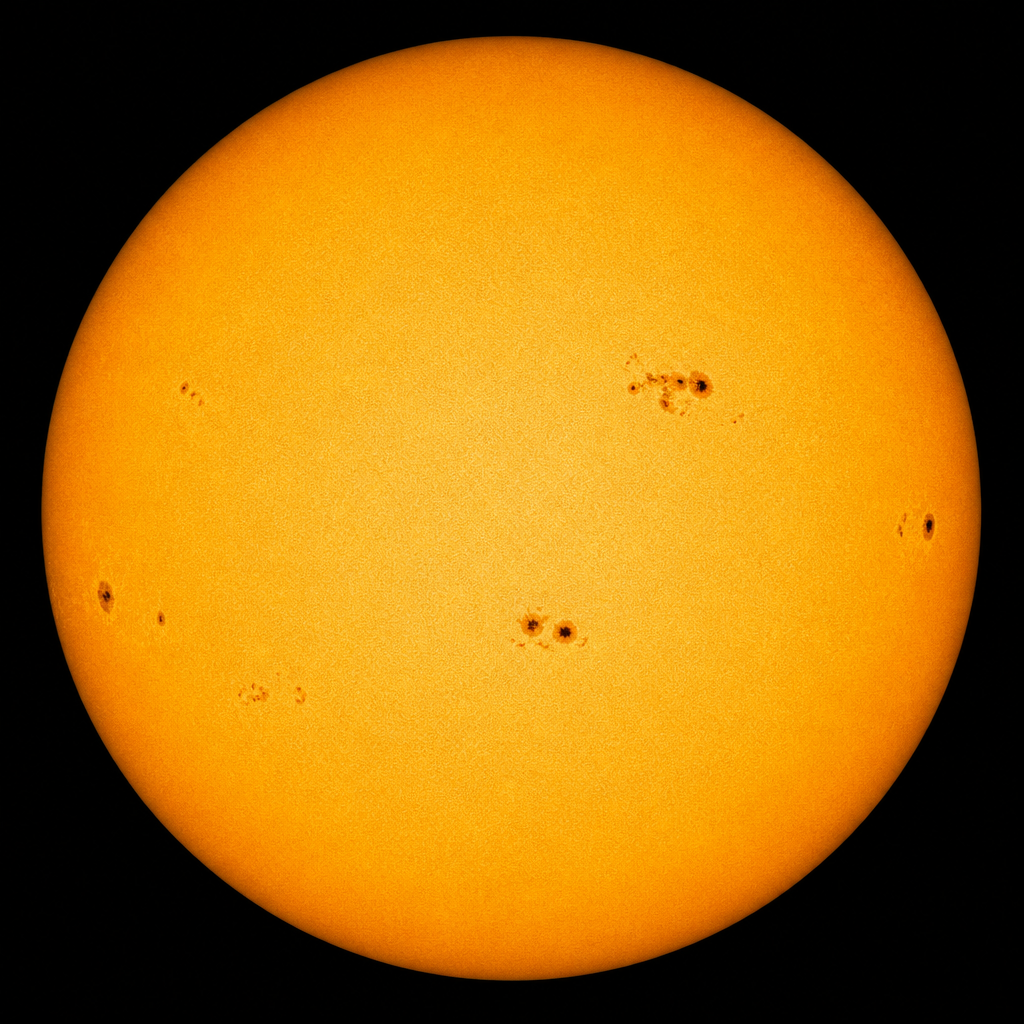
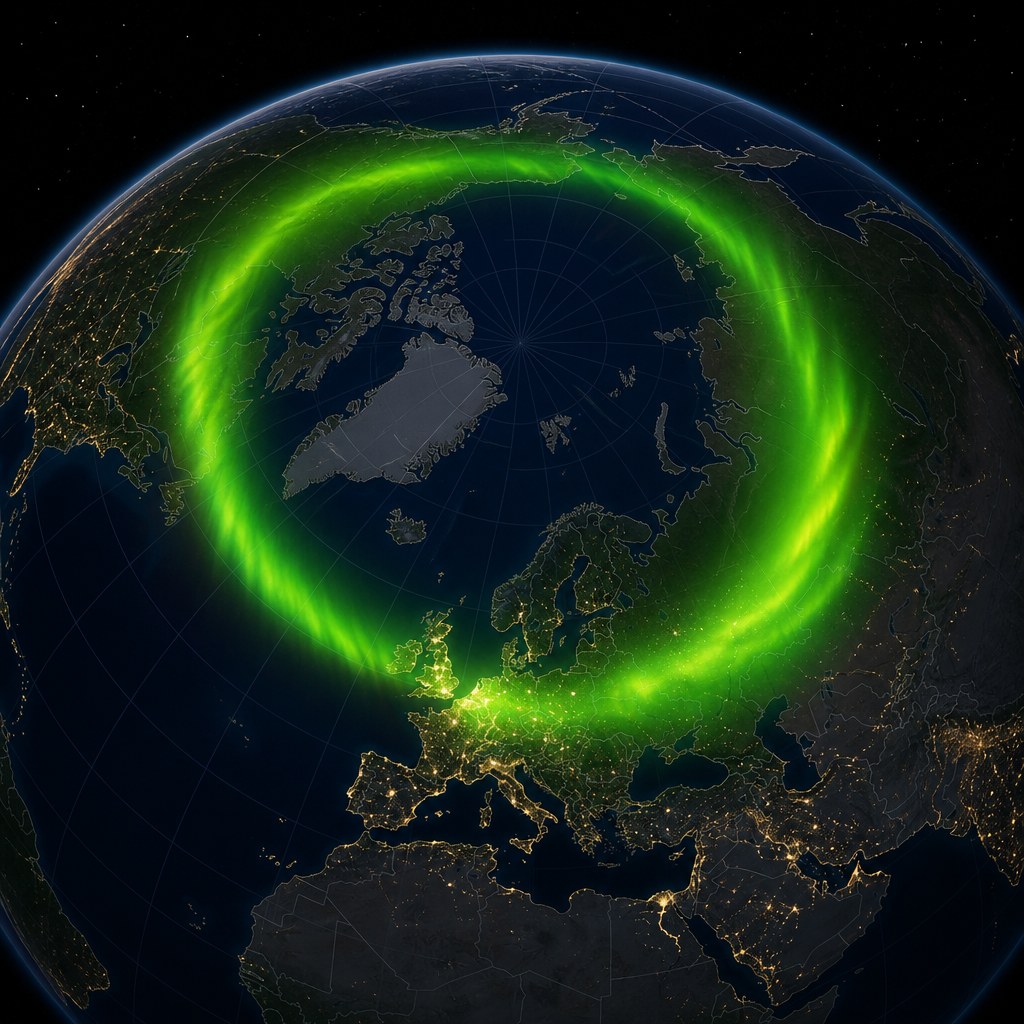
 Current Auroral Oval:


Satellite re-entries over the UK are becoming a summer evening genre
Most burn harmlessly. A few put on a slow, fragmenting show that is not a meteor shower and not an alien.
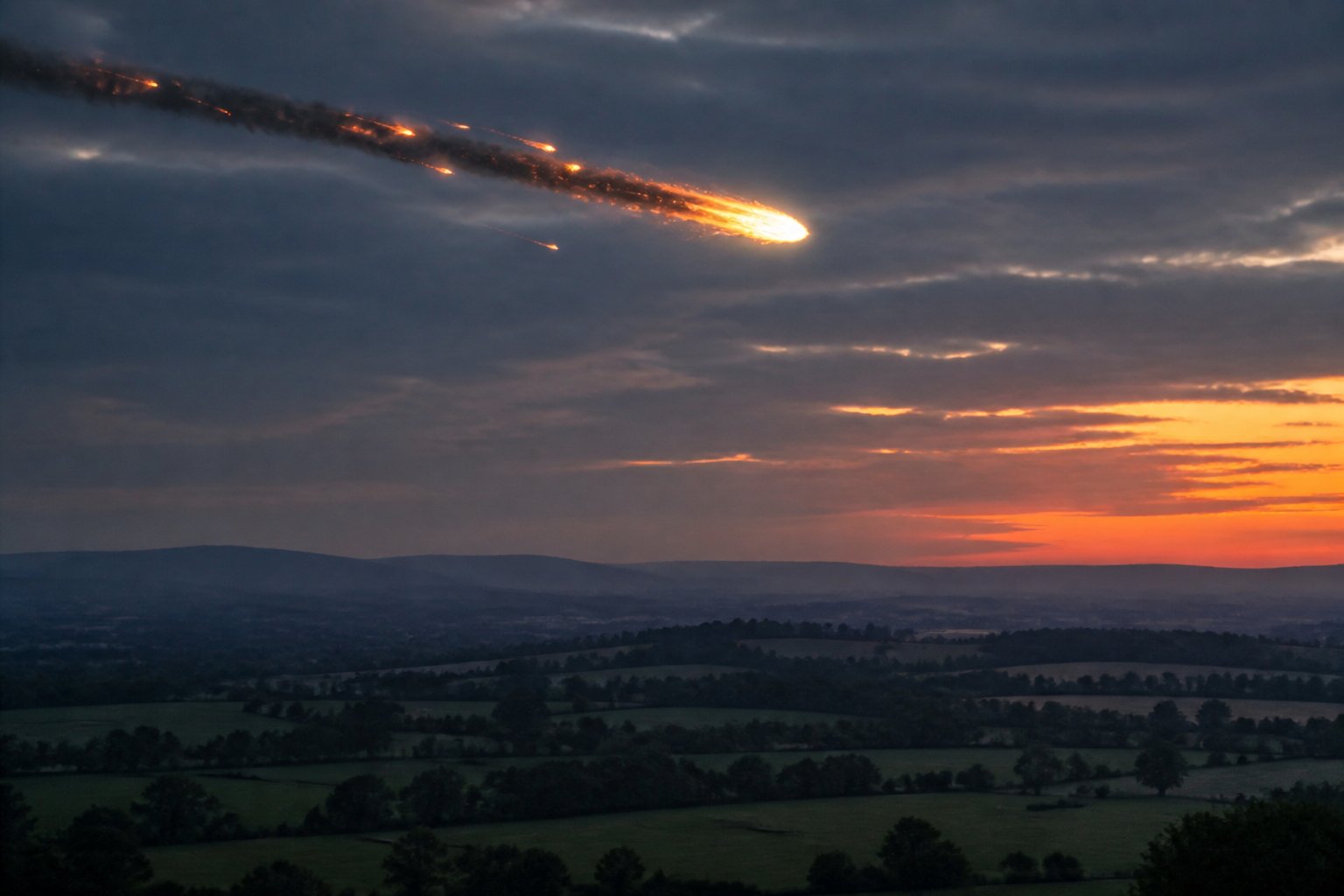
A satellite re-entry visible from the UK is no longer a once-a-decade campfire story. Constellation refresh cycles and solar-maximum drag have increased the number of objects that come down, and a fraction of those passages happen in darkness over populated islands that like to look up. Scienception wants the identification to be boring: predicted, slow, fragmenting, and mostly harmless.
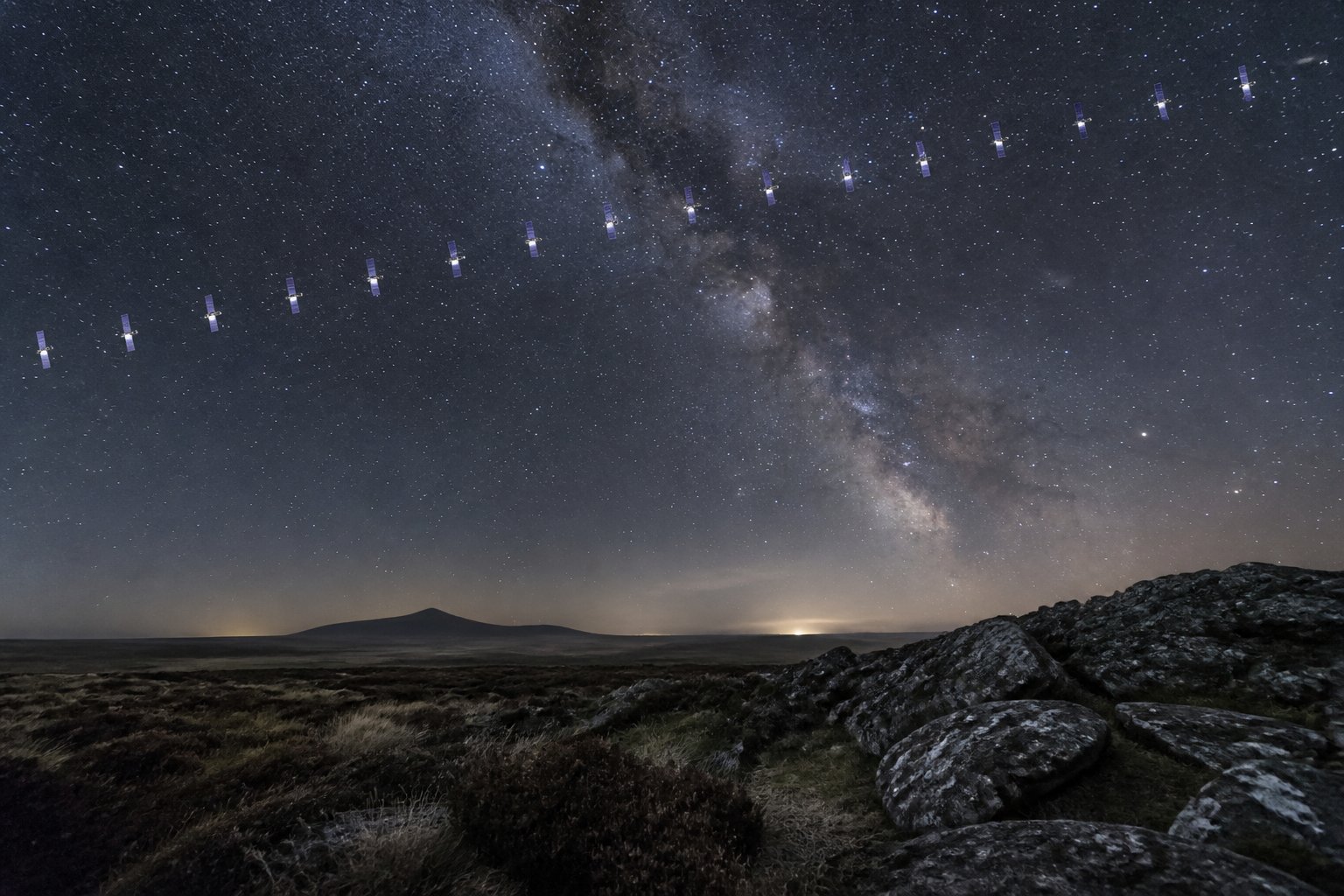
Meteors are fast and usually gone in a blink. Re-entries are slower, often orange, and can cross much of the sky while shedding bits. If your clip looks like a firework procession, search a re-entry forecast before you search a conspiracy forum.
The Aerospace Corporation and other trackers publish predictions with uncertainty. Weather and last-minute drag make the footprint a ribbon, not a pin. People who demand a postcode are asking the atmosphere to be a spreadsheet.
Slow streaks with a bureaucracy behind them
Risk to the ground is low for most objects and not zero for large ones. Honesty holds both. Sensational maps of 'it could hit your house' without a probability are vandalism.
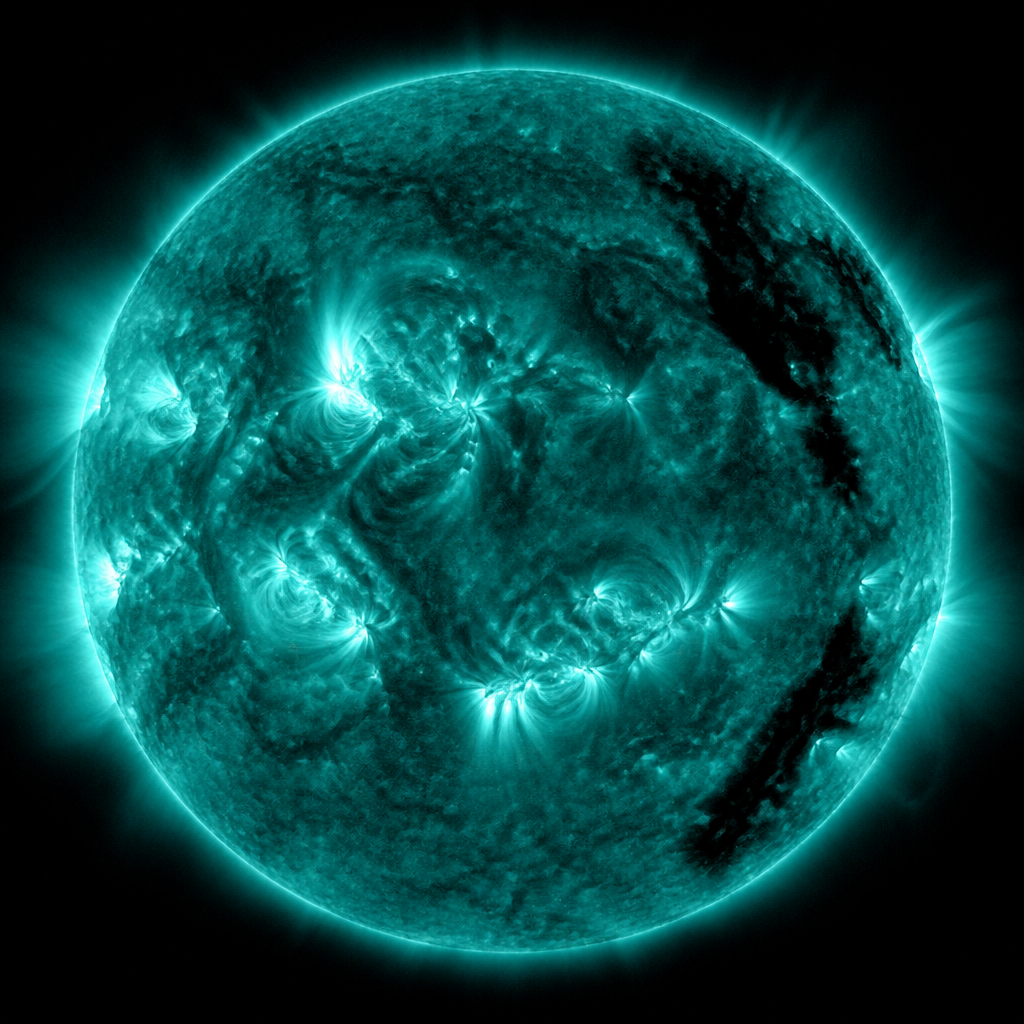
Solar activity is the hidden protagonist. A puffed thermosphere drags low objects down faster. Solar Cycle 25 is therefore a sanitation worker as well as an aurora factory. That duality belongs in the caption.
If it takes twenty seconds and comes to pieces like a string of beads, it is probably us, coming home.
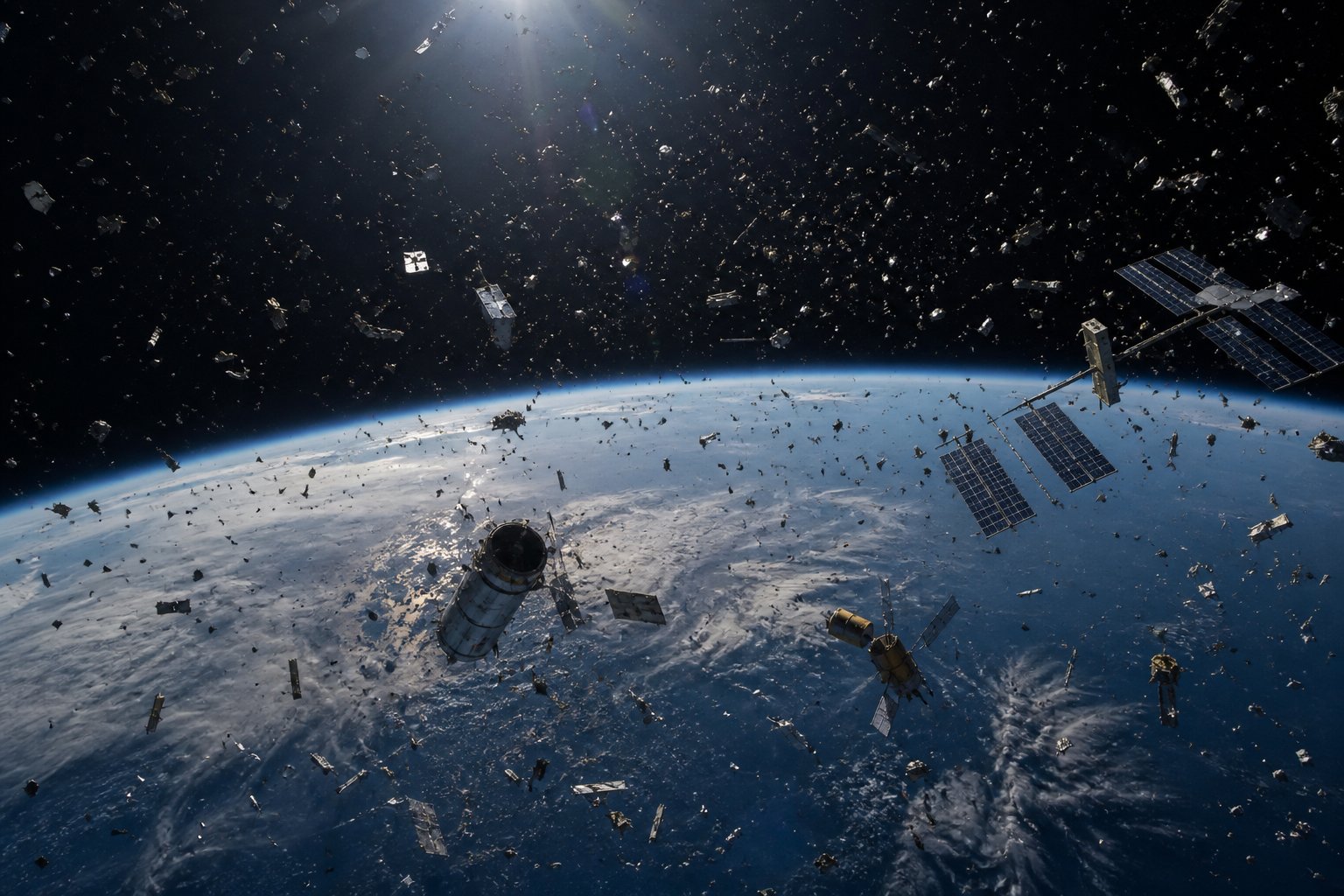
Operators who design for demise — materials that burn — are doing the adult version of leaving no trace. Operators who do not should not get a quiet licence renewal.
How to tell a re-entry from a fireball
UKMON-style cameras will catch re-entries and meteors in the same night. Labelling is the science. A mislabelled viral clip pollutes both datasets in the public mind.
Scienception will post a short explainer next to any notable UK-visible re-entry rather than a mystery headline. Mystery headlines are lazy.
If debris ever causes damage here, the story becomes law and insurance. Until then, the story is identification and design for demise.
Look up. Then look up the catalogue. The second look is what makes it science.
Further context for UK readers
Solar-maximum drag is a sanitation worker. It brings objects down faster. It also crowds the replacement launches. Print the loop.
Twenty seconds and a bead of fragments is us coming home. A blink is a meteor. Teach the difference until the group chats learn it.
Uncertainty ribbons are honest. Postcode promises are not. The atmosphere is not a spreadsheet.
Risk is low and not zero for large objects. Both clauses. Delete either and you are vandalising.
UKMON cameras will catch both classes of streak. Labelling is the science. Viral mislabels are pollution.
Scienception will use an explainer, not a mystery headline. Mystery is lazy. Logistics is the genre.
Design for demise is leave-no-trace for orbit. Reward it in licences. Do not reward a quiet explosion of titanium over a county.
Look up, then look up the catalogue. The second look is the scientific method in a village.
How to read this on a UK science desk
What a careful UK reader should actually do with this story is slower than a social feed wants. The live wires are: bead procession, catalogue second look, demise design, uncertainty ribbon, UKMON labels. If a paragraph does not touch one of those wires, it is probably colour. Colour is allowed. It is not a substitute for a product page at the Met Office, BGS, UKRI, ESA, the UK Space Agency, NATS, the CAA, Ofcom, UKAEA, NHS England or the laboratory named in the sources list. Scienception prints editorial snapshots on the left-hand rail so the homepage feels like a conditions desk in the old space-weather style. Those figures are not a live operational feed. If you are making a decision about aviation, the grid, a licence, a clinical pathway or a launch commit, leave this tab and go to the authority, then come back for the argument.
British geography keeps deciding supposedly global science. Magnetic latitude, Atlantic cloud, a coal switchyard, a dark-sky park, a Clyde clean room, a synchrotron on a former airfield, an ice-shelf station, a parish lighting rule: these are not decorations on satellite reentries visible uk. They decide whether a result is operational for this country or merely interesting. A model that cannot be checked against a UK sensor is tourism. A policy that cannot be walked to a protocol is speech. We will keep dragging the global noun back to a named place.
There is a records problem in the background of this beat. Time series die when programmes end, when students leave, and when a dashboard is funded instead of a person who knows a sensor's quirks. The cheap way to look modern is a new visualisation. The expensive way that works is to keep the ugly log alive. Magnetograms, ionosondes, light curves, beam-test files, trusted research environments, licence PDFs and anomaly reports are how a democracy stays in the measurement business when the solar cycle, the debris environment or a carbon budget stops being polite.
The public conversation still swings between panic and shrug. Hold two true sentences at once. A minor geomagnetic watch is not a national blackout. A stored tonne of carbon is not a groundbreaking party. A nova that has not erupted is not a failure. A satellite train is not an invasion. Scienception will keep writing as if readers can cope with a caveat, a map, a table and a link. That is the minimum adult form of UK science news, and it is the house style for this article as much as for the conditions rail.
If you work in a school, use the primary links as a single homework: open the Met Office or BGS or ESA page, write down what the official product actually says, and compare it with our kicker. If you work in a control room, steal only the method: name the sensor, name the failure mode, name the British place that would feel it. If you only wanted a picture, look at the figures, then look at the sources. The figures are illustrations. The sources are how you check us. Corrections remain info@scienception.com at Scienception LTD.
A bead of orange fragments crossing a county is logistics coming home, not a shower and not a mystery. Solar-maximum drag is both janitor and launch-repeat customer. Use the catalogue, use the cameras, use the word demise. Scienception will keep the genre boring on purpose, because boring identification is how you stop a village inventing a threat.
Related on Scienception: Coronal-hole streams still ruin UK amateur radio in the most educational way · Perseids over Northumberland still beat a phone screen, if the Moon allows · UKMON fireballs are turning casual streaks into orbits

