



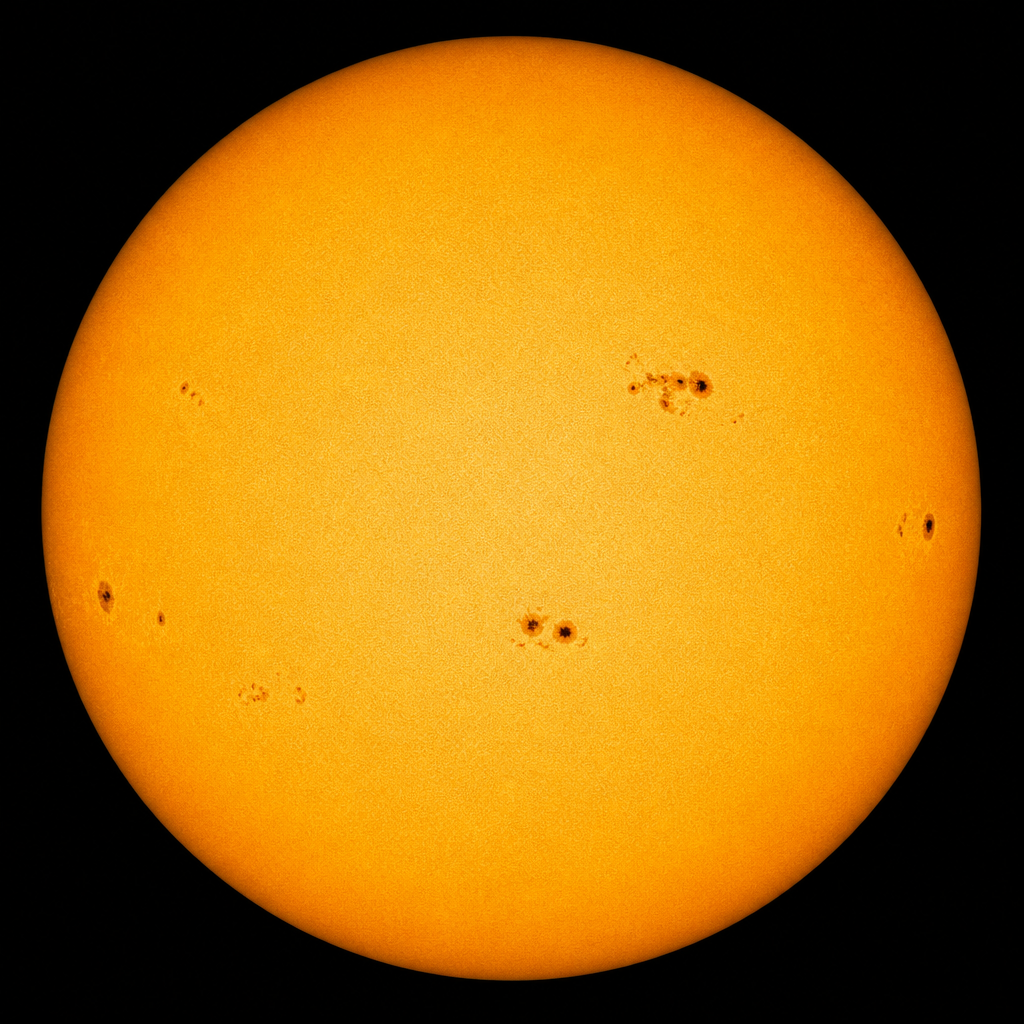
 Current Auroral Oval:


Armagh Observatory still does the unfashionable work of following near-Earth objects
Northern Ireland's historic observatory remains part of the global chain that turns a newly spotted asteroid into a measured orbit.
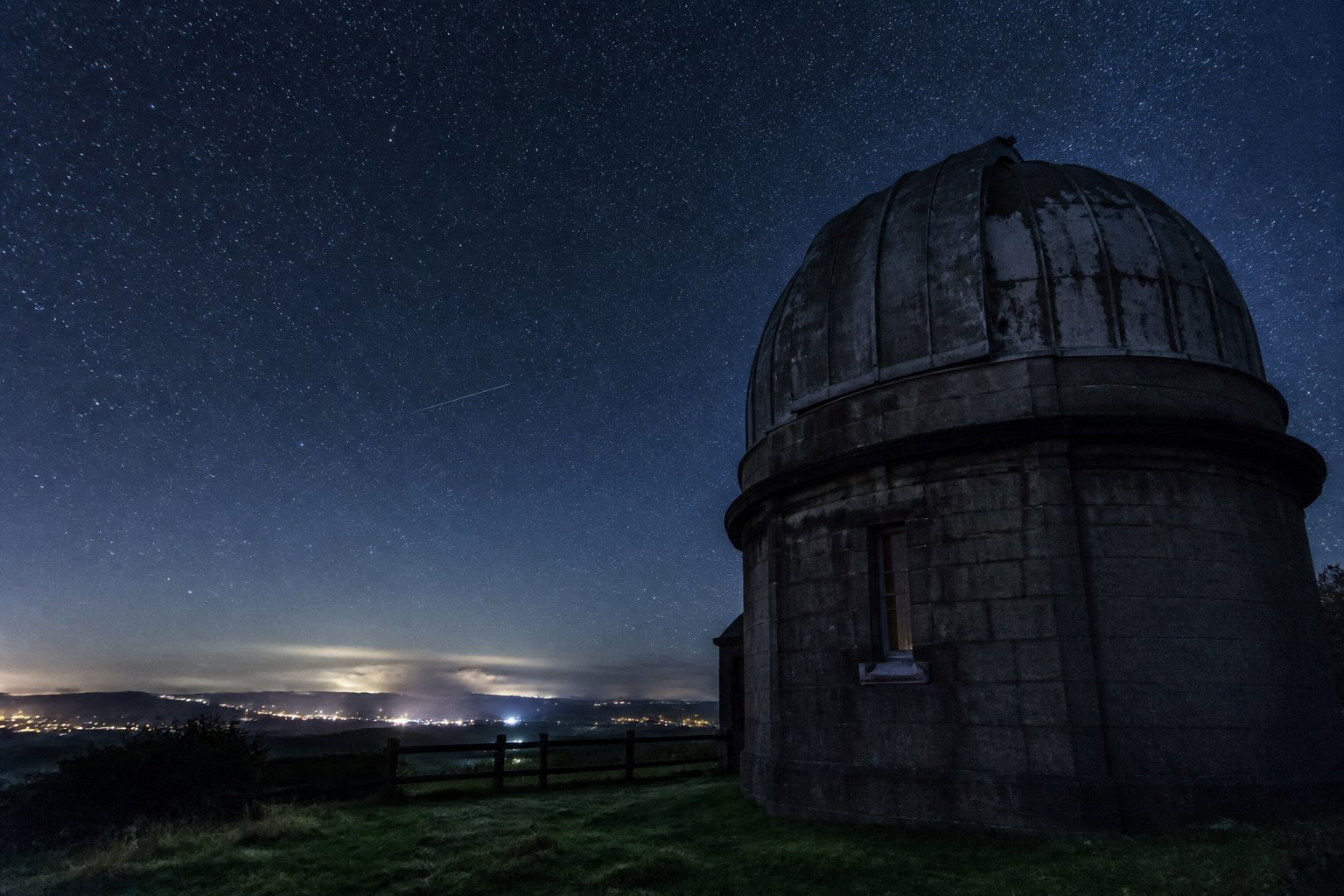
Armagh Observatory and Planetarium sits on a hill that has been measuring the sky since 1790. That would be a heritage story on its own. It is also a working node in the worldwide follow-up of near-Earth objects (NEOs). When a survey telescope in another hemisphere flags a fast-moving object, someone has to measure it again before it fades. Scienception went to the idea of Armagh, if not the car park, because planetary defence is a chain and Britain still holds a few of the links.
Surveys discover. Follow-up refines. Without the second job, orbits are rubber. The International Astronomical Union's Minor Planet Center still lives on astrometric submissions. ESA's planetary-defence work, including the Near-Earth Object Coordination Centre, depends on that culture. A UK observatory that still does astrometry is therefore not a museum with a sideline. It is part of a warning system that mostly produces all-clears.
Potentially hazardous asteroids are defined by size and by how close they can come, not by a Hollywood probability. None of the known PHAs is on an impact trajectory with Earth in the foreseeable calculated window. New ones appear because surveys improve. That sentence should be printed larger than any artist's impression of a tsunami.
Discovery is not the same as follow-up
Northern Ireland's weather is not Arizona's. Armagh's contribution is stubbornness and photometry under Gulf Stream skies. Students who learn error bars on a mediocre night become better scientists than students who only reduce perfect data from a desert they have never visited.
There is a funding tension familiar across UK astronomy. Public planetarium seats pay some bills. Research time on modest apertures does not trend. If follow-up work is treated as optional, we will still have stunning survey images from abroad and a thinner British ability to say what those images mean.
A potentially hazardous asteroid is a definition about size and approach distance. It is not a prophecy. Confusing those has wasted more public attention than any real impactor in our lifetime.
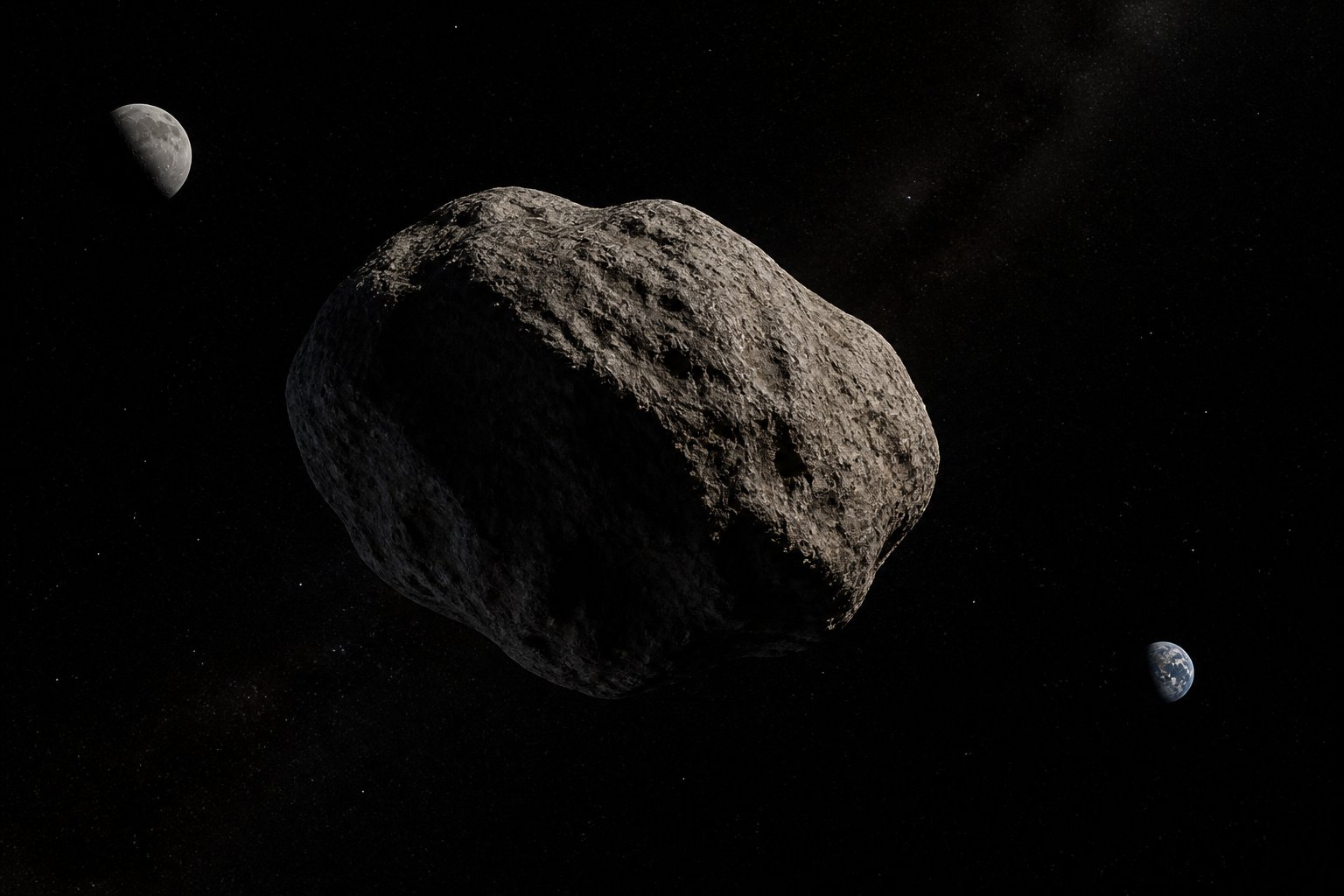
Close approaches measured in lunar distances make good tables. Scienception will keep a table on the homepage because it is the honest visual: lots of small rocks, large miss distances, a few interesting ones. It is not a countdown.
Hazard is a calculation, not a film
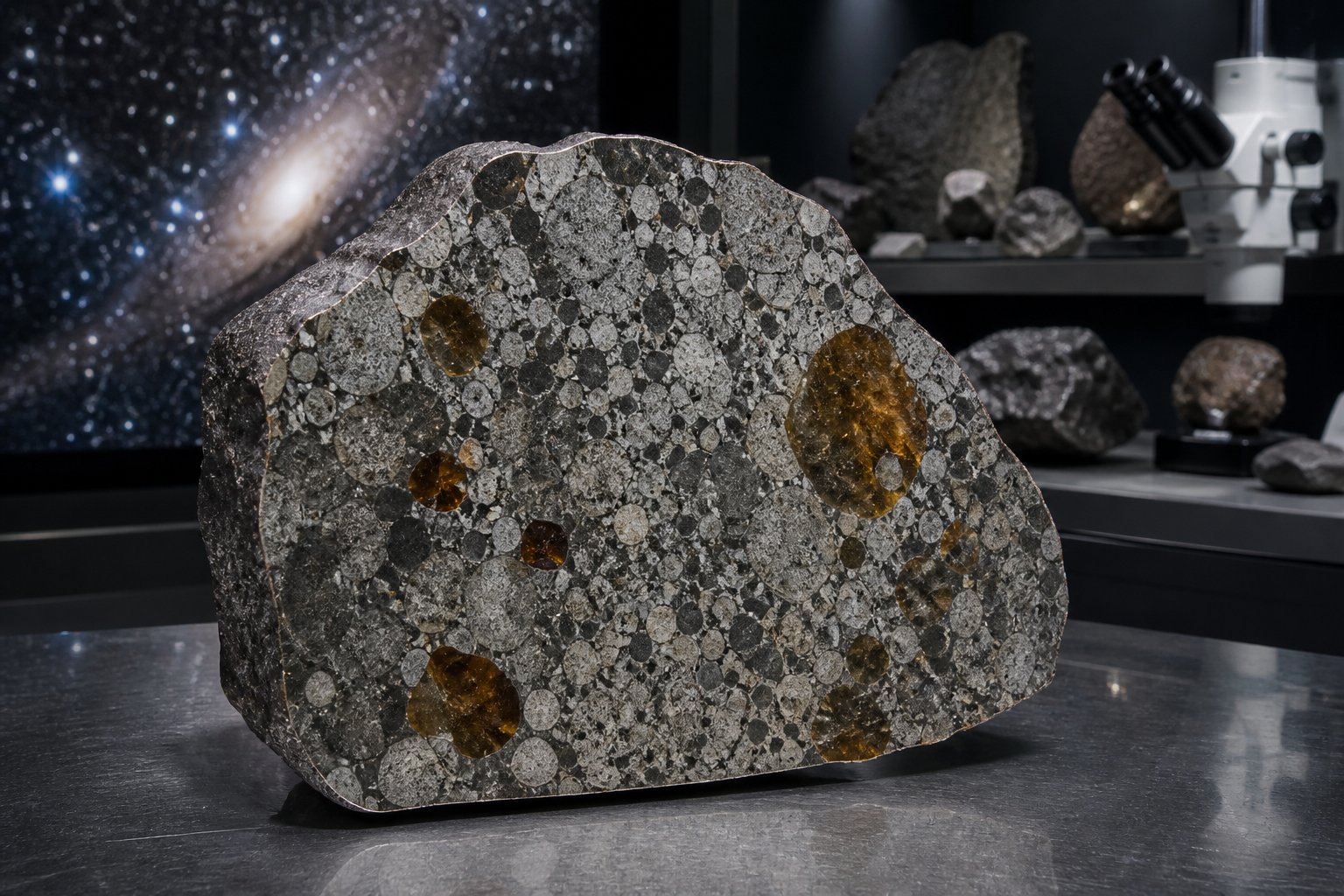
Spectroscopy and light curves add composition and shape. Those are how you know whether a future deflection test would be hitting a rubble pile or a shard. Armagh's wider research culture, including stellar work, sits beside that solar-system duty. Mixed observatories are healthy observatories.
If a genuine impactor were found with decades of warning, the story would move to policy, spacecraft and diplomacy. We are not in that story. We are in the story of keeping the census accurate. That is less exciting and more adult.
Visit the planetarium if you like. Then look up the latest NEO confirmation page. The second visit is the science.
Asteroids do not care about borders. Follow-up telescopes do. Ireland's magnetic latitude and Britain's administrative one both meet in Armagh, which is a very Ulster way to do planetary defence.
Further context for UK readers
1790 is not a branding exercise. It is a reminder that orbits were a British-Irish craft before they were a NASA craft. Continuity is allowed to be a virtue.
Follow-up in twilight is miserable and necessary. Fast NEOs hide near the Sun in the sky. Someone has to lose sleep. Archives do not collect themselves.
ESA's planetary-defence work needs many small telescopes more than it needs another infographic of a dinosaur. Armagh is a small telescope with a long memory.
Photometric filters and star catalogues sound clerical. They are how you do not invent a hazard. Clerical work is planetary defence.
Planetarium tickets pay for public love. Research time pays for the census. A director who can hold both thoughts is doing the job. A director who can hold only one is doing half.
Close-approach tables on Scienception are a literacy tool. They are not a threat board. If your pulse rises at 4.5 LD, read the diameter column. Then sit down.
Northern Ireland weather teaches error bars. Students who reduce a half-night of data learn more than students who wait for Chile.
If Armagh stopped submitting astrometry, nobody's app would break tomorrow. The census would be slightly worse. That is how capability dies: slightly.
How to read this on a UK science desk
What a careful UK reader should actually do with this story is slower than a social feed wants. The live wires are: 1790 continuity, twilight follow-up, ESA NEOCC, close-approach tables, weather as error bars. If a paragraph does not touch one of those wires, it is probably colour. Colour is allowed. It is not a substitute for a product page at the Met Office, BGS, UKRI, ESA, the UK Space Agency, NATS, the CAA, Ofcom, UKAEA, NHS England or the laboratory named in the sources list. Scienception prints editorial snapshots on the left-hand rail so the homepage feels like a conditions desk in the old space-weather style. Those figures are not a live operational feed. If you are making a decision about aviation, the grid, a licence, a clinical pathway or a launch commit, leave this tab and go to the authority, then come back for the argument.
British geography keeps deciding supposedly global science. Magnetic latitude, Atlantic cloud, a coal switchyard, a dark-sky park, a Clyde clean room, a synchrotron on a former airfield, an ice-shelf station, a parish lighting rule: these are not decorations on armagh observatory neo. They decide whether a result is operational for this country or merely interesting. A model that cannot be checked against a UK sensor is tourism. A policy that cannot be walked to a protocol is speech. We will keep dragging the global noun back to a named place.
There is a records problem in the background of this beat. Time series die when programmes end, when students leave, and when a dashboard is funded instead of a person who knows a sensor's quirks. The cheap way to look modern is a new visualisation. The expensive way that works is to keep the ugly log alive. Magnetograms, ionosondes, light curves, beam-test files, trusted research environments, licence PDFs and anomaly reports are how a democracy stays in the measurement business when the solar cycle, the debris environment or a carbon budget stops being polite.
The public conversation still swings between panic and shrug. Hold two true sentences at once. A minor geomagnetic watch is not a national blackout. A stored tonne of carbon is not a groundbreaking party. A nova that has not erupted is not a failure. A satellite train is not an invasion. Scienception will keep writing as if readers can cope with a caveat, a map, a table and a link. That is the minimum adult form of UK science news, and it is the house style for this article as much as for the conditions rail.
If you work in a school, use the primary links as a single homework: open the Met Office or BGS or ESA page, write down what the official product actually says, and compare it with our kicker. If you work in a control room, steal only the method: name the sensor, name the failure mode, name the British place that would feel it. If you only wanted a picture, look at the figures, then look at the sources. The figures are illustrations. The sources are how you check us. Corrections remain info@scienception.com at Scienception LTD.
Related on Scienception: Coronal-hole streams still ruin UK amateur radio in the most educational way · Perseids over Northumberland still beat a phone screen, if the Moon allows · UKMON fireballs are turning casual streaks into orbits

