



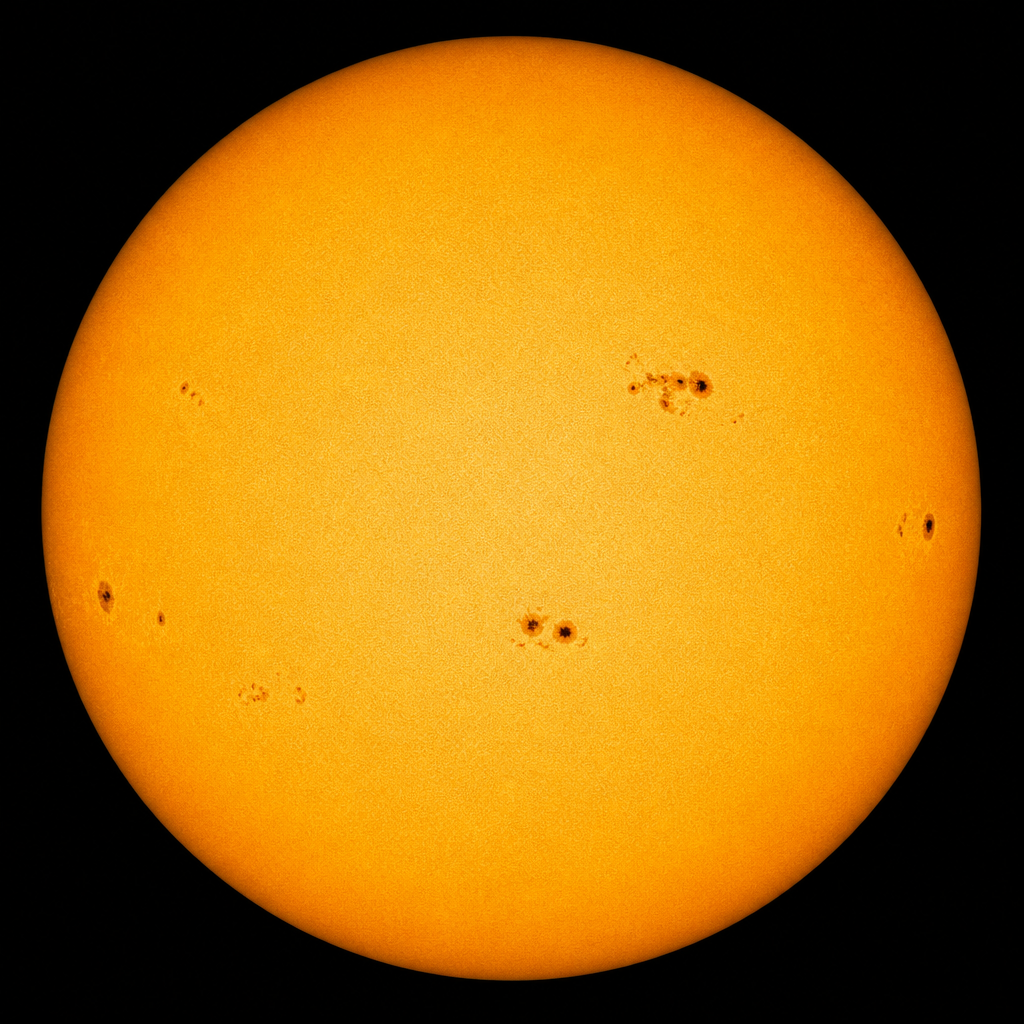
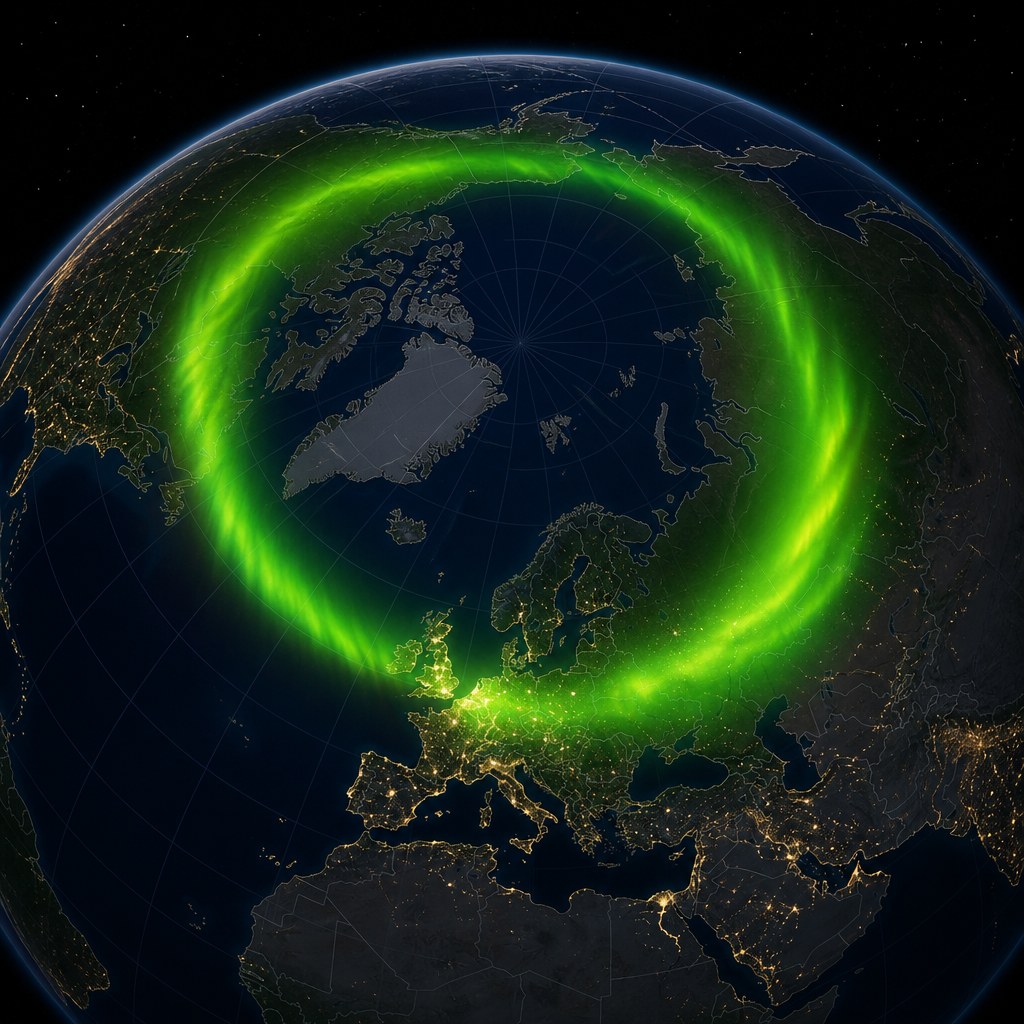
 Current Auroral Oval:
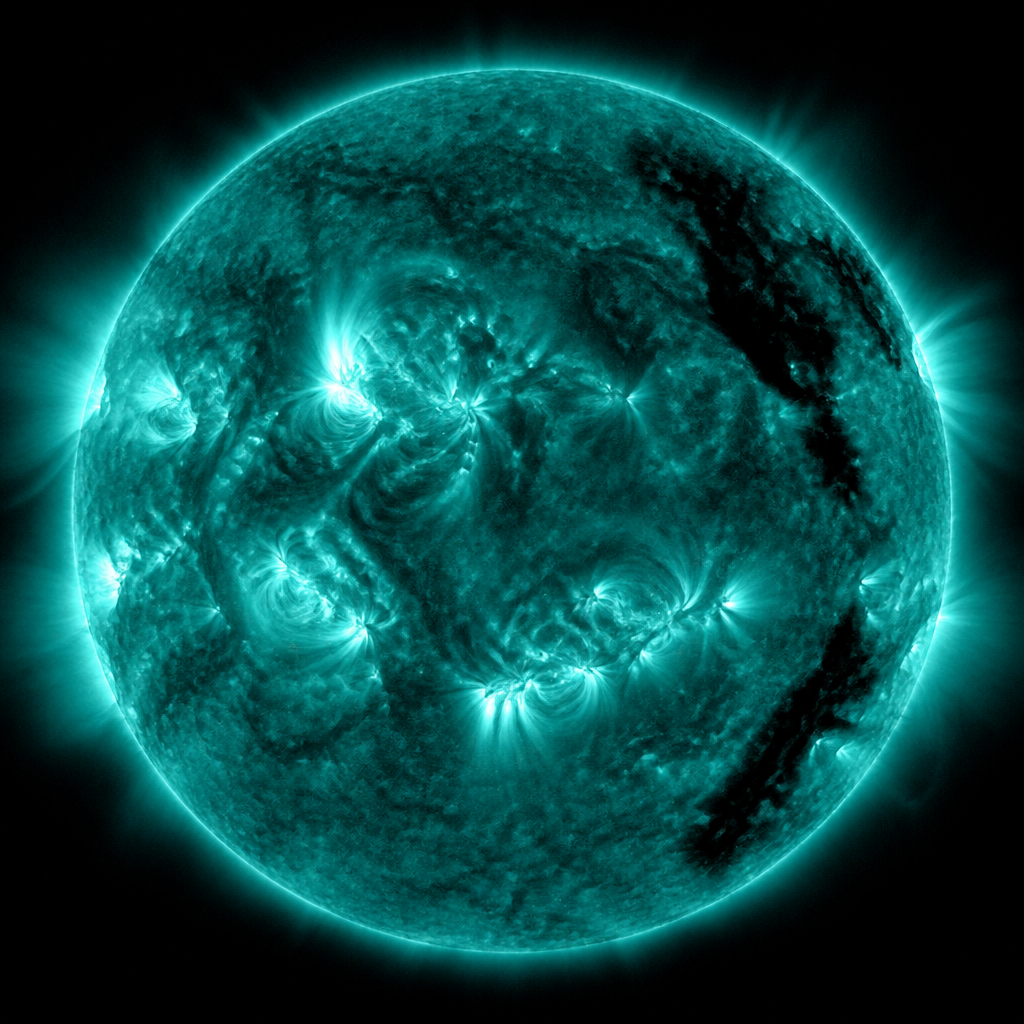


JUICE is a Jupiter mission with a British habit of measuring hostile plasma
ESA's Jupiter Icy Moons Explorer is a planetary spectacular. The UK story is the instruments that have to work inside a giant magnetosphere that makes Earth's look polite.
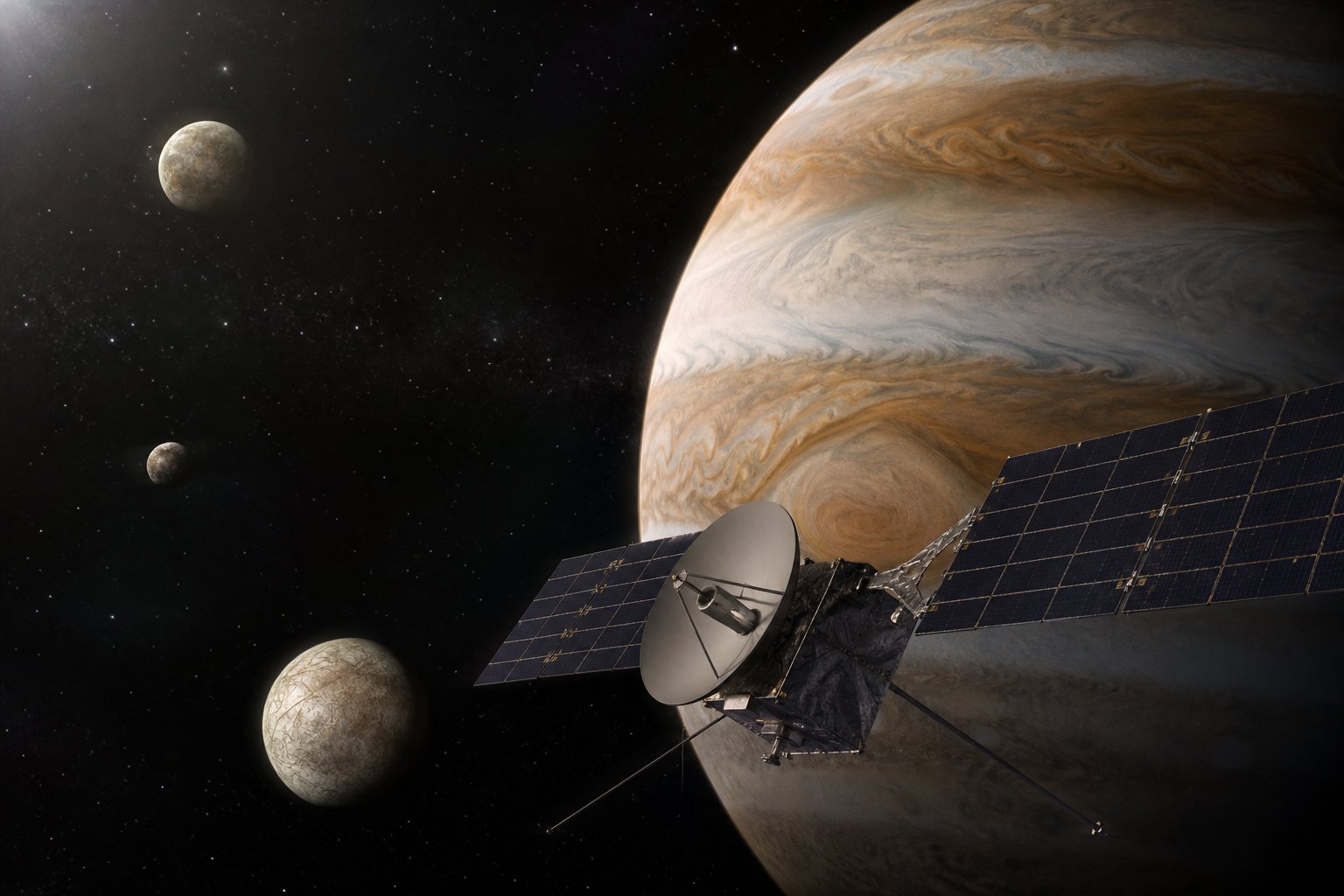
Jupiter is not a quiet giant. It is a rotation-powered particle engine wrapped around an ocean-world system. JUICE is flying into that weather to study Ganymede, Europa and Callisto as icy bodies and as plasma obstacles. British groups that already know how to fly magnetometers and particle sensors through the solar wind are part of why Europe can even attempt the trip. Scienception is covering JUICE as space weather at another planet, not as a travelogue.
Earth's magnetosphere is a research subject because it hosts aviation, GNSS and a grid. Jupiter's magnetosphere is a research subject because it hosts oceans you cannot sample with a bucket. The shared grammar is fields, particles and boundaries. If you learned that grammar on Solar Orbiter or Cluster, Jupiter is the same language shouted.
Radiation dose on the way in is not a subplot. It is the design constraint that decides whether a British detector still speaks after cruise. Glasgow's smallsat shops sell hardness for low Earth orbit. JUICE is the reminder that hardness has a planetary extreme. Components that laugh at a G3 storm over Britain can still sulk in the Jovian belts.
Ganymede is a magnetosphere inside a magnetosphere
Ganymede's own magnetic field is the punchline of undergraduate lectures. JUICE is supposed to map that mini-magnetosphere as a real object, with a plasma wake and an interaction region, not as a textbook diagram. That is the same intellectual move SMILE is making at Earth: stop inferring a boundary from a lucky fly-through if you can survey it.
Europa's surface is a radiation-processed crust over a suspected ocean. The interesting UK sentence is not 'could there be life'. It is 'what particle weather writes the surface chemistry we will actually measure'. Astrobiology without a radiation environment is a mood board.
Jupiter's aurora is not a tourist overlay. It is the visible exhaust of a magnetosphere that can fry a spacecraft and still hide an ocean.
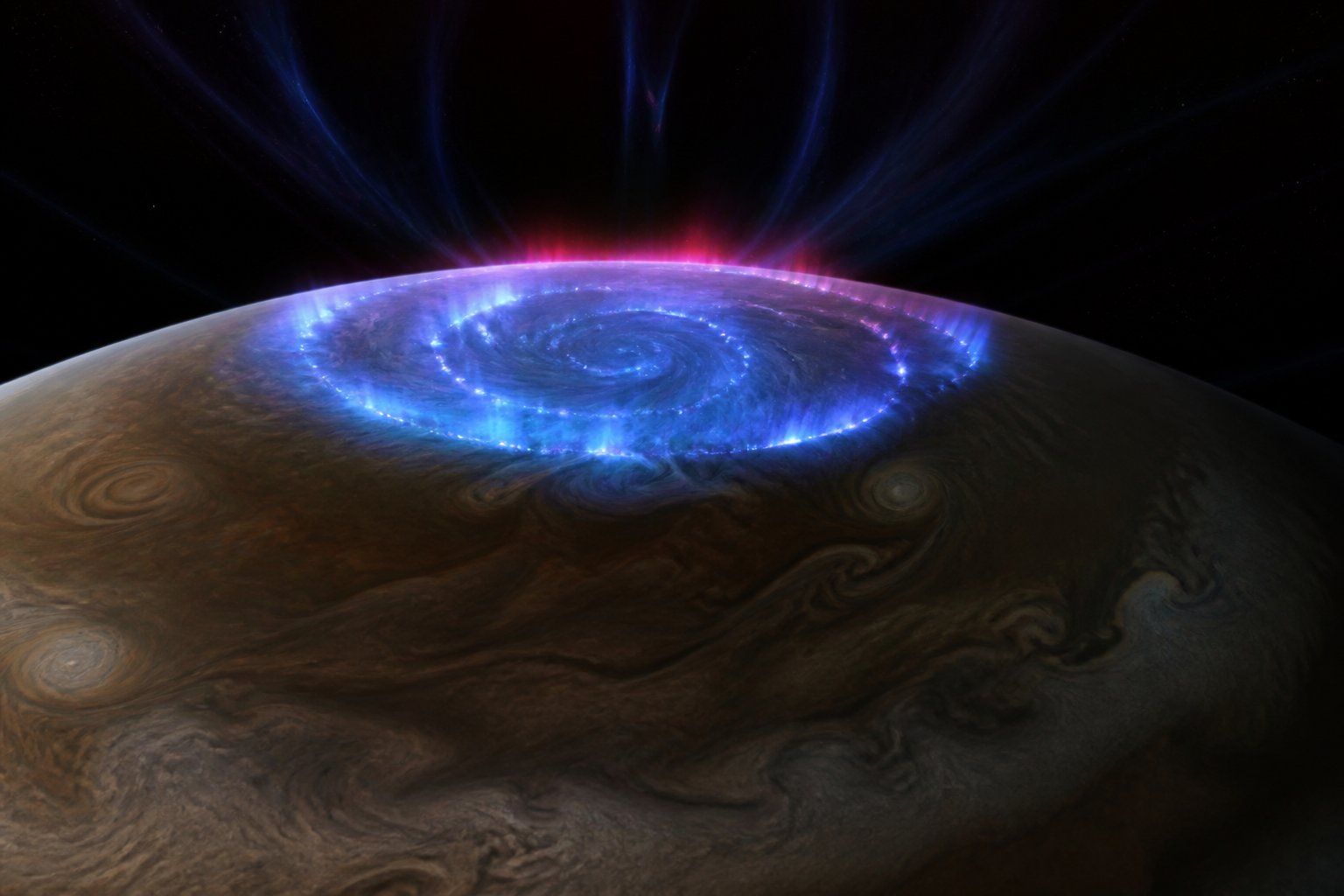
Imperial's long magnetometer tradition is easy to treat as a brand. Treat it as a method: calibrate, boom-deploy, subtract spacecraft field, publish a time series someone at MOSWOC quality would recognise as honest. Planetary missions fail that method when they only fund the launch film.
Why a UK science desk should still care
Because the people who can keep a magnetometer honest at Jupiter are the same scarce people who keep solar-terrestrial work alive at home. A country that only funds Earth-orbit applications will notice, a decade later, that it cannot staff a Jupiter team or a MOSWOC night shift. Skills are not a tap.
Data volume will be a British problem too. Planetary packets arrive slowly. Catalogues need curators. Euclid already taught UK data centres that cosmology is a factory. JUICE will be a smaller factory with nastier calibration. If the archive is an afterthought, the oceans stay poetry.
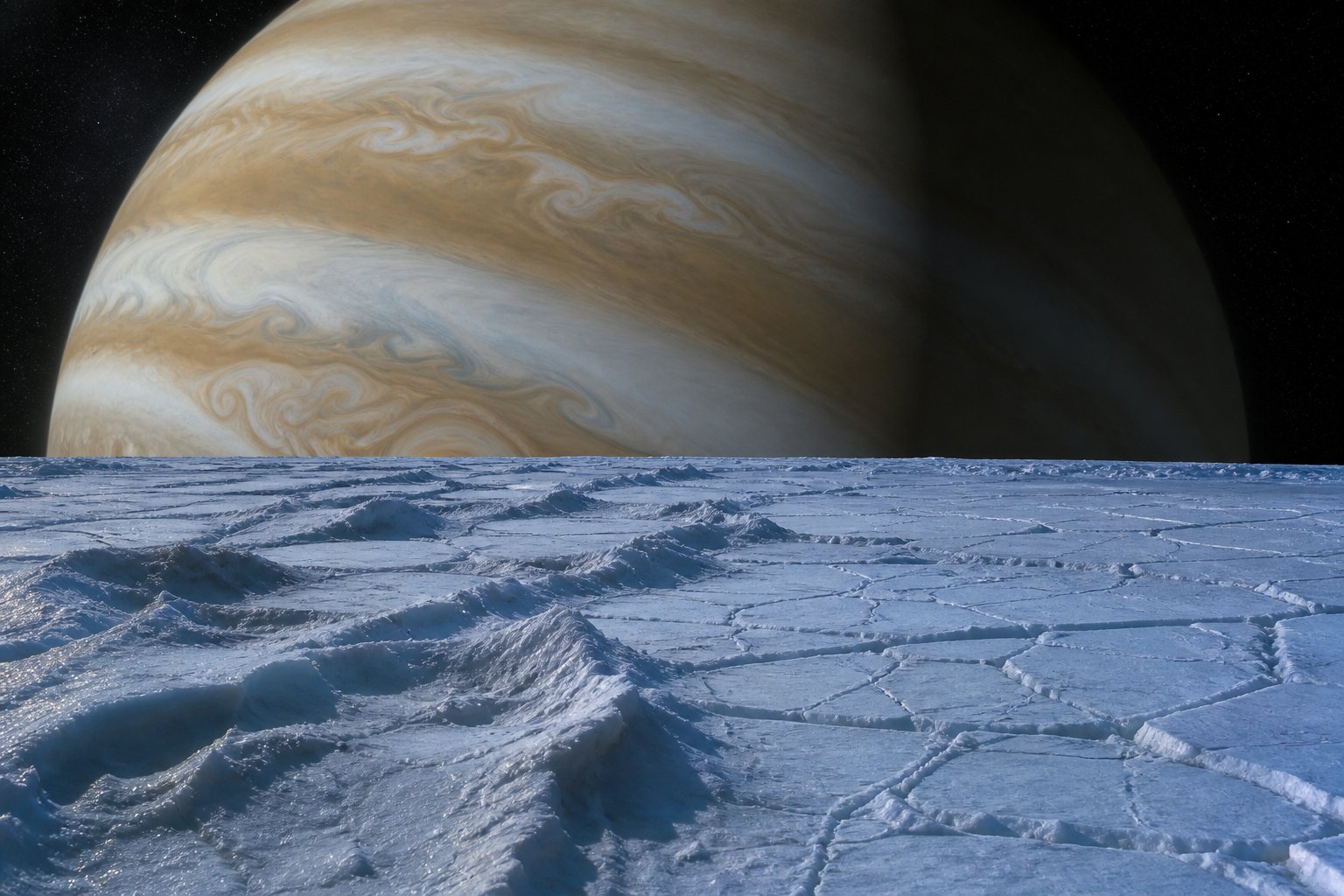
Schools will want the Great Red Spot. Give them the spot, then give them the oval, then give them a moon that has to live in that oval. That sequence is a space-weather lesson that does not require a Shetland midnight.
Do not wait for orbit insertion to decide whether Britain is 'on the mission'. The work is already the cruise checkout, the calibration papers, and the students who can tell a real field from a spacecraft-generated lie. Scienception will come back when those papers exist, not only when a dish takes a pretty picture.
Further context for UK readers
Juno changed the texture of Jupiter science. JUICE is not a sequel so much as a different instrument: ice, oceans, and a tour that privileges moons over a polar orbit around the gas planet. Readers who flatten every Jupiter headline into one NASA brand are missing the European design choice.
Callisto is the quieter sibling and therefore easy to skip. A heavily cratered ice-rock world at the edge of the radiation bath is a control sample. Control samples are how you stop lying about Europa. Mention Callisto or you are doing fandom.
Radio occultations, ice-penetrating radar and magnetometry have to argue with each other. If they agree too quickly, someone has smoothed a plot. Planetary science at this level should look like a disagreement that converges. Scienception prefers that mess to a single 'ocean confirmed' banner.
UK industry that built parts for JUICE will put logos on a stand at Farnborough. Fine. The scientific return is still a time series and a map. Ask for the map.
There is a space-weather rhyme for operators. Jupiter teaches particle acceleration at a scale Earth never matches. The point is not that National Grid should fear Io's torus. The point is that British plasma literacy has more than one classroom, and we keep closing classrooms.
Flybys of Earth and Venus on the way were not sightseeing. They were instrument dress rehearsals in real plasma. Those rehearsals are the least televised and most important days of cruise.
How to follow JUICE without drowning in spectacle
Bookmark ESA's mission pages, then look for instrument papers with UK affiliations, then look for a magnetosphere map of Ganymede that a BGS scientist would recognise as a cousin of their own work. That is the trail.
If a paragraph only names moons and never names particles, it is a poster. Posters are allowed on a Friday. They are not a desk.
Corrections: info@scienception.com at Scienception LTD. Figures are illustrations for Scienception.
Plasma literacy that pays rent at home
Io's torus is a volcanic plasma doughnut. It is also the most extreme classroom for the same charge-exchange and pickup-ion physics that SMILE will hunt in a whisper at Earth. A British student who can explain both is employable at MSSL, at a cubesat shop, and at a forecast desk. That is the industrial policy hiding inside a planetary mission.
Ganymede's aurora, seen by Hubble and now due a closer look, is a particle weather report written on ice. If a UK spectroscopist helps read that report, print their instrument, not a stock banded Jupiter. The bands are the celebrity. The oval on a moon is the science.
Cruise checkouts will throw noisy plots. Noisy plots are how you learn a boom's cleanliness. Cleanliness is the untelevised UK contribution: people who refuse to publish a field that still has the spacecraft in it. Hold them up when the pretty moon picture lands, or the public will think the camera was the whole payload.
Europa Clipper and JUICE will overlap in public conversation. They are not duplicates. One is a NASA Europa specialist. One is a European icy-moon tour with Ganymede orbit as the prize. Mixing them is how you get a reader who thinks there is one Jupiter spacecraft with two flags. Keep the architectures distinct.
Related on Scienception: Solar Orbiter's UK magnetometer · Horizon Europe and UK space science · Glasgow smallsats and radiation hardness

