



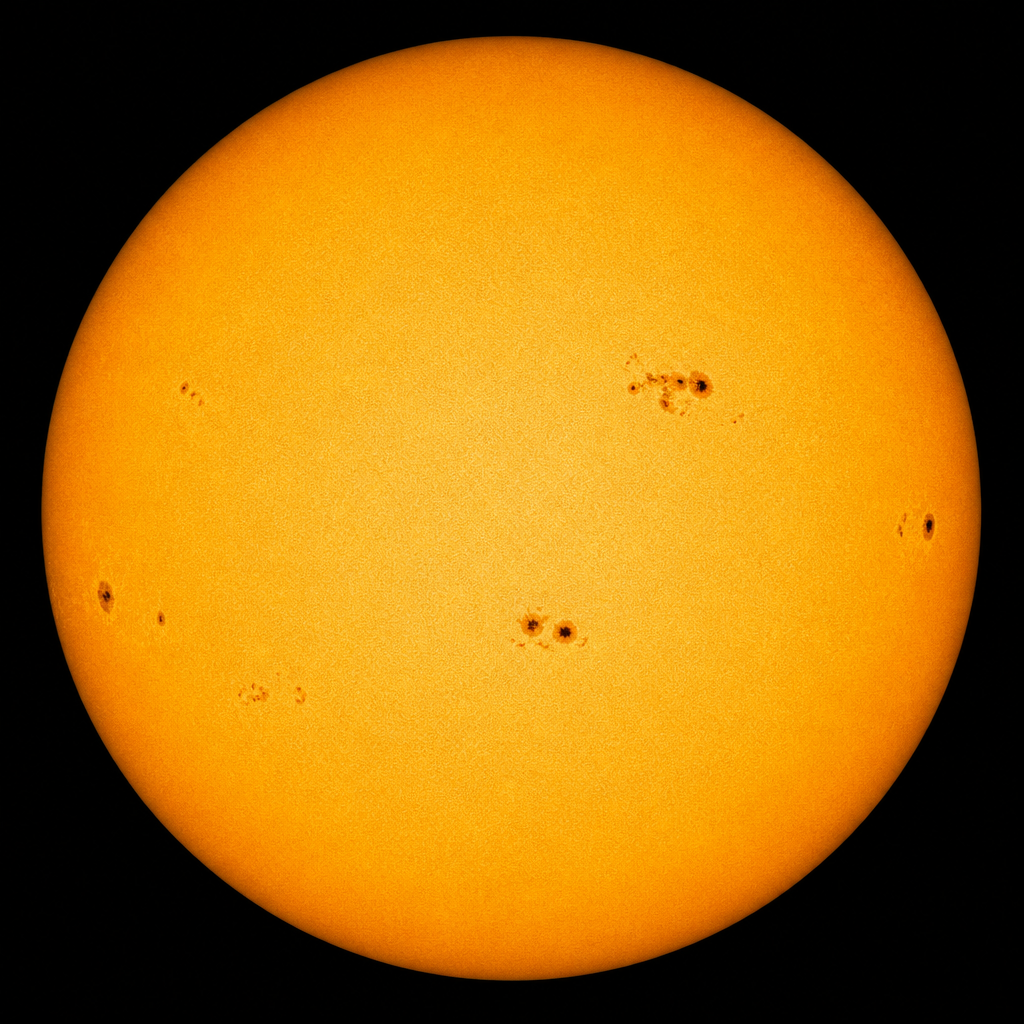
 Current Auroral Oval:


Horizon Europe association is still a space-science story about networks, not flags
UK teams can bid again. The missing years of network decay will not be undone by a single successful proposal.
The United Kingdom's association to Horizon Europe was a political saga that scientists experienced as a hiring freeze, a lost consortium slot, and a generation of students who did not intern in Toulouse. Association reopens a door. Scienception will not pretend the corridor behind the door is unchanged. Networks decay. They can be rebuilt. Rebuilding is work.
Space science under Horizon is not a substitute for ESA optional programmes. It is a complement: mobility, smaller instruments, data tools, and the social tissue that makes a big payload possible. People who say 'we have ESA, we did not need Horizon' are telling on their own career path.
Win rates will be watched like sunspot numbers, and they are as easy to misread. A low win rate can mean excellent competition. A high win rate on trivial calls can mean you are not in the hard room. Context or silence, please.
Association is a door, not a corridor
Administrative friction remains. University research offices that forgot the Brussels clock have to remember it. That sounds petty. It decides whether a proposal is late.
For heliophysics specifically, European collaborations on magnetoseismology, ionospheric modelling and radiation tools were a casualty of the gap. Re-entering those rooms requires showing up with something to trade, not only with a flag.
You can associate on paper and still be out of the WhatsApp group that writes the instrument paper.
Industry bids will move faster than university ones. That is not a moral failing. It is a warning that academic groups need professional services, not another inspirational town hall.
What space science actually lost
Scienception will cover a UK-led heliophysics consortium that actually files. We will not cover a 'Britain is back' banner without a grant number.
Students should still learn French and German enough to survive a meeting. That sentence used to be a joke. It became a skills gap.
Association does not restore lost years on a mission that already selected its payload. Some doors stay shut. Adult communication says so.
Europe is where UK space science gets scale. The Sun does not recognise the Channel. Our funding instruments had to relearn that.
Further context for UK readers
The WhatsApp group is a scientific instrument. Missing it for years is a data gap. Association reopens email. It does not replay the jokes that built trust.
Win rates without context are sunspot numbers for administrators. Provide the context or do not provide the number.
Research offices that forgot the Brussels clock will lose on lateness, not on science. That is preventable humiliation.
Heliophysics groups must arrive with something to trade. A flag is not a trade.
Students still need enough French and German to survive a payload meeting. That is a skills policy disguised as courtesy.
Scienception wants a grant number, not a 'Britain is back' banner. Banners are cheap. Grant numbers are not.
Some mission doors stay shut. Adult communication lists them. Fantasy communication pretends association is a time machine.
The Channel is not a magnetic boundary. Our funding had to remember. It is remembering slowly.
How to read this on a UK science desk
What a careful UK reader should actually do with this story is slower than a social feed wants. The live wires are: network decay, Brussels clock, trade not flags, closed mission doors, Channel not magnetic. If a paragraph does not touch one of those wires, it is probably colour. Colour is allowed. It is not a substitute for a product page at the Met Office, BGS, UKRI, ESA, the UK Space Agency, NATS, the CAA, Ofcom, UKAEA, NHS England or the laboratory named in the sources list. Scienception prints editorial snapshots on the left-hand rail so the homepage feels like a conditions desk in the old space-weather style. Those figures are not a live operational feed. If you are making a decision about aviation, the grid, a licence, a clinical pathway or a launch commit, leave this tab and go to the authority, then come back for the argument.
British geography keeps deciding supposedly global science. Magnetic latitude, Atlantic cloud, a coal switchyard, a dark-sky park, a Clyde clean room, a synchrotron on a former airfield, an ice-shelf station, a parish lighting rule: these are not decorations on horizon europe uk space science. They decide whether a result is operational for this country or merely interesting. A model that cannot be checked against a UK sensor is tourism. A policy that cannot be walked to a protocol is speech. We will keep dragging the global noun back to a named place.
There is a records problem in the background of this beat. Time series die when programmes end, when students leave, and when a dashboard is funded instead of a person who knows a sensor's quirks. The cheap way to look modern is a new visualisation. The expensive way that works is to keep the ugly log alive. Magnetograms, ionosondes, light curves, beam-test files, trusted research environments, licence PDFs and anomaly reports are how a democracy stays in the measurement business when the solar cycle, the debris environment or a carbon budget stops being polite.
The public conversation still swings between panic and shrug. Hold two true sentences at once. A minor geomagnetic watch is not a national blackout. A stored tonne of carbon is not a groundbreaking party. A nova that has not erupted is not a failure. A satellite train is not an invasion. Scienception will keep writing as if readers can cope with a caveat, a map, a table and a link. That is the minimum adult form of UK science news, and it is the house style for this article as much as for the conditions rail.
If you work in a school, use the primary links as a single homework: open the Met Office or BGS or ESA page, write down what the official product actually says, and compare it with our kicker. If you work in a control room, steal only the method: name the sensor, name the failure mode, name the British place that would feel it. If you only wanted a picture, look at the figures, then look at the sources. The figures are illustrations. The sources are how you check us. Corrections remain info@scienception.com at Scienception LTD.
Association is a door with a queue behind it. Networks that decayed during the gap will not reassemble because a communique said they should. Show up with an instrument, a dataset or a student who can still sit through a payload meeting. Scienception will print grant numbers. Flags are already well supplied. A closed payload door should be listed as closed, not as a time machine.
Related on Scienception: Starlink trains are now part of British weather, and the forecast is crowded · Greenwich can still teach the sky, if CPRE's night-blight maps are taken seriously · STEP at West Burton is a power-station ghost being asked to become a torus

