



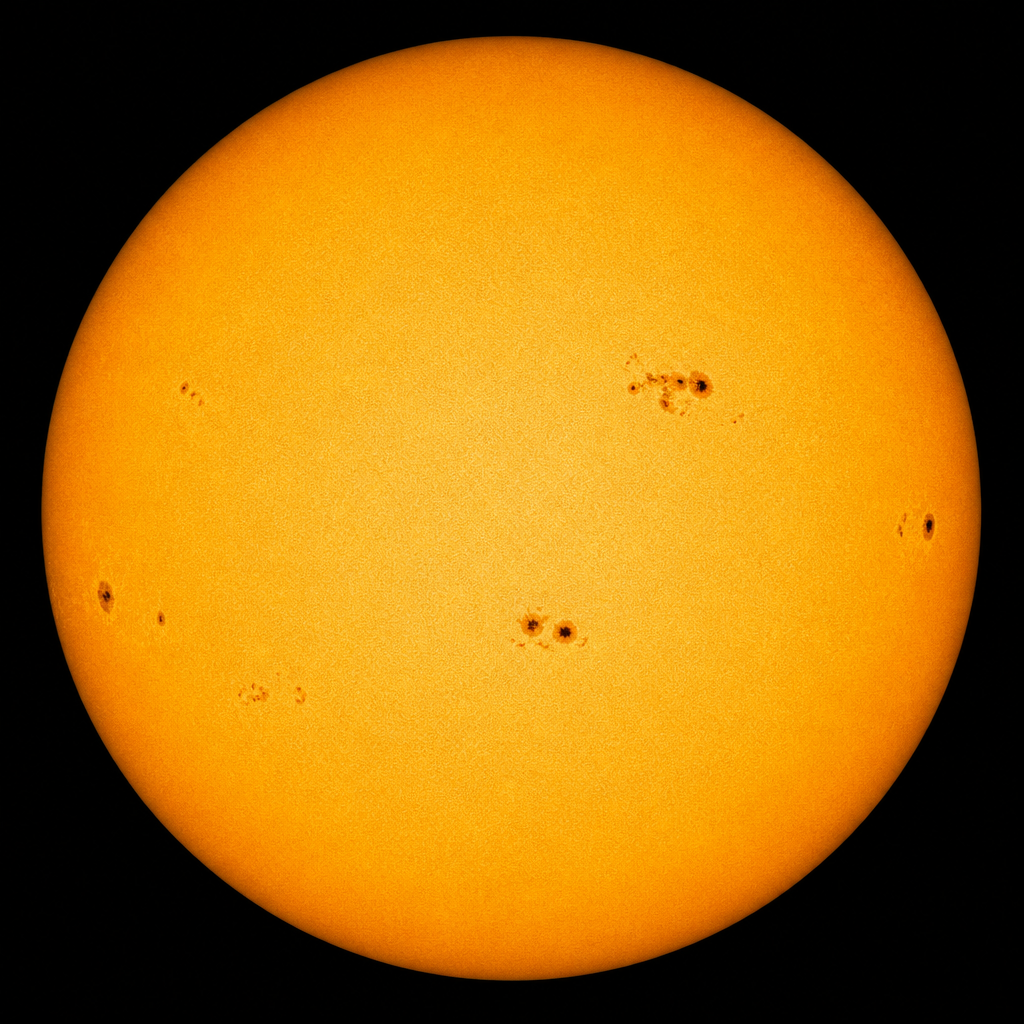
 Current Auroral Oval:
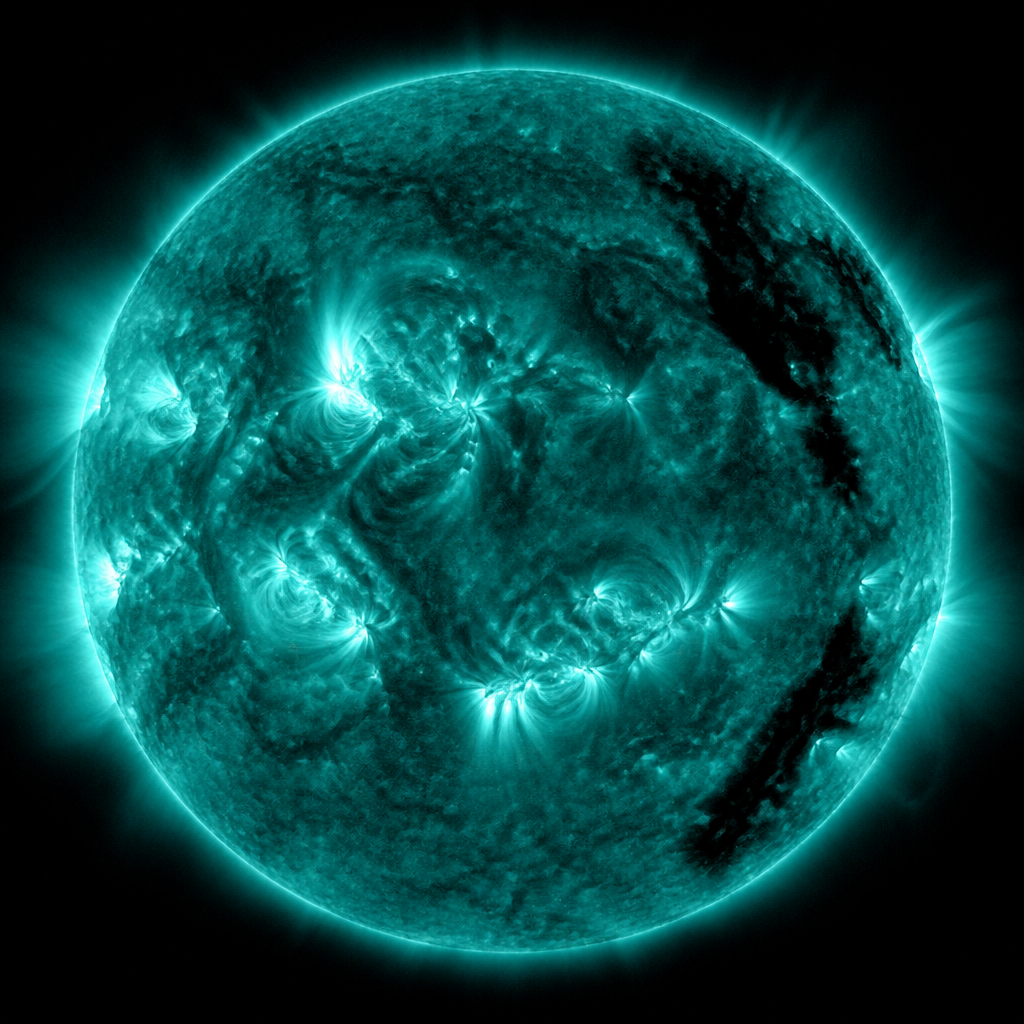


GNSS scintillation is now a NATS problem, not a hobbyist complaint
When the ionosphere twinkles, satellite navigation errors grow. UK air traffic procedures already assume the sky can misbehave.
Satellite navigation is so ordinary that people forget it is a radio link through a weather system. The ionosphere delays GNSS signals; when it becomes patchy, the delay scintillates and receivers lose lock or wander. At equatorial latitudes this is a nightly drama. At UK latitudes it is a storm-time drama. NATS, the UK's main air-navigation service provider, already treats GNSS as a magnificent tool with known failure modes. Scienception wanted to put space weather back into that sentence.
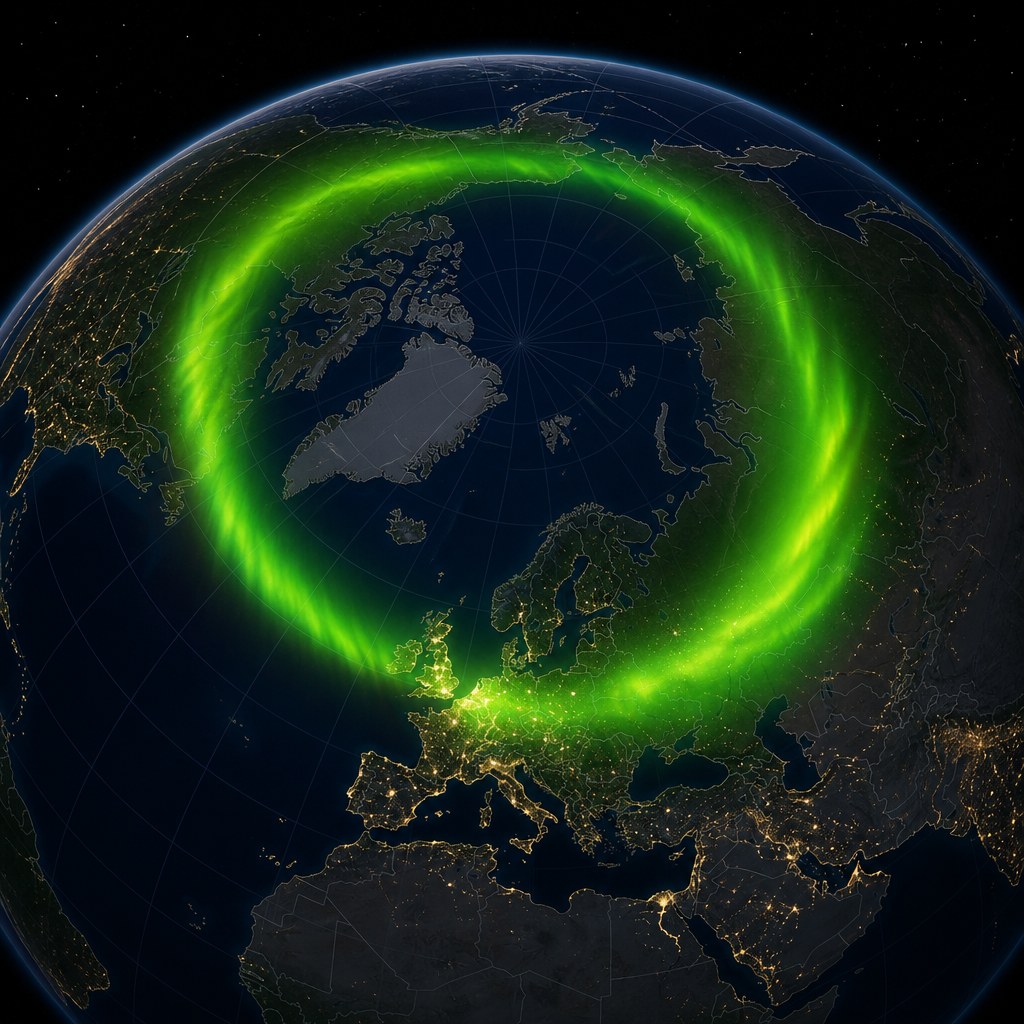
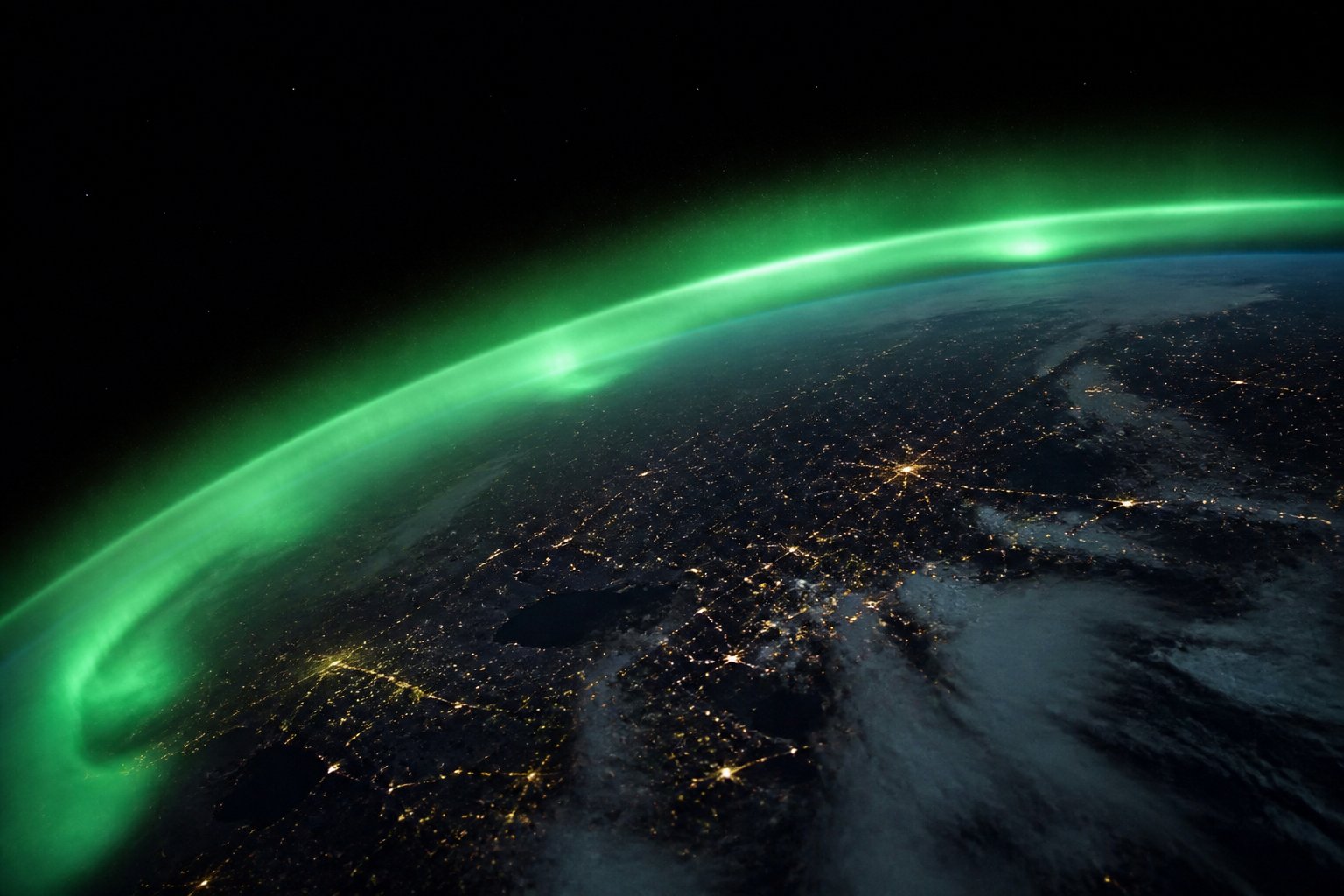
Scintillation is not a solar flare's instant HF blackout. It is turbulence: small-scale electron-density structure that makes the signal's amplitude and phase jump. Storm-time auroral oval dynamics can drag that turbulence toward Scotland. Even without a postcard aurora, an aircraft using GNSS for performance-based navigation may see integrity flags. The correct response is procedure, not panic.
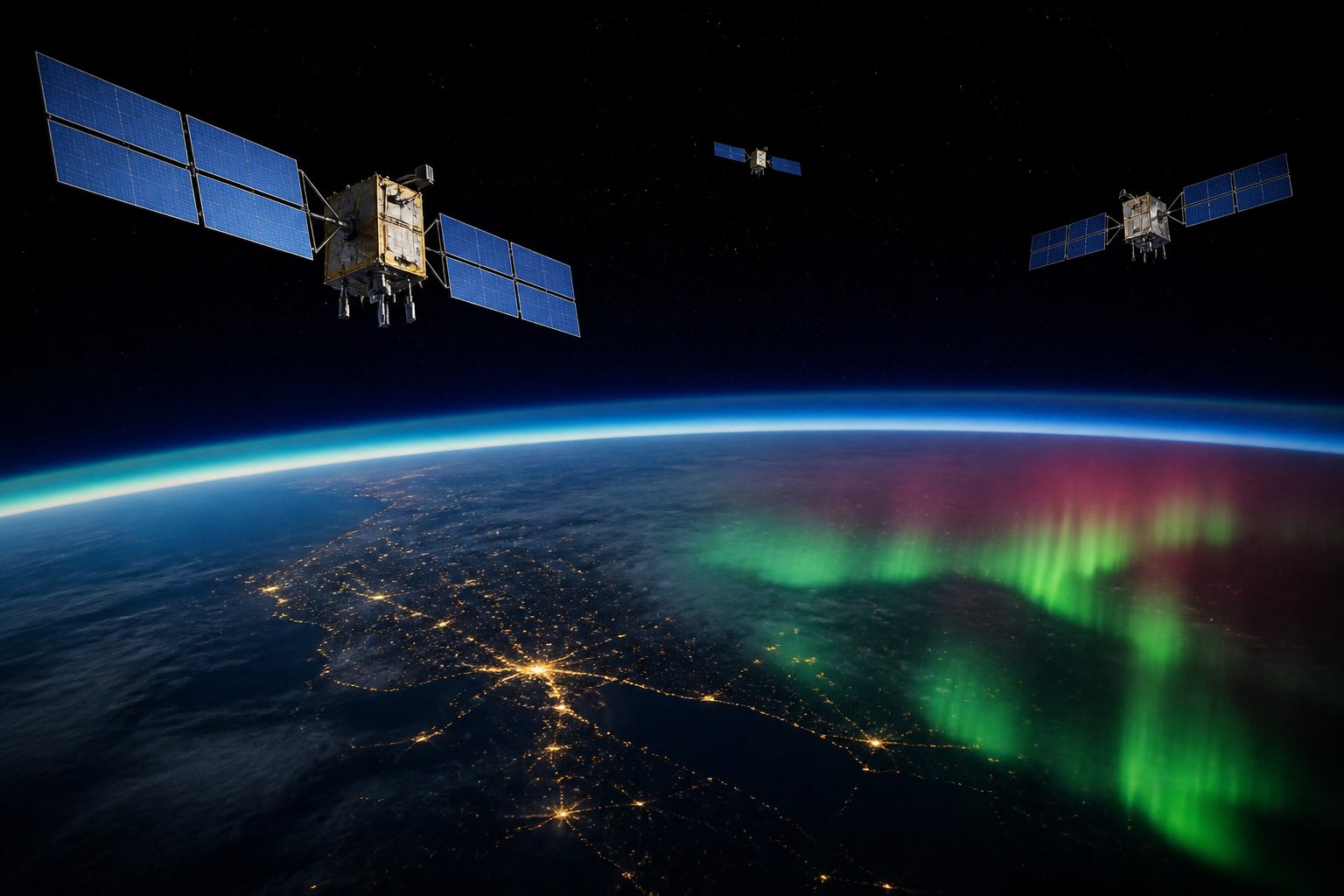
NATS and the CAA do not publish space-weather thrillers. They publish safety cases. Those documents assume that GNSS can degrade because of space weather, interference, or constellation faults. The operational overlay is redundancy: ground navaids, radar, procedural control. A country that dismantled too many backups in the name of efficiency would feel a geomagnetic storm more sharply. Britain has not fully done that. It should not start.
Twinkling electrons, shifting positions
Researchers at UK universities have run scintillation receivers for years, especially during solar maximum campaigns. The data rarely leave specialist workshops. They should. A public that understands 'the ionosphere went noisy' is less likely to invent 5G conspiracies when a receiver drops.
There is a precise vocabulary worth defending. Loss of lock is not the same as a slowly biased ionospheric delay. Integrity is not the same as accuracy. Space-weather articles that mash those words together are not doing aviation any favours. Scienception will keep them apart.
A metre of positioning error is a curiosity on a hiking app and a procedure on an approach plate.
Solar Cycle 25 has already produced nights when high-latitude receivers looked drunk. Most passengers never knew. That is success. The near-miss would be an operator who had never rehearsed a GNSS-degraded arrival into a busy terminal area on a storm night.
What controllers actually change
Quantum timing and eLoran revival talk sits in the policy background. Neither is a next-week fix. Space-weather resilience for aviation is still: keep alternative navaids, keep training, keep MOSWOC on the phone list.
If you fly light aircraft with a tablet as your primary map, this story is for you too. A scintillating ionosphere does not respect your weekend. Carry a backup that does not live in orbit.
The ionosphere will twinkle again. The professional question is whether the procedure manual twinkles less often than the electrons.
Navigation is a British scientific heritage subject, from maritime chronometers to radio. GNSS scintillation is simply the latest chapter in which the sky refuses to be a perfect vacuum.
Further context for UK readers
Performance-based navigation made GNSS a primary tool, which is why its failure modes had to grow up. A space-weather paragraph in a safety case is not decoration. It is how you keep a ground navaid funded when an accountant wants it gone.
Receiver manufacturers already ship ionospheric models. Those models assume a quieter sky than a storm. Integrity monitoring is the adult response: if the sky is lying, stop using the lie. Pilots need a verb: revert.
Aberdeen and the northern North Sea see different GNSS weather from Gatwick. Helicopter operations to platforms add a maritime-aviation hybrid that scintillation textbooks often skip. UK coverage should not skip it.
Jamming and spoofing dominate the security conversation. Space weather is the natural sibling. A desk that only writes about hostile actors will misread a storm night as an attack. That misread has happened elsewhere. Practice the distinction.
Research receivers at UK universities should be plotted on a public map during storms, even if the data are delayed. A dark map is how folklore wins.
General aviation tablets fail more honestly than certified boxes: they just wander. That honesty is not a safety case. It is a teaching aid. Instructors should show a scintillation night on a ground display.
Quantum backups and eLoran revival will be slow. Keep the VOR and the procedure. Romanticism about a single system is how you get a single failure.
NATS does not owe the public a thriller. It owes the public a boring alternative when the ionosphere twinkles. Boredom is the brand of safety.
How to read this on a UK science desk
What a careful UK reader should actually do with this story is slower than a social feed wants. The live wires are: PBN procedures, North Sea helicopters, jamming versus storms, general aviation tablets, VOR as backup. If a paragraph does not touch one of those wires, it is probably colour. Colour is allowed. It is not a substitute for a product page at the Met Office, BGS, UKRI, ESA, the UK Space Agency, NATS, the CAA, Ofcom, UKAEA, NHS England or the laboratory named in the sources list. Scienception prints editorial snapshots on the left-hand rail so the homepage feels like a conditions desk in the old space-weather style. Those figures are not a live operational feed. If you are making a decision about aviation, the grid, a licence, a clinical pathway or a launch commit, leave this tab and go to the authority, then come back for the argument.
British geography keeps deciding supposedly global science. Magnetic latitude, Atlantic cloud, a coal switchyard, a dark-sky park, a Clyde clean room, a synchrotron on a former airfield, an ice-shelf station, a parish lighting rule: these are not decorations on gnss scintillation nats. They decide whether a result is operational for this country or merely interesting. A model that cannot be checked against a UK sensor is tourism. A policy that cannot be walked to a protocol is speech. We will keep dragging the global noun back to a named place.
There is a records problem in the background of this beat. Time series die when programmes end, when students leave, and when a dashboard is funded instead of a person who knows a sensor's quirks. The cheap way to look modern is a new visualisation. The expensive way that works is to keep the ugly log alive. Magnetograms, ionosondes, light curves, beam-test files, trusted research environments, licence PDFs and anomaly reports are how a democracy stays in the measurement business when the solar cycle, the debris environment or a carbon budget stops being polite.
The public conversation still swings between panic and shrug. Hold two true sentences at once. A minor geomagnetic watch is not a national blackout. A stored tonne of carbon is not a groundbreaking party. A nova that has not erupted is not a failure. A satellite train is not an invasion. Scienception will keep writing as if readers can cope with a caveat, a map, a table and a link. That is the minimum adult form of UK science news, and it is the house style for this article as much as for the conditions rail.
If you work in a school, use the primary links as a single homework: open the Met Office or BGS or ESA page, write down what the official product actually says, and compare it with our kicker. If you work in a control room, steal only the method: name the sensor, name the failure mode, name the British place that would feel it. If you only wanted a picture, look at the figures, then look at the sources. The figures are illustrations. The sources are how you check us. Corrections remain info@scienception.com at Scienception LTD.
Related on Scienception: BGS magnetometers map the quiet currents that stress the grid · SuperDARN radars watch the ionosphere that blackouts North Atlantic HF · Skynet's next solar storm will be a resilience exam, not a parade

