



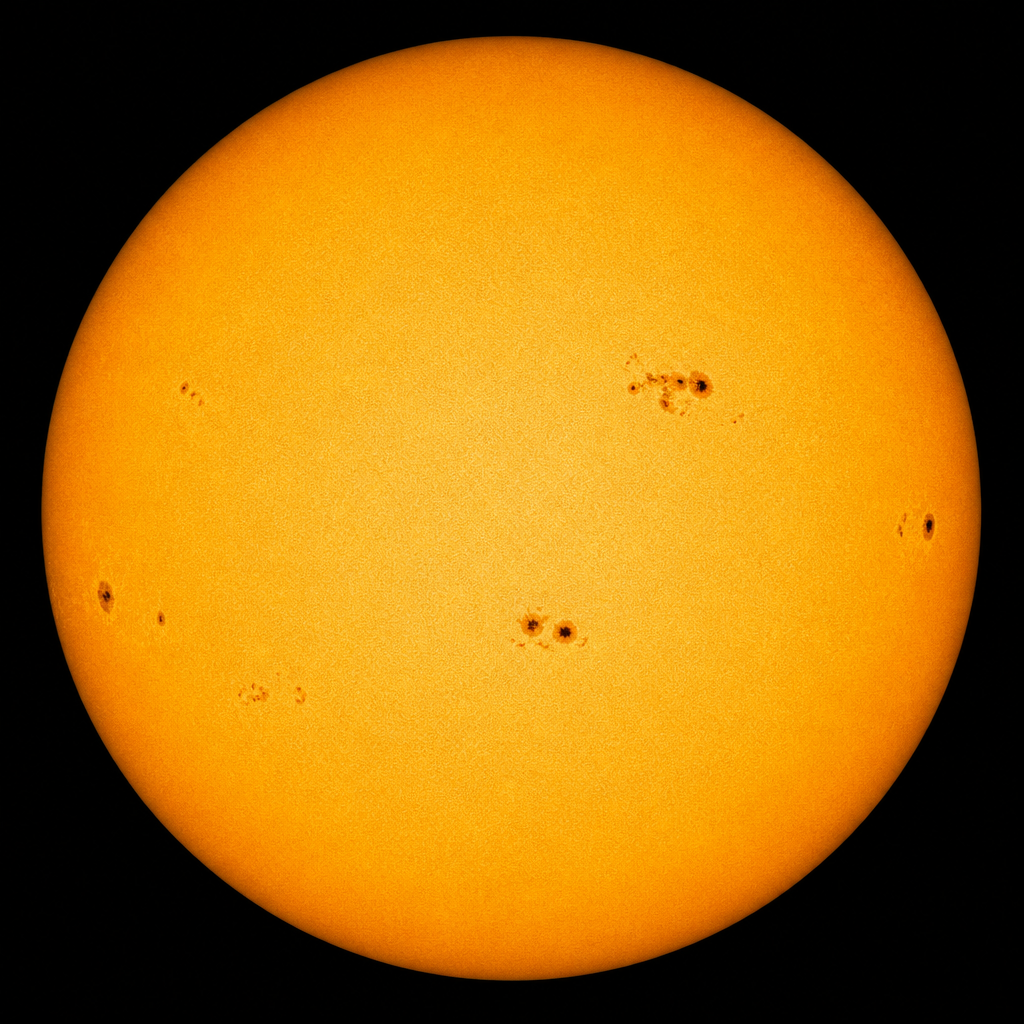
 Current Auroral Oval:
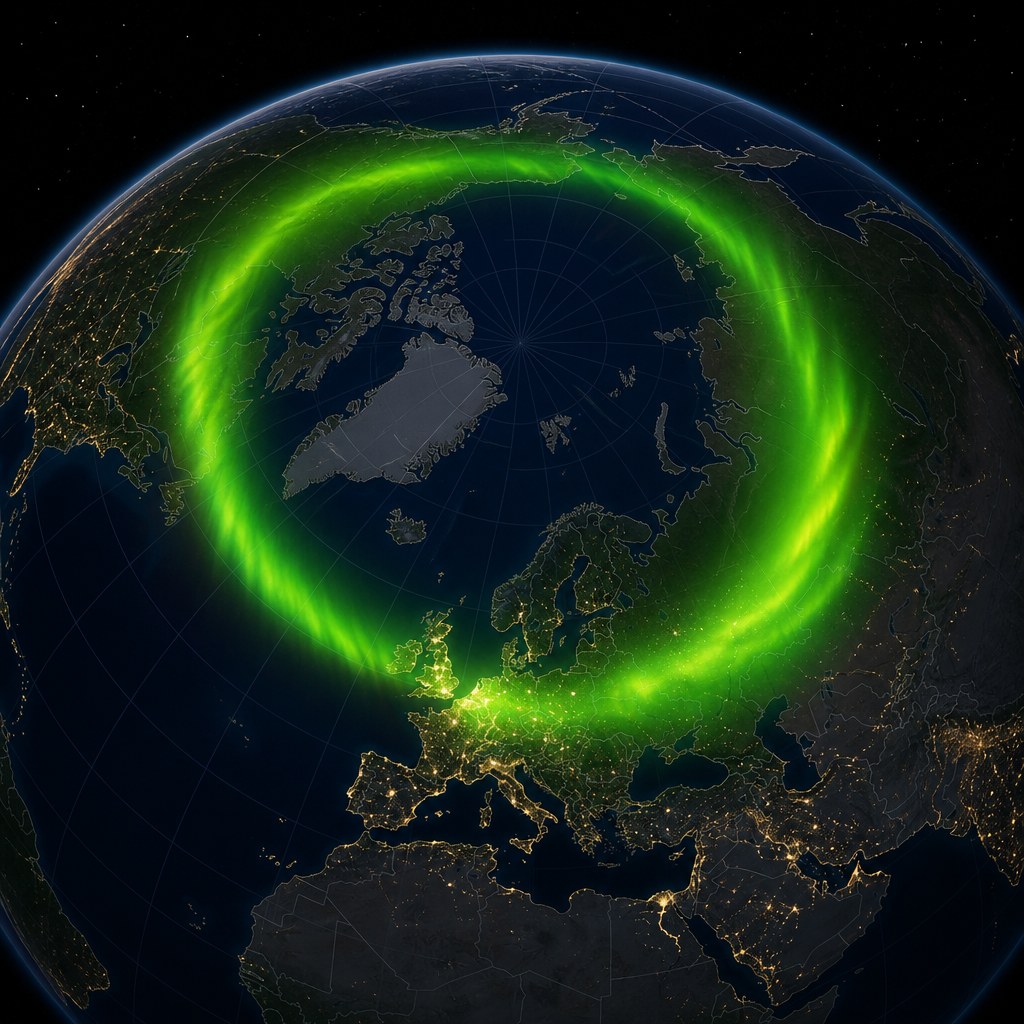
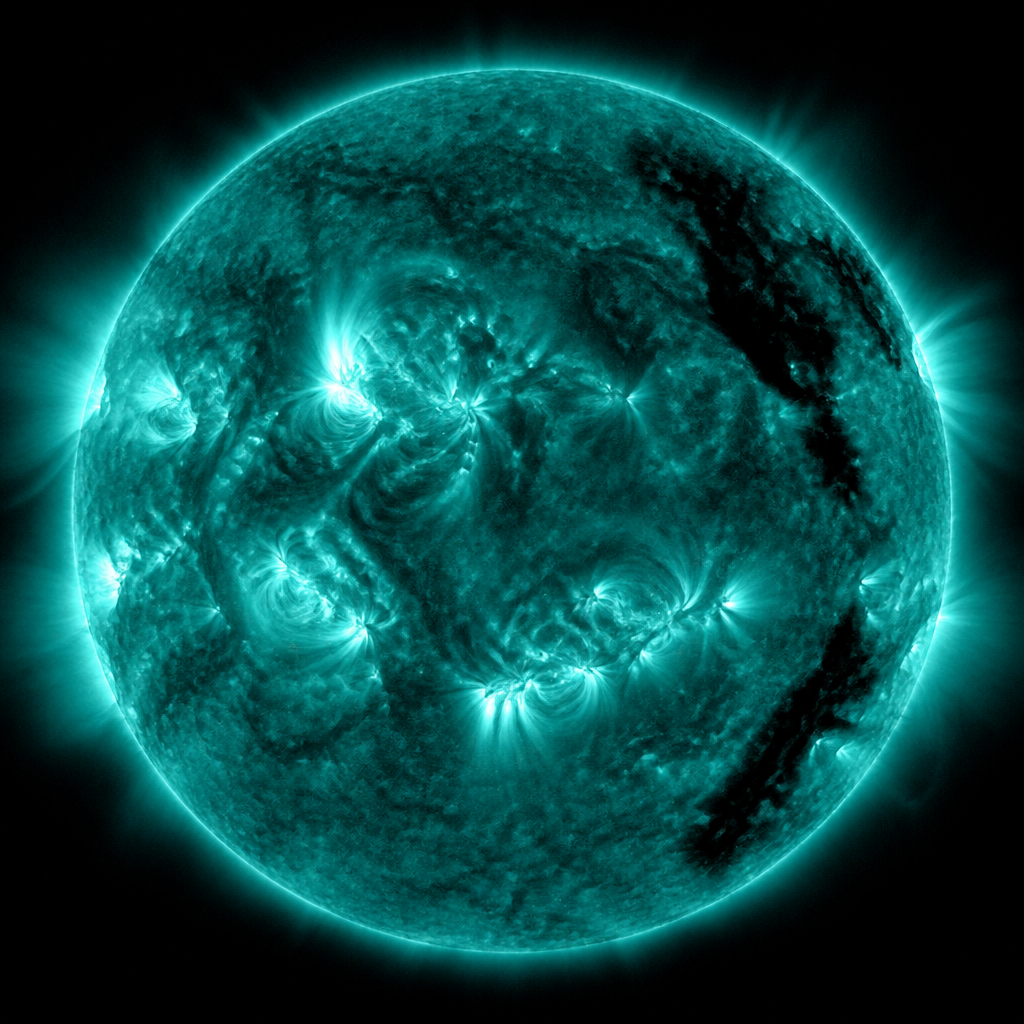


BGS magnetometers map the quiet currents that stress the grid
Geomagnetically induced currents are a National Grid planning problem. The British Geological Survey's observatory network is how Britain actually sees them coming.
The British Geological Survey runs a magnetometer network that is easy to ignore until a transformer engineer starts asking about harmonics. Stations at Lerwick, Eskdalemuir and Hartland, plus a scatter of variometers, give the United Kingdom a continuous picture of how the geomagnetic field is twitching. Those twitches, when they are sharp enough, drive geomagnetically induced currents (GICs) through the high-voltage network. Scienception spent a week with the public data and with papers from BGS's geomagnetism team. The conclusion is unromantic: space weather in Britain is mostly an electrical-engineering story.
GICs appear when a changing magnetic field induces an electric field in the ground. The resistivity of the geology matters. So does the orientation of the line. A long east-west conductor over resistive rock is a better antenna than a short north-south spur over wet clay. Scotland and northern England therefore take a disproportionate share of the theoretical risk, which is why Lerwick's record is not a curiosity for aurora hunters. It is an input to grid models.
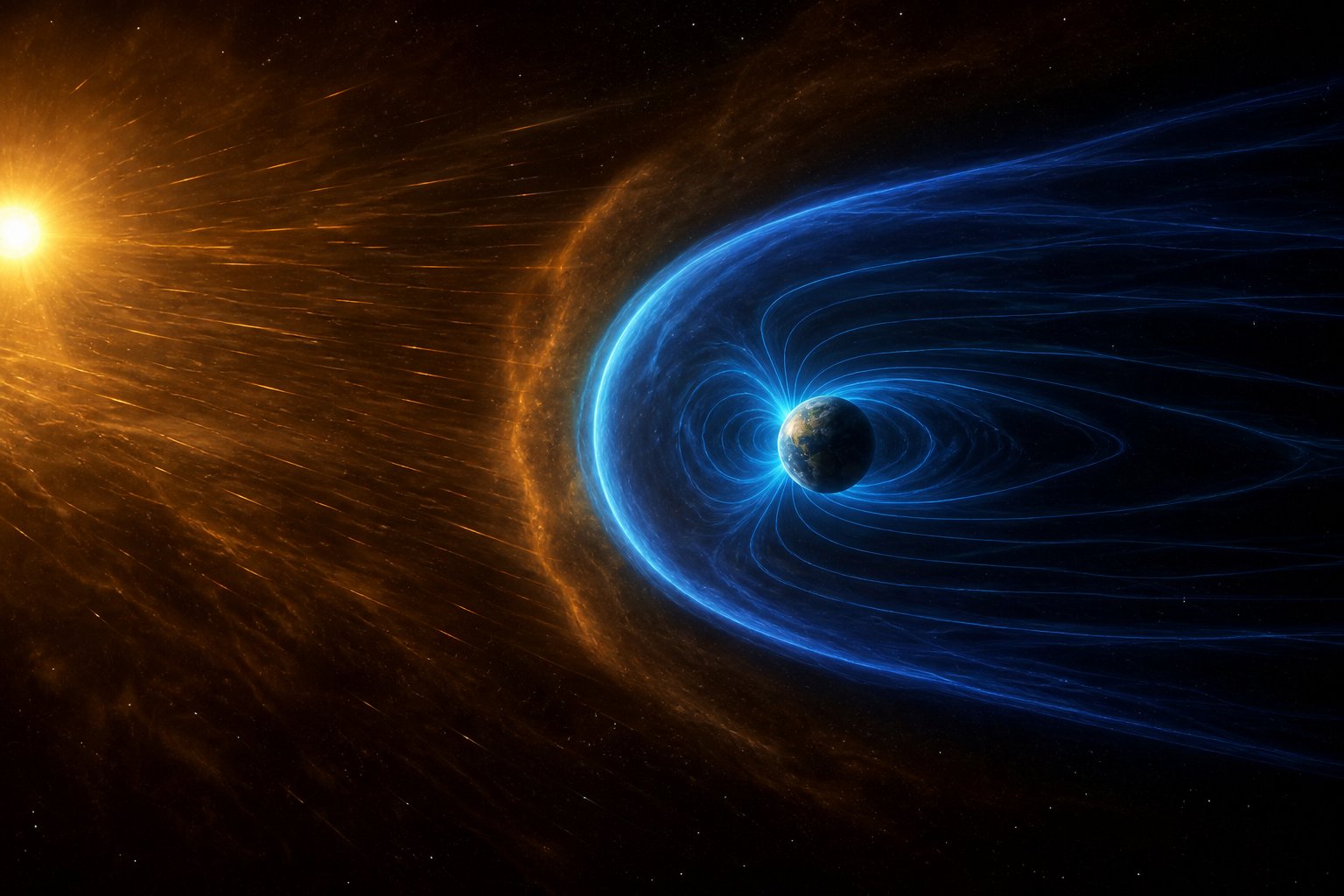
National Grid already treats severe geomagnetic storms as a reasonable worst-case scenario in resilience planning. That does not mean a Carrington-class event is expected next Tuesday. It means transformers, especially older ones with certain winding designs, can overheat if DC-like currents ride the neutrals for hours. Monitoring, spare strategy and operational procedures are the boring tools that actually reduce risk. A public siren is not, yet, one of those tools.
From Lerwick to Hartland, a national nervous system
BGS publishes indices and observatory plots that look humble next to NASA imagery. They are more relevant to British infrastructure. The K-index family compresses three-hour activity into a 0–9 scale. Operators also care about dB/dt, the rate of change. A moderate storm with sharp onsets can be nastier for GICs than a pretty, slow oval. That distinction is routinely lost in consumer coverage.
There is a research frontier. High-resolution magnetotelluric maps of the UK crust would let models place GICs on individual substations rather than on cartoon corridors. Work funded through the SWIMMR programme and earlier NERC grants has pushed that map forward, but it is not finished. Until it is, planners use ensembles and conservatism. That is appropriate. It is also why Scienception will keep returning to Hartland's traces rather than to solar selfies.
The grid does not care about aurora selfies. It cares about the time derivative of the magnetic field over the length of a 400 kV line.
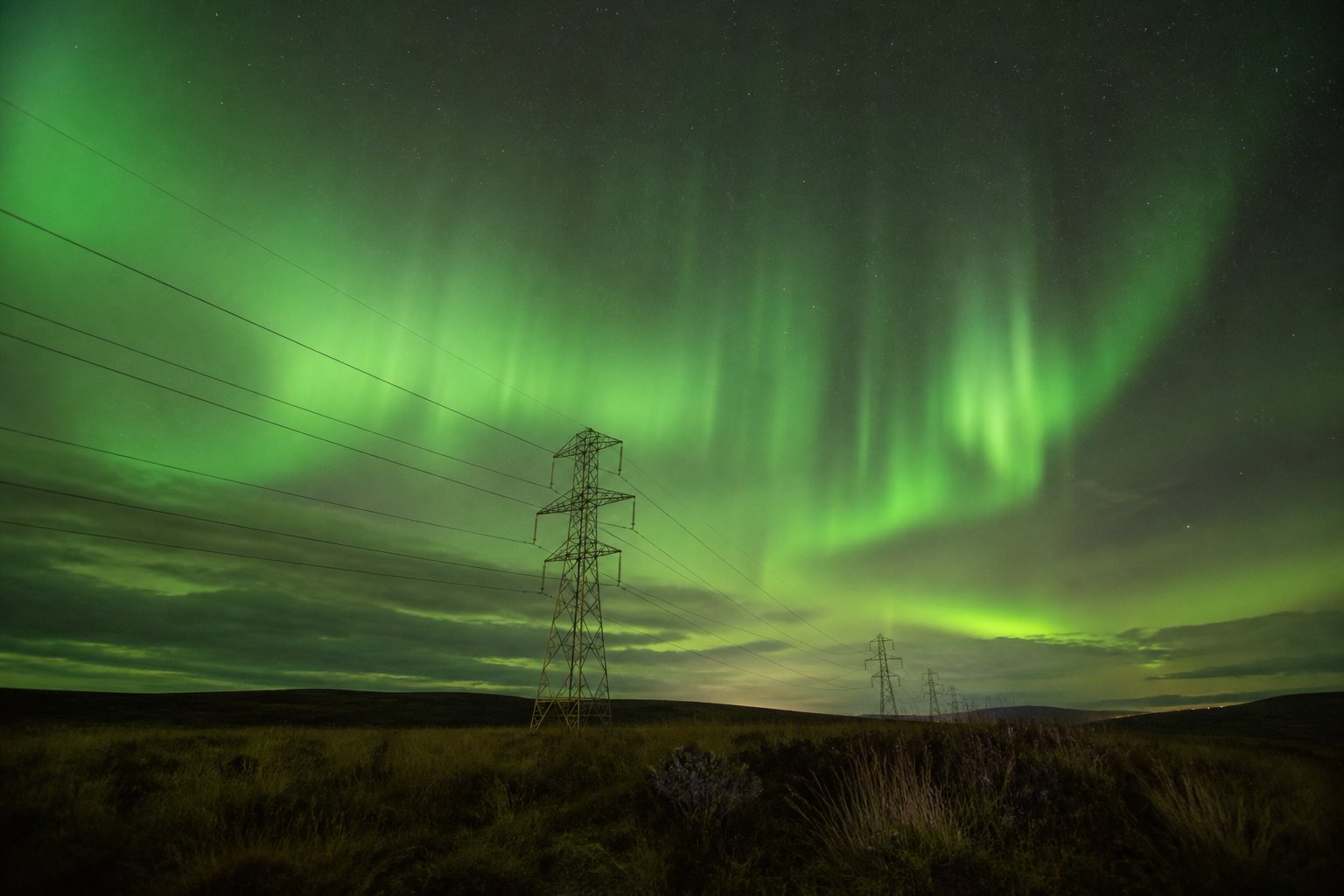
None of this is secret. Papers in Space Weather and Geophysical Journal International have laid out UK GIC scenarios for years. The missing piece is public literacy. People understand flood defences. They do not understand that a magnetic storm can make a transformer age faster. Explaining that without inflating it into an apocalypse is the journalistic job.
What operators do when the field jumps
On a quiet day the magnetometers still wiggle with solar-wind turbulence and with trains, solar-quiet ionospheric currents and cultural noise. Quality control is a craft. BGS staff spend as much time knowing which spikes are a nearby fence as they do watching a CME. That craft is part of the UK's critical national infrastructure even if it never appears in a spending-review photograph.
If you want a practical habit, bookmark the BGS observatory pages and learn what a sudden impulse looks like. When MOSWOC posts a watch, glance at Hartland. If the field is already jumping, the grid desks will already be awake. You do not need to phone anyone. You might, however, understand the next winter storm a little better.
Scotland's hydro corridors and the long English spine to the south-east are not equally exposed. Geology is destiny here, more than latitude alone. A Highland line over ancient resistive crust can pick up more induced electric field than a comparable stretch of the London clay. That is why a national model cannot be a single number.
Scienception will keep the magnetometer story on the science desk, not the disaster desk. The honest risk is chronic ageing and rare severe events, not weekly blackouts. The honest mitigation is instrumentation, spares, and engineers who still know how to read a magnetogram.
Further context for UK readers
Hartland, on the north Devon coast, is easy to romanticise as a remote hut. It is a node. Its traces, compared with Eskdalemuir in the Southern Uplands and Lerwick in Shetland, let researchers see how a storm front moves across the UK rather than as a single national twitch. That spatial view is how you stop treating the grid as one transformer.
Geologically, the British Isles are a mess of terranes. Resistive Precambrian rock in the north and west can support larger induced electric fields than the sedimentary basins of the south-east. A storm that is 'the same Kp' is not the same GIC risk in Aberdeenshire and in Kent. BGS papers have been saying so for years. Operational tools are still catching up.
Transformer neutrals are where the quiet current becomes a thermal problem. Engineers talk about hotspots, harmonics and ageing, not about aurora. A science desk that cannot hold that vocabulary will keep writing disaster fiction. Scienception would rather bore you with neutrals.
The 1989 Hydro-Quebec collapse still haunts every UK briefing slide. It is a useful scare and a poor analogue if you skip the network topology. Britain's grid is not Quebec's. Copying the anecdote without the single-line diagram is folklore.
There is a data-sharing tension. Some high-resolution GIC model outputs sit closer to operators than to the public. That may be correct for security. It is still possible to publish the public magnetograms and the method papers. Opacity about methods is not the same as withholding substation names.
Students can plot Hartland's open data in a spreadsheet in an afternoon. That exercise does more for national resilience literacy than a CGI of a sparking pylon. Schools in Devon should treat the observatory as a local industry, like a lighthouse with nanoteslas.
Climate change conversations sometimes hijack GIC stories. Warmer weather does not switch off the solar cycle. Separate the sentences. Both can be true on the same island.
If National Grid ever names a geomagnetic protocol in a public winter briefing the way it names cold-weather demand, the culture will have shifted. Until then, the magnetometers keep writing a diary whether or not anyone reads it at breakfast.
How to read this on a UK science desk
What a careful UK reader should actually do with this story is slower than a social feed wants. The live wires are: Hartland Eskdalemuir Lerwick triangle, crustal resistivity, transformer neutrals, 1989 as a bad analogue, open magnetograms. If a paragraph does not touch one of those wires, it is probably colour. Colour is allowed. It is not a substitute for a product page at the Met Office, BGS, UKRI, ESA, the UK Space Agency, NATS, the CAA, Ofcom, UKAEA, NHS England or the laboratory named in the sources list. Scienception prints editorial snapshots on the left-hand rail so the homepage feels like a conditions desk in the old space-weather style. Those figures are not a live operational feed. If you are making a decision about aviation, the grid, a licence, a clinical pathway or a launch commit, leave this tab and go to the authority, then come back for the argument.
British geography keeps deciding supposedly global science. Magnetic latitude, Atlantic cloud, a coal switchyard, a dark-sky park, a Clyde clean room, a synchrotron on a former airfield, an ice-shelf station, a parish lighting rule: these are not decorations on bgs magnetometers national grid. They decide whether a result is operational for this country or merely interesting. A model that cannot be checked against a UK sensor is tourism. A policy that cannot be walked to a protocol is speech. We will keep dragging the global noun back to a named place.
There is a records problem in the background of this beat. Time series die when programmes end, when students leave, and when a dashboard is funded instead of a person who knows a sensor's quirks. The cheap way to look modern is a new visualisation. The expensive way that works is to keep the ugly log alive. Magnetograms, ionosondes, light curves, beam-test files, trusted research environments, licence PDFs and anomaly reports are how a democracy stays in the measurement business when the solar cycle, the debris environment or a carbon budget stops being polite.
The public conversation still swings between panic and shrug. Hold two true sentences at once. A minor geomagnetic watch is not a national blackout. A stored tonne of carbon is not a groundbreaking party. A nova that has not erupted is not a failure. A satellite train is not an invasion. Scienception will keep writing as if readers can cope with a caveat, a map, a table and a link. That is the minimum adult form of UK science news, and it is the house style for this article as much as for the conditions rail.
If you work in a school, use the primary links as a single homework: open the Met Office or BGS or ESA page, write down what the official product actually says, and compare it with our kicker. If you work in a control room, steal only the method: name the sensor, name the failure mode, name the British place that would feel it. If you only wanted a picture, look at the figures, then look at the sources. The figures are illustrations. The sources are how you check us. Corrections remain info@scienception.com at Scienception LTD.
Related on Scienception: SuperDARN radars watch the ionosphere that blackouts North Atlantic HF · GNSS scintillation is now a NATS problem, not a hobbyist complaint · Skynet's next solar storm will be a resilience exam, not a parade

