



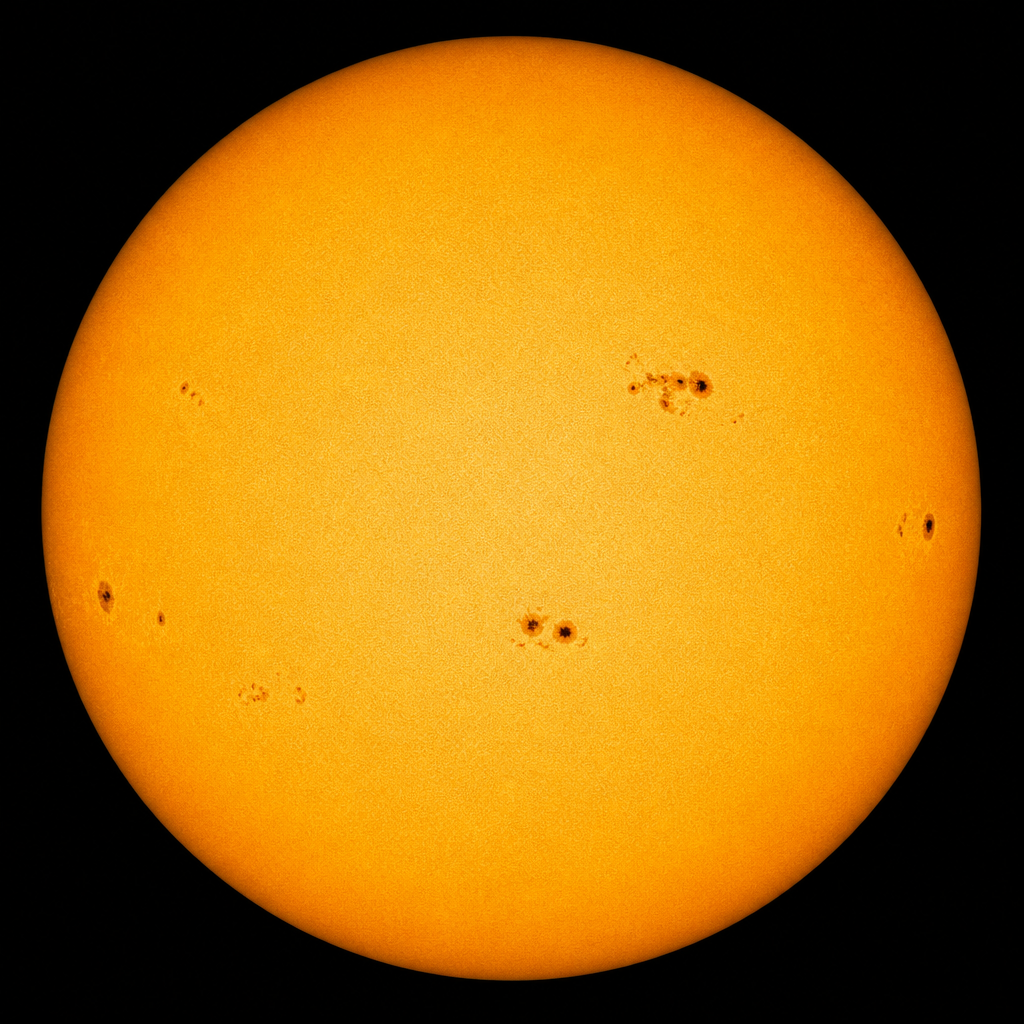
 Current Auroral Oval:
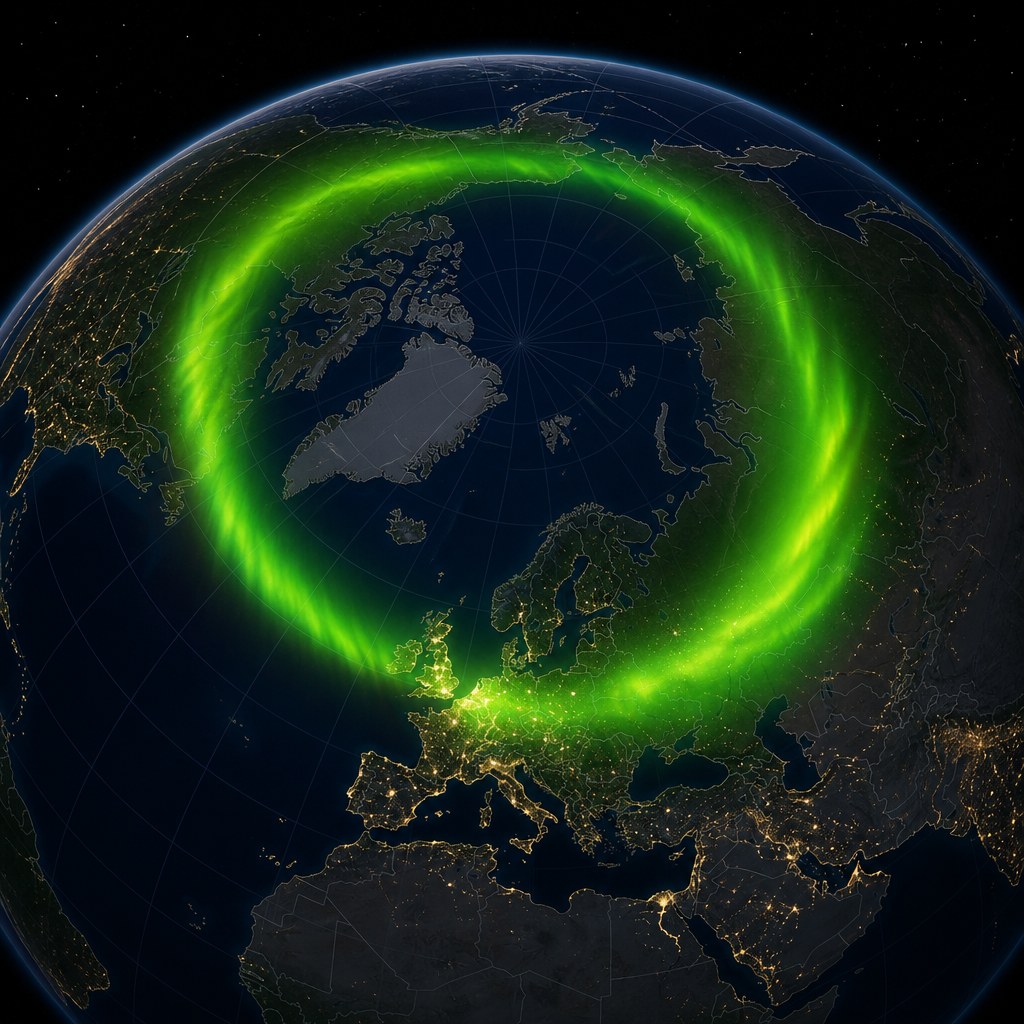
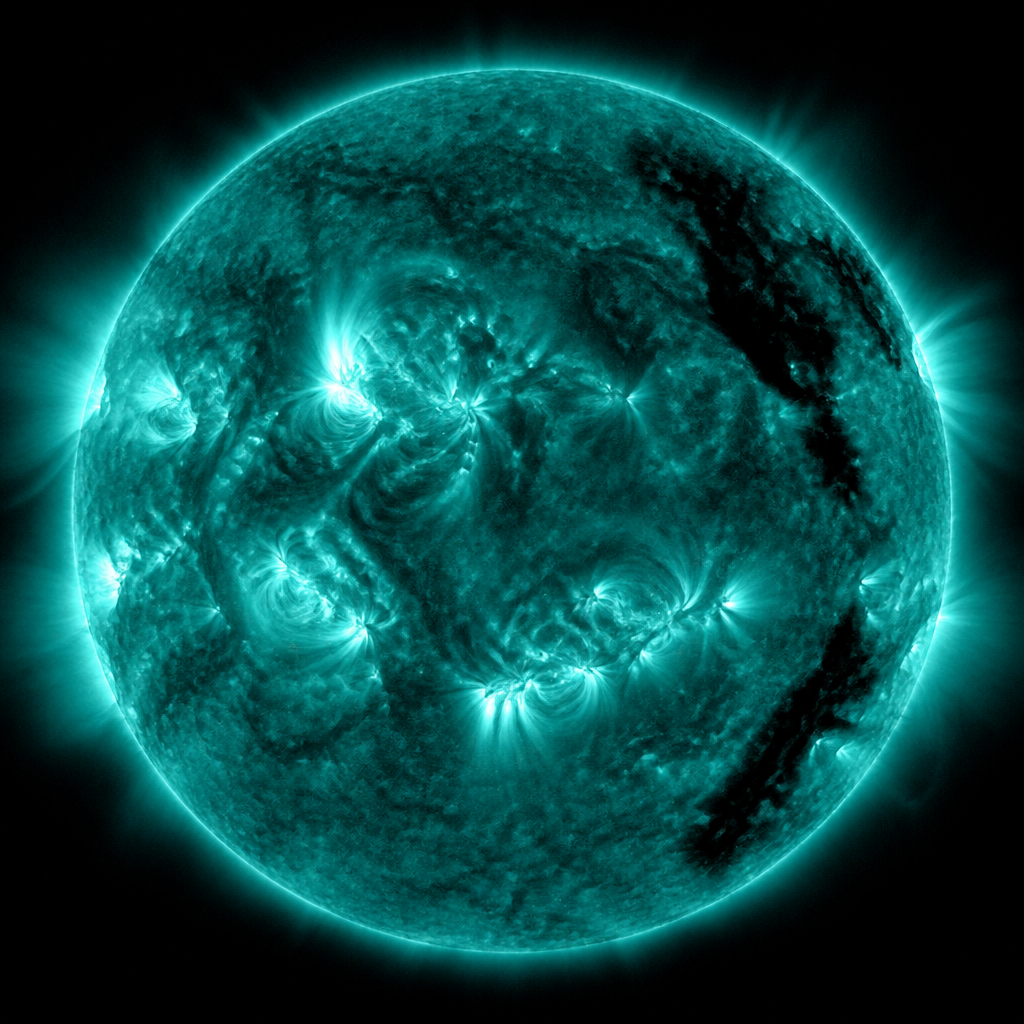


Cosmic-ray dose on UK long-haul crews is a space-weather story with a union angle
At cruise altitude the atmosphere is a thinner shield. Solar energetic particles and galactic cosmic rays are why airline radiation still belongs on a science desk.
Galactic cosmic rays are always there, a slow rain of high-energy particles that the Sun's magnetic field modulates. At the surface, the atmosphere and magnetic field do most of the shielding. At 11 kilometres, much of that atmosphere is beneath you. UK long-haul crews, especially on routes that graze high latitudes, therefore collect occupational dose that the rest of us do not. Scienception is not going to pretend this is a crisis. It is a regulated exposure that still sits inside space weather.
The Civil Aviation Authority and UK Health Security Agency context is dry by design. Airline operators assess cosmic-radiation exposure for aircrew under existing UK frameworks. Typical annual doses for long-haul crew can sit in the millisievert range that would look large to a desk worker and modest to a nuclear worker. The point is monitoring, route choice, and not treating space as an afterthought.
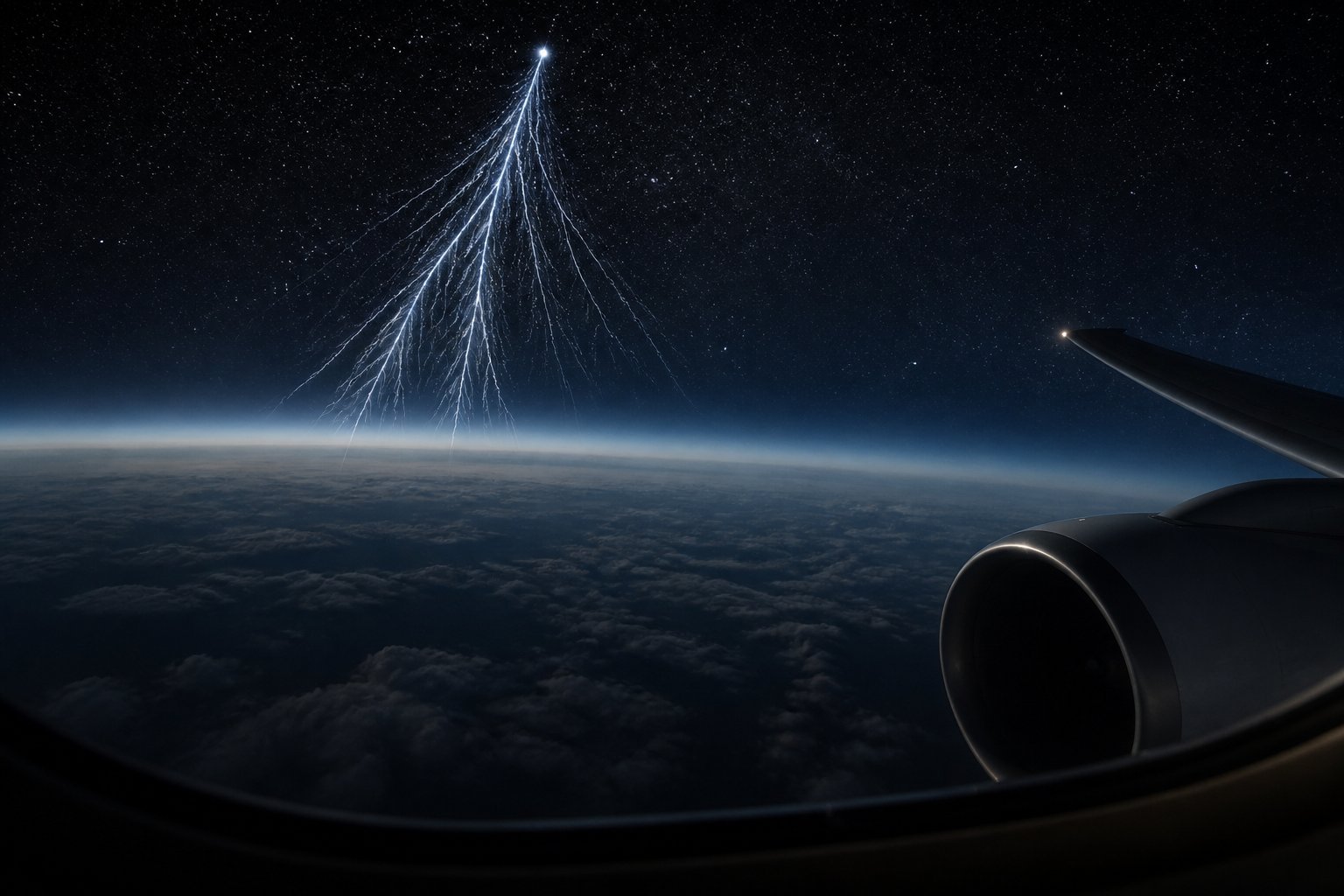
Solar energetic particle events are the dramatic cousin. A strong eruption can raise dose rates on polar routes enough that airlines consider reroutes or lower latitudes. Those events are rare compared with the galactic background. They are also why MOSWOC's radiation products exist. A science story that only mentions aurora and never mentions neutrons at cruise altitude is incomplete.
Who actually receives the dose
Physics students meet the Regener-Pfotzer maximum in balloon labs: the altitude where secondary particles peak. Commercial jets cruise below that peak but still well above the ground. Secondary neutrons and muons do the biological work. You cannot feel them. You can count them with the right instrument.
There is a labour angle. Crews cannot 'opt out' of a solar cycle. Rosters, pregnancy policies and route assignments are how exposure is managed in practice. Journalism that ignores the union and occupational-health side of cosmic rays is hobby astronomy. Scienception will not do that.
A solar proton event is a headline. The career dose is a spreadsheet. Both are real.
Passengers asking whether they should cancel a holiday because of a G1 watch should not. A single return to New York is a small increment. If you are a crew member flying that route weekly for twenty years, the increment is the job. Those sentences can both be true.
Solar storms versus the slow rain
Research continues on whether certain cardiac or cancer statistics in aircrew have a radiation component among several confounders: circadian disruption, cabin air, lifestyle. Honest writing keeps the confounders in the paragraph. Alarmist writing deletes them.
Balloon programmes and high-altitude research still calibrate the models that airlines use. When solar maximum suppresses galactic cosmic rays — a Forbush decrease after a CME is the short version — dose rates can fall even as aurora rises. The public finds that inversion confusing. It is one of the better teaching moments in heliophysics.
If you want a practical habit, read the CAA's public material on aircrew radiation rather than a social thread. Then look at a polar chart and notice where the flights go. Geography is the uncredited co-author.
Space weather is occupational health at 37,000 feet. That is not a slogan. It is a dose rate.
Further context for UK readers
Heathrow to Los Angeles on a polar-leaning track is a different dose from Heathrow to Johannesburg. Geography is the first control. Airlines already know this. Passengers who ask only 'is flying safe' are asking the wrong resolution of question.
UK Health Security Agency material on aircrew is drier than a science feature and more useful. Link it. Do not paraphrase it into a scare. Scienception will keep the dry link.
Balloon measurements over the UK are rare compared with the US tradition, but the Regener-Pfotzer physics does not care. A school balloon with a simple counter is still a legitimate cousin of the occupational story.
Solar proton events that matter to dose are rarer than aurora nights. Mixing the two in a headline is how you get ignored. Keep G1 away from millisieverts unless the protons actually arrived.
Pregnancy policies exist because dose is cumulative and because ethics boards are not optional in aviation. Write that without prurience and without dumping the risk on the worker as a lifestyle choice.
Concorde's altitude used to make this conversation sharper. Modern long-haul is lower and longer. Time at cruise can beat a slightly lower altitude. The integral is the point.
Unions that treat cosmic rays as one line among fatigue and air quality are being precise. A science story that isolates radiation as the only villain is being dramatic.
The Sun's magnetic field is a shield that thickens at solar maximum and thins at minimum. Crews live through both. Rosters should know which year they are in.
How to read this on a UK science desk
What a careful UK reader should actually do with this story is slower than a social feed wants. The live wires are: polar tracks, Regener-Pfotzer, pregnancy policy, Forbush decreases, CAA dry guidance. If a paragraph does not touch one of those wires, it is probably colour. Colour is allowed. It is not a substitute for a product page at the Met Office, BGS, UKRI, ESA, the UK Space Agency, NATS, the CAA, Ofcom, UKAEA, NHS England or the laboratory named in the sources list. Scienception prints editorial snapshots on the left-hand rail so the homepage feels like a conditions desk in the old space-weather style. Those figures are not a live operational feed. If you are making a decision about aviation, the grid, a licence, a clinical pathway or a launch commit, leave this tab and go to the authority, then come back for the argument.
British geography keeps deciding supposedly global science. Magnetic latitude, Atlantic cloud, a coal switchyard, a dark-sky park, a Clyde clean room, a synchrotron on a former airfield, an ice-shelf station, a parish lighting rule: these are not decorations on cosmic ray dose uk aviation. They decide whether a result is operational for this country or merely interesting. A model that cannot be checked against a UK sensor is tourism. A policy that cannot be walked to a protocol is speech. We will keep dragging the global noun back to a named place.
There is a records problem in the background of this beat. Time series die when programmes end, when students leave, and when a dashboard is funded instead of a person who knows a sensor's quirks. The cheap way to look modern is a new visualisation. The expensive way that works is to keep the ugly log alive. Magnetograms, ionosondes, light curves, beam-test files, trusted research environments, licence PDFs and anomaly reports are how a democracy stays in the measurement business when the solar cycle, the debris environment or a carbon budget stops being polite.
The public conversation still swings between panic and shrug. Hold two true sentences at once. A minor geomagnetic watch is not a national blackout. A stored tonne of carbon is not a groundbreaking party. A nova that has not erupted is not a failure. A satellite train is not an invasion. Scienception will keep writing as if readers can cope with a caveat, a map, a table and a link. That is the minimum adult form of UK science news, and it is the house style for this article as much as for the conditions rail.
If you work in a school, use the primary links as a single homework: open the Met Office or BGS or ESA page, write down what the official product actually says, and compare it with our kicker. If you work in a control room, steal only the method: name the sensor, name the failure mode, name the British place that would feel it. If you only wanted a picture, look at the figures, then look at the sources. The figures are illustrations. The sources are how you check us. Corrections remain info@scienception.com at Scienception LTD.
Related on Scienception: The Francis Crick Institute is where spaceflight biology meets a London bench · Genomics England still shows how a national dataset becomes a scientific instrument · G1 watch puts Shetland and Northern Ireland on aurora alert

