



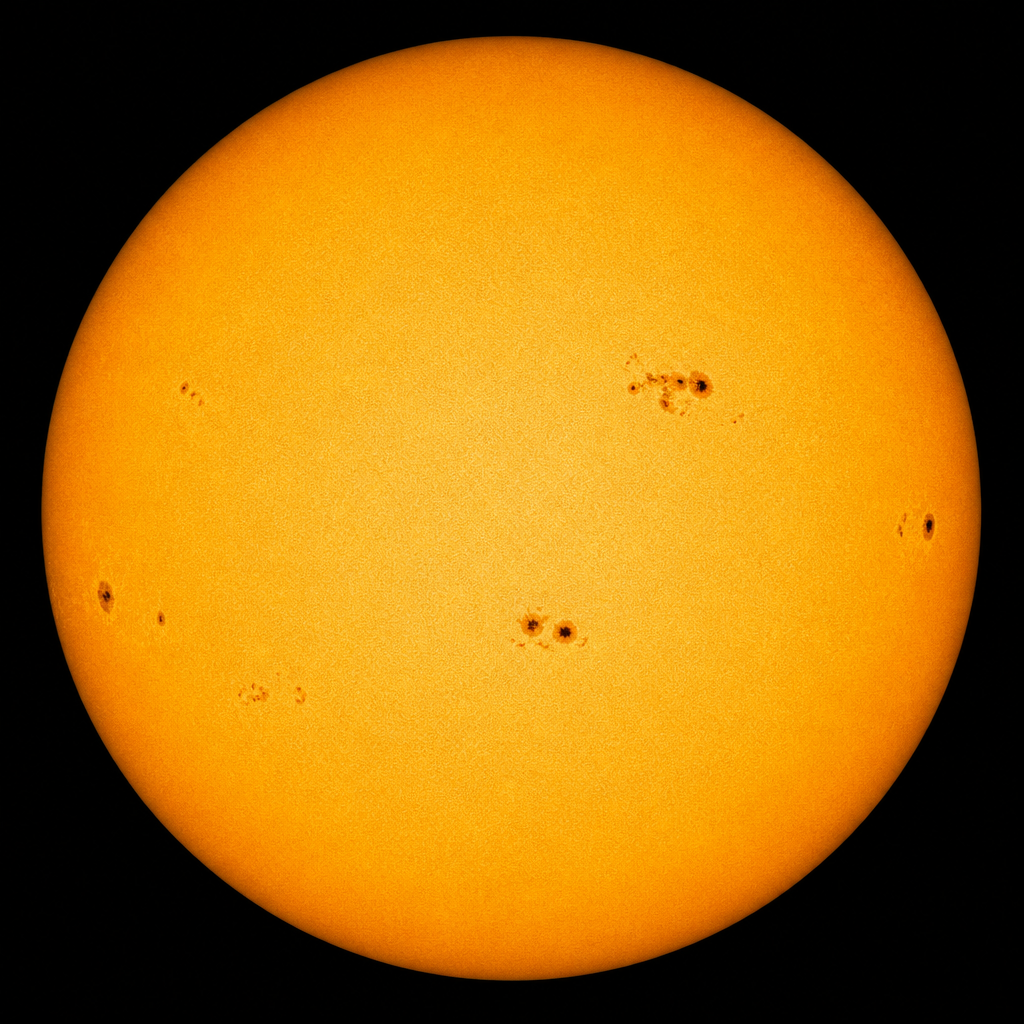
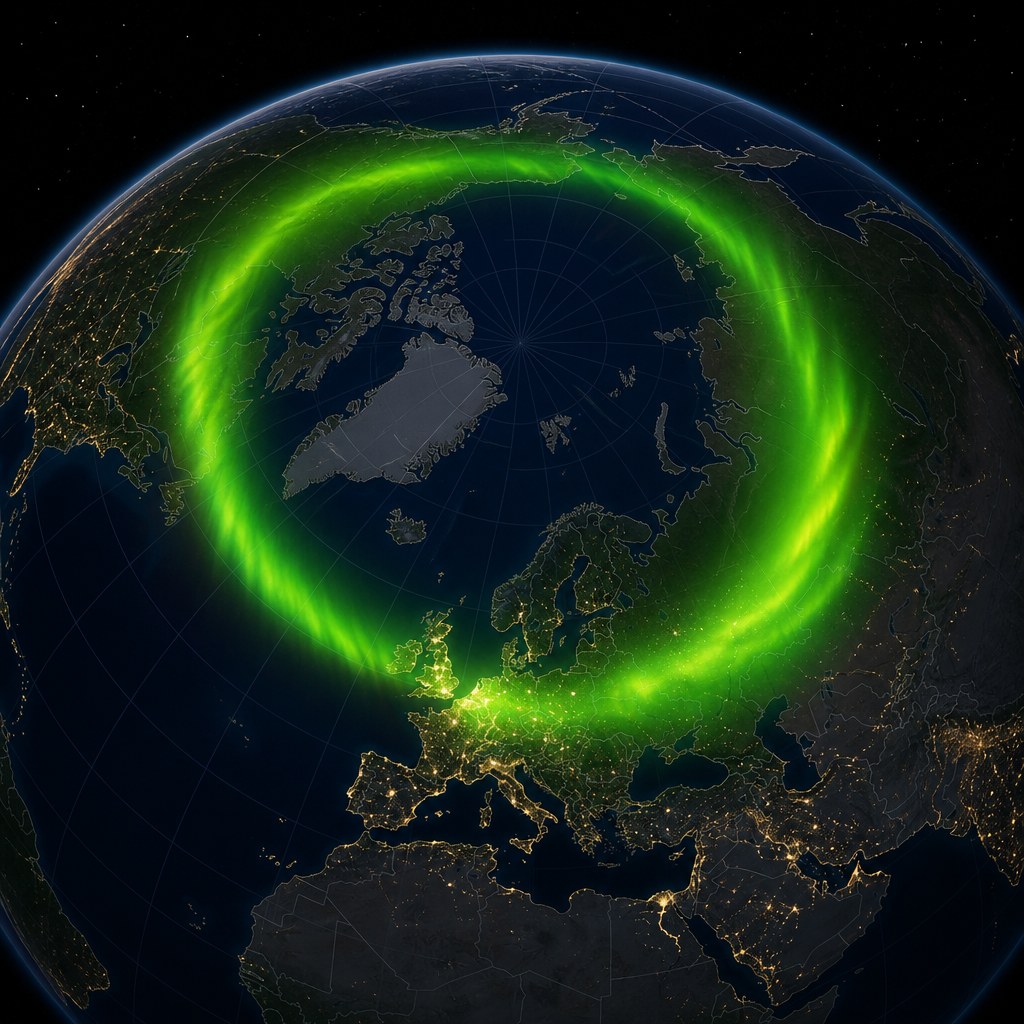
 Current Auroral Oval:


Euclid's cosmology will be won in UK data centres as much as in space
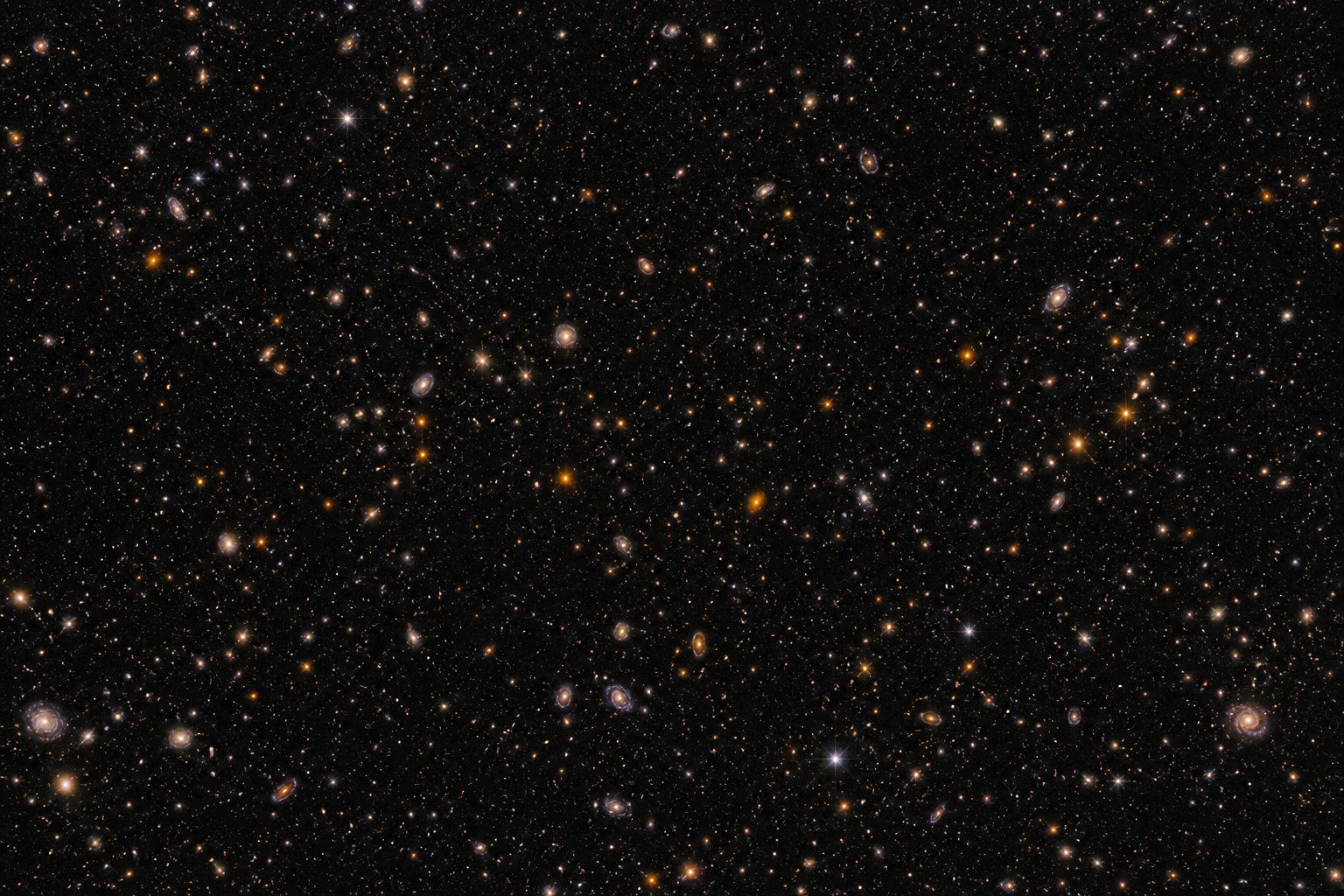
ESA's Euclid telescope maps the dark universe. The unglamorous victory condition is pipelines, catalogues and people who can keep a petabyte honest.
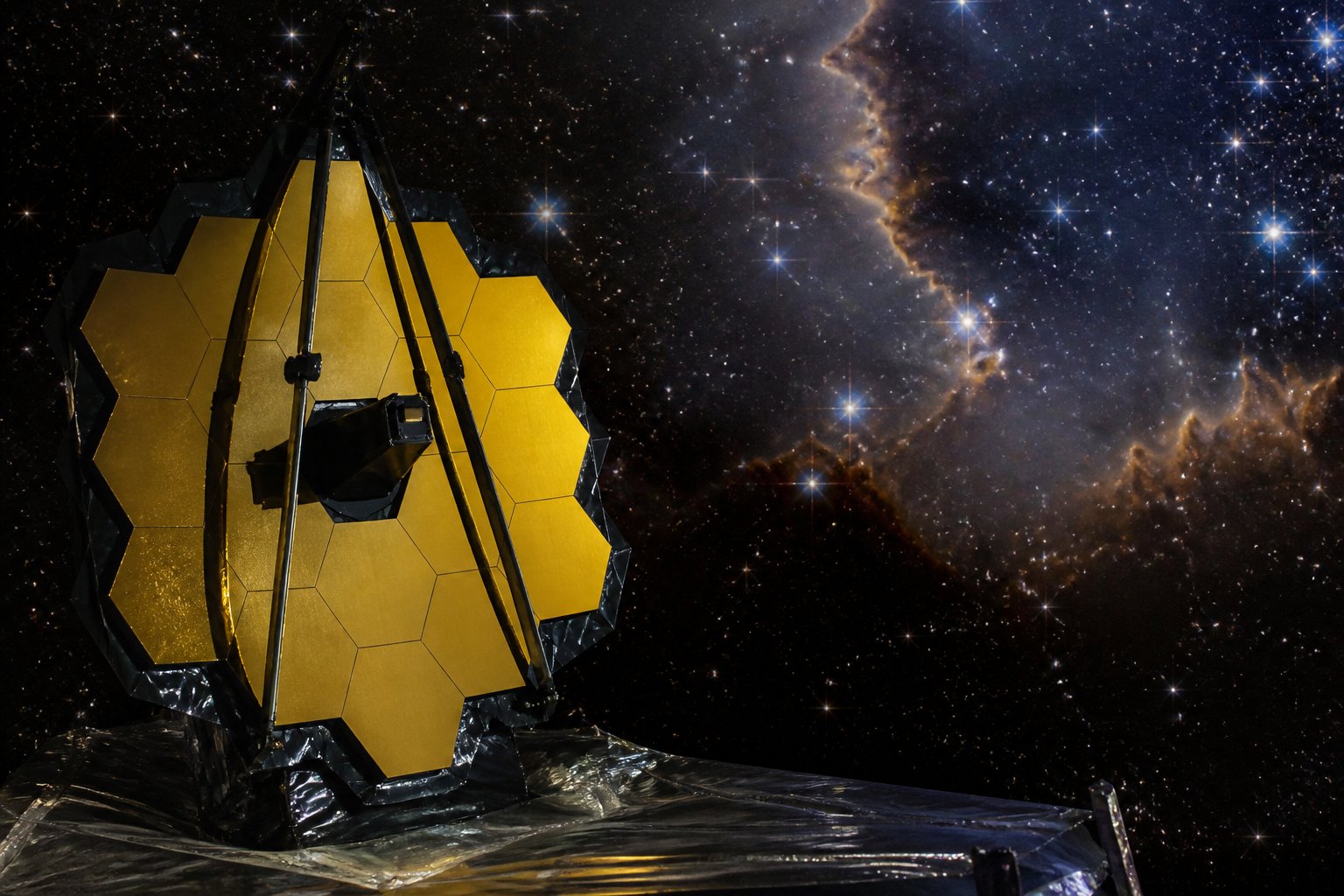
Euclid is ESA's attempt to weigh the dark universe by mapping galaxies and weak gravitational lensing over a huge fraction of the sky. The spacecraft is the celebrity. The catalogues will be the science. UK groups are inside the consortium's science ground segment, which means the national story is as much about compute and algorithms as about a telescope at L2. Scienception prefers that story because it is where errors actually live.
Weak lensing measures tiny distortions in galaxy shapes. Systematics hide in the same decimal places as cosmology. A bias in PSF modelling can impersonate dark energy. That is why a data centre with a version-controlled pipeline is a scientific instrument.
Britain's cosmology community is strong and argumentative, which is the correct culture. Euclid will not end arguments. It will move them to a larger sample. Print that as a feature.
A survey is a factory
There is a skills issue. People who can tend a survey pipeline are poached by anyone with a cloud budget. If STFC and universities cannot keep them, the catalogue quality will quietly drop while the press office still issues maps.
Public releases must be usable by a postdoc who was not on the original team. That is the test of a legacy. Pretty colour pictures are a courtesy. Documented columns are the legacy.
If the pipeline is wrong, the dark energy is wrong, and no amount of launch-day bunting will save the paper.
Space weather is barely a character here, and that is fine. A science site can hold more than one beat. The same readers who watch Kp can watch a constraint on w, the dark-energy equation of state, without being treated like children.
Weak lensing without weak documentation
Outreach should admit we do not know what dark matter is. Euclid will tell us more about how it clumps, not necessarily what it is. Clumping is already a revolution if you remember the alternative was guessing.
UK hardware contributions sit beside the data story. Both matter. The data story is the one more likely to be under-funded because it is ugly.

Scienception will cover key releases with fewer superlatives and more caveats. Cosmology has earned the caveats.
The dark universe is a British scientific subject because we helped build the factory that measures it. Factories need maintenance.
Further context for UK readers
Weak lensing is a statistical sport with a cruelty: your systematics impersonate cosmology. UK groups that obsess over PSFs are not pedants. They are the mission.
Petabytes without archivists are landfill. A data centre is a scientific instrument the way a telescope is. Staff it like one.
Cosmology arguments should stay loud. Euclid will not end them. It will move the furniture. Print the moved furniture, not a tombstone for dark energy.
If AI is used in the pipeline, demand the bias tests in the same paper. Cosmology has been here before with other algorithms. The hat is new. The problem is not.
Public maps will be pretty. Pretty is a courtesy. The courtesy should not outrun the systematic error table.
Skills poaching by the cloud industry is predictable. Pay the pipeline people or lose the catalogue quality while the press office still smiles.
Scienception can hold Kp and w in the same reader's head. We refuse to infantilise that reader.
The factory that measures the dark universe needs maintenance. Maintenance is the UK story.
How to read this on a UK science desk
What a careful UK reader should actually do with this story is slower than a social feed wants. The live wires are: weak lensing PSFs, petabyte staffing, w parameter, public maps versus error tables, pipeline pay. If a paragraph does not touch one of those wires, it is probably colour. Colour is allowed. It is not a substitute for a product page at the Met Office, BGS, UKRI, ESA, the UK Space Agency, NATS, the CAA, Ofcom, UKAEA, NHS England or the laboratory named in the sources list. Scienception prints editorial snapshots on the left-hand rail so the homepage feels like a conditions desk in the old space-weather style. Those figures are not a live operational feed. If you are making a decision about aviation, the grid, a licence, a clinical pathway or a launch commit, leave this tab and go to the authority, then come back for the argument.
British geography keeps deciding supposedly global science. Magnetic latitude, Atlantic cloud, a coal switchyard, a dark-sky park, a Clyde clean room, a synchrotron on a former airfield, an ice-shelf station, a parish lighting rule: these are not decorations on euclid uk data centres. They decide whether a result is operational for this country or merely interesting. A model that cannot be checked against a UK sensor is tourism. A policy that cannot be walked to a protocol is speech. We will keep dragging the global noun back to a named place.
There is a records problem in the background of this beat. Time series die when programmes end, when students leave, and when a dashboard is funded instead of a person who knows a sensor's quirks. The cheap way to look modern is a new visualisation. The expensive way that works is to keep the ugly log alive. Magnetograms, ionosondes, light curves, beam-test files, trusted research environments, licence PDFs and anomaly reports are how a democracy stays in the measurement business when the solar cycle, the debris environment or a carbon budget stops being polite.
The public conversation still swings between panic and shrug. Hold two true sentences at once. A minor geomagnetic watch is not a national blackout. A stored tonne of carbon is not a groundbreaking party. A nova that has not erupted is not a failure. A satellite train is not an invasion. Scienception will keep writing as if readers can cope with a caveat, a map, a table and a link. That is the minimum adult form of UK science news, and it is the house style for this article as much as for the conditions rail.
If you work in a school, use the primary links as a single homework: open the Met Office or BGS or ESA page, write down what the official product actually says, and compare it with our kicker. If you work in a control room, steal only the method: name the sensor, name the failure mode, name the British place that would feel it. If you only wanted a picture, look at the figures, then look at the sources. The figures are illustrations. The sources are how you check us. Corrections remain info@scienception.com at Scienception LTD.
Related on Scienception: SWIMMR is the quiet programme that taught Britain to model storms · RAL Space still builds the UK's eyes on the solar wind · Ariel is the UK's next long stare at other atmospheres

