




 Current Auroral Oval:



Diamond Light Source is where UK space hardware goes to have its atoms interrogated
The synchrotron at Harwell lets engineers see fatigue, coatings and radiation damage in materials that are about to leave the atmosphere.
Diamond Light Source is the UK's national synchrotron, a machine that produces intense X-rays for everything from viruses to turbine blades. Space hardware is a minority user and a revealing one. Coatings that must survive atomic oxygen in low Earth orbit, solders that must survive thermal cycling, and composites that must survive radiation all show their secrets in a beamline hutch. Scienception includes Diamond in a space-weather-adjacent newsroom because materials are how missions die quietly.
Harwell's geography helps. RAL Space, satellite companies and Diamond share a campus. A sample can travel a shorter distance than a procurement officer's email chain. That clustering is industrial policy whether or not anyone wrote it down.
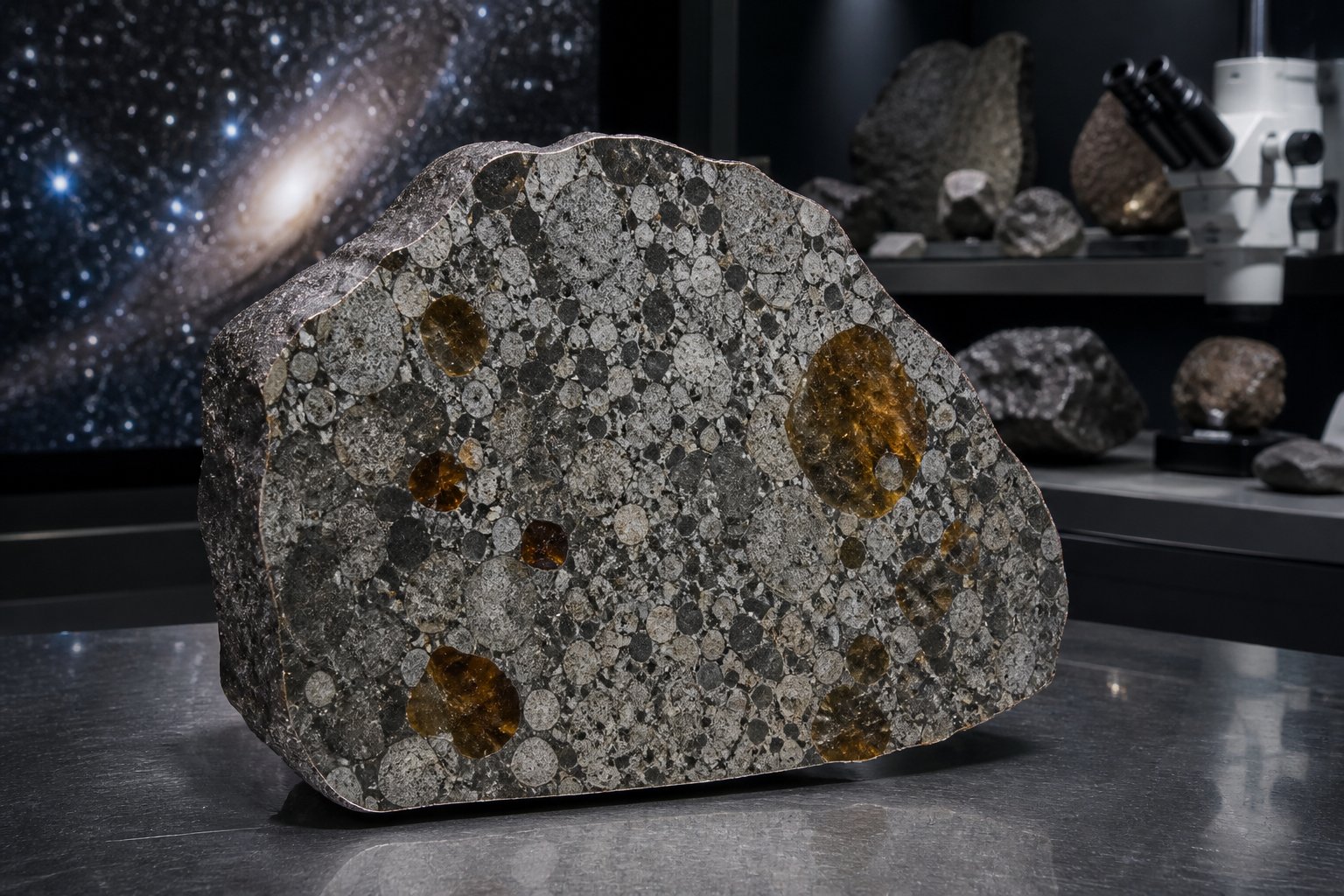
Radiation damage studies here are cousins of the solar energetic particle problem. You do not need a solar flare to wreck a polymer. You need fluence. Understanding fluence in a controlled beam is how you stop learning it in orbit.
A light brighter than the briefing
Access time is competitive. A small satellite firm without a knowledgeable user will not get the best of Diamond. Fellowship programmes and beamline scientists who can translate are the unglamorous infrastructure.
Public tours see a doughnut. The science is in the hutches. Outreach that stops at the doughnut undersells the country.
If you cannot see the damage, you will fly it anyway. Diamond is how Britain sees the damage in time.
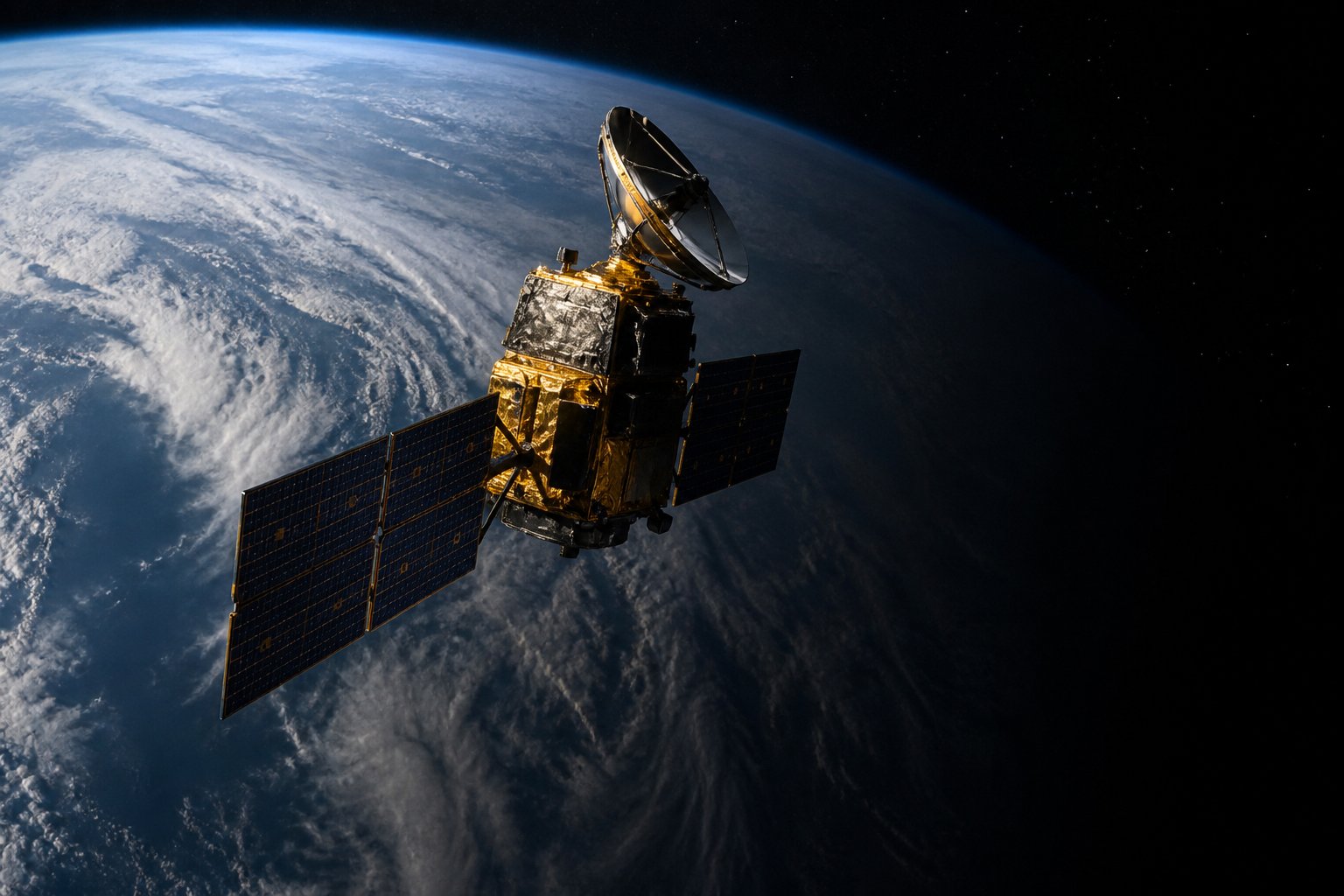
There is a climate-materials overlap: batteries, catalysts, wind-turbine blades. A campus that serves both space and net zero is a campus worth protecting from being photographed only as 'science park'.
Coatings, cracks and the solar wind's cousins
Scienception will cover papers that use Diamond on space alloys the same way we cover a magnetogram: as evidence.
If Diamond's successor conversations stall, UK materials science will fly samples abroad and lose the corridor conversations that actually transfer knowledge. The corridor is the instrument too.

Engineers should not be shy of synchrotrons. Shyness is how you fly a coating that blistered in a test you did not do.
Atoms do not care whether they sit in a cubesat bracket or a bridge bearing. Diamond is the democracy of that fact.
Further context for UK readers
A synchrotron is a workplace with a ring in the middle. People eat lunch next to a machine that can see atoms. That sentence should be on a careers poster instead of an astronaut.
Atomic oxygen in LEO eats polymers. Beamlines that mimic that hunger save missions. Fly the coating that survived the hutch.
Access schemes for small firms need humans who translate. A beamline scientist who can talk to a cubesat start-up is national infrastructure.
Tours that stop at the doughnut undersell the hutches. Put a hutch on the tour even if it is boring. Boring is the science.
Net-zero materials and space materials sharing a campus is not a branding accident. It is how a country affords a machine.
If Diamond's successor stalls, samples will fly to Grenoble and the corridor conversations will die. The corridor is an instrument.
Scienception will cite a DOI from a space-alloy experiment with the same respect as a magnetogram. Evidence is evidence.
Atoms in a cubesat bracket and atoms in a bridge bearing are the same atoms. Democracy of matter is Diamond's joke, and it is a good one.
How to read this on a UK science desk
What a careful UK reader should actually do with this story is slower than a social feed wants. The live wires are: atomic oxygen, hutches, small-firm translators, successor stall, alloys and blades. If a paragraph does not touch one of those wires, it is probably colour. Colour is allowed. It is not a substitute for a product page at the Met Office, BGS, UKRI, ESA, the UK Space Agency, NATS, the CAA, Ofcom, UKAEA, NHS England or the laboratory named in the sources list. Scienception prints editorial snapshots on the left-hand rail so the homepage feels like a conditions desk in the old space-weather style. Those figures are not a live operational feed. If you are making a decision about aviation, the grid, a licence, a clinical pathway or a launch commit, leave this tab and go to the authority, then come back for the argument.
British geography keeps deciding supposedly global science. Magnetic latitude, Atlantic cloud, a coal switchyard, a dark-sky park, a Clyde clean room, a synchrotron on a former airfield, an ice-shelf station, a parish lighting rule: these are not decorations on diamond light source space materials. They decide whether a result is operational for this country or merely interesting. A model that cannot be checked against a UK sensor is tourism. A policy that cannot be walked to a protocol is speech. We will keep dragging the global noun back to a named place.
There is a records problem in the background of this beat. Time series die when programmes end, when students leave, and when a dashboard is funded instead of a person who knows a sensor's quirks. The cheap way to look modern is a new visualisation. The expensive way that works is to keep the ugly log alive. Magnetograms, ionosondes, light curves, beam-test files, trusted research environments, licence PDFs and anomaly reports are how a democracy stays in the measurement business when the solar cycle, the debris environment or a carbon budget stops being polite.
The public conversation still swings between panic and shrug. Hold two true sentences at once. A minor geomagnetic watch is not a national blackout. A stored tonne of carbon is not a groundbreaking party. A nova that has not erupted is not a failure. A satellite train is not an invasion. Scienception will keep writing as if readers can cope with a caveat, a map, a table and a link. That is the minimum adult form of UK science news, and it is the house style for this article as much as for the conditions rail.
If you work in a school, use the primary links as a single homework: open the Met Office or BGS or ESA page, write down what the official product actually says, and compare it with our kicker. If you work in a control room, steal only the method: name the sensor, name the failure mode, name the British place that would feel it. If you only wanted a picture, look at the figures, then look at the sources. The figures are illustrations. The sources are how you check us. Corrections remain info@scienception.com at Scienception LTD.
A beamline hutch at Harwell is one of the few rooms in Britain where a cubesat bracket and a turbine blade become the same kind of object: a sample with a history of stress. Operators who skip that room because the queue is long will learn the same history in orbit, where there is no queue, only a dead camera. Scienception will keep sending space stories to Diamond because materials are how quiet missions die, and because the campus already knows how to talk to RAL Space without a ministerial summit.
Related on Scienception: SWIMMR is the quiet programme that taught Britain to model storms · RAL Space still builds the UK's eyes on the solar wind · Ariel is the UK's next long stare at other atmospheres

