



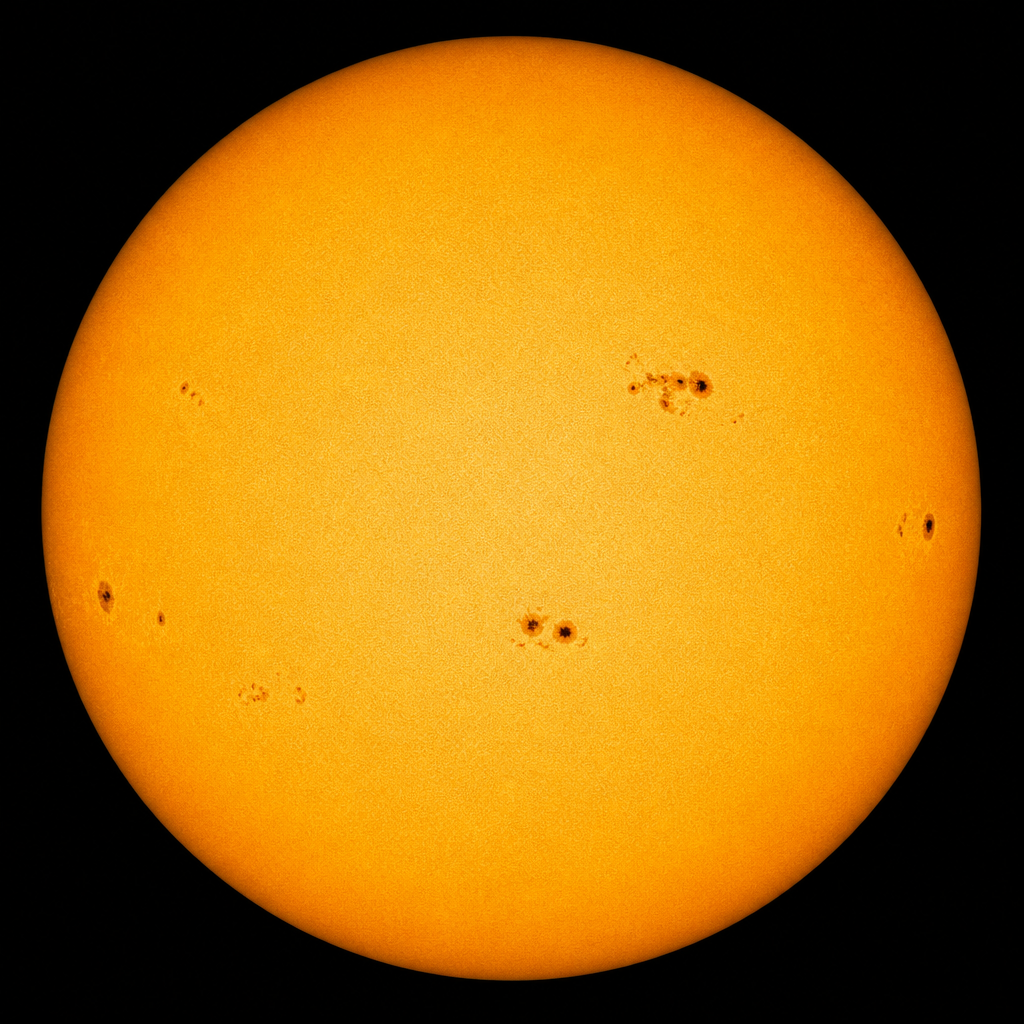
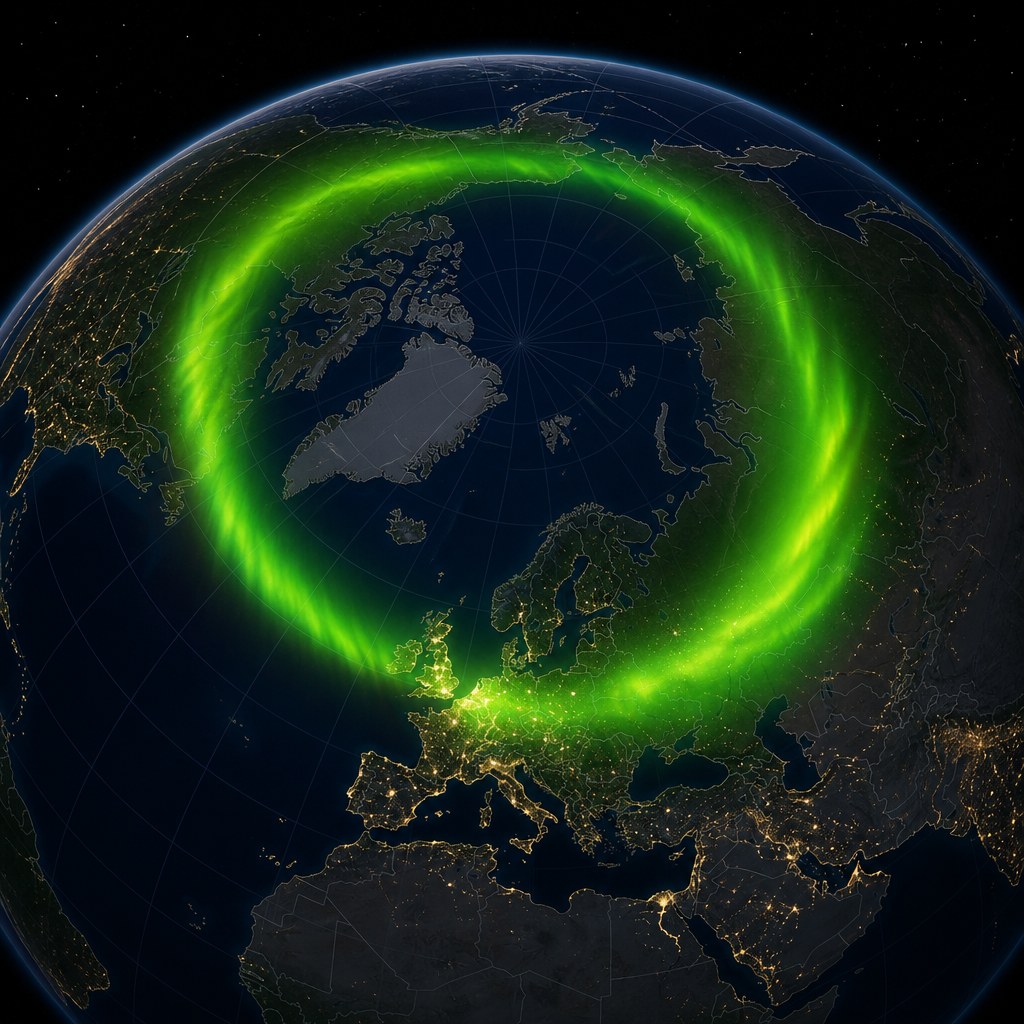
 Current Auroral Oval:
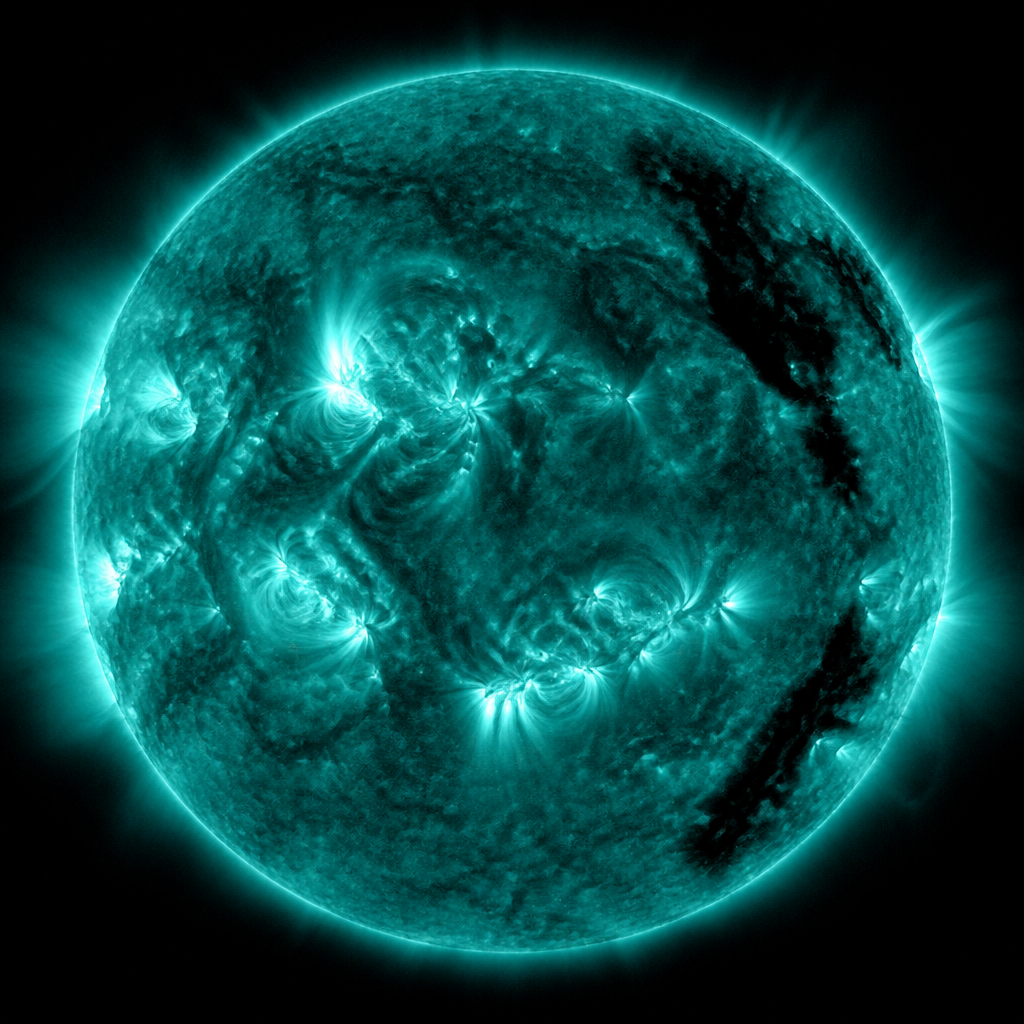


Halley Research Station still archives a space climate the UK would otherwise forget
The British Antarctic Survey's Halley site sits under a different magnetosphere. Its records are how Britain studies long solar-terrestrial change.
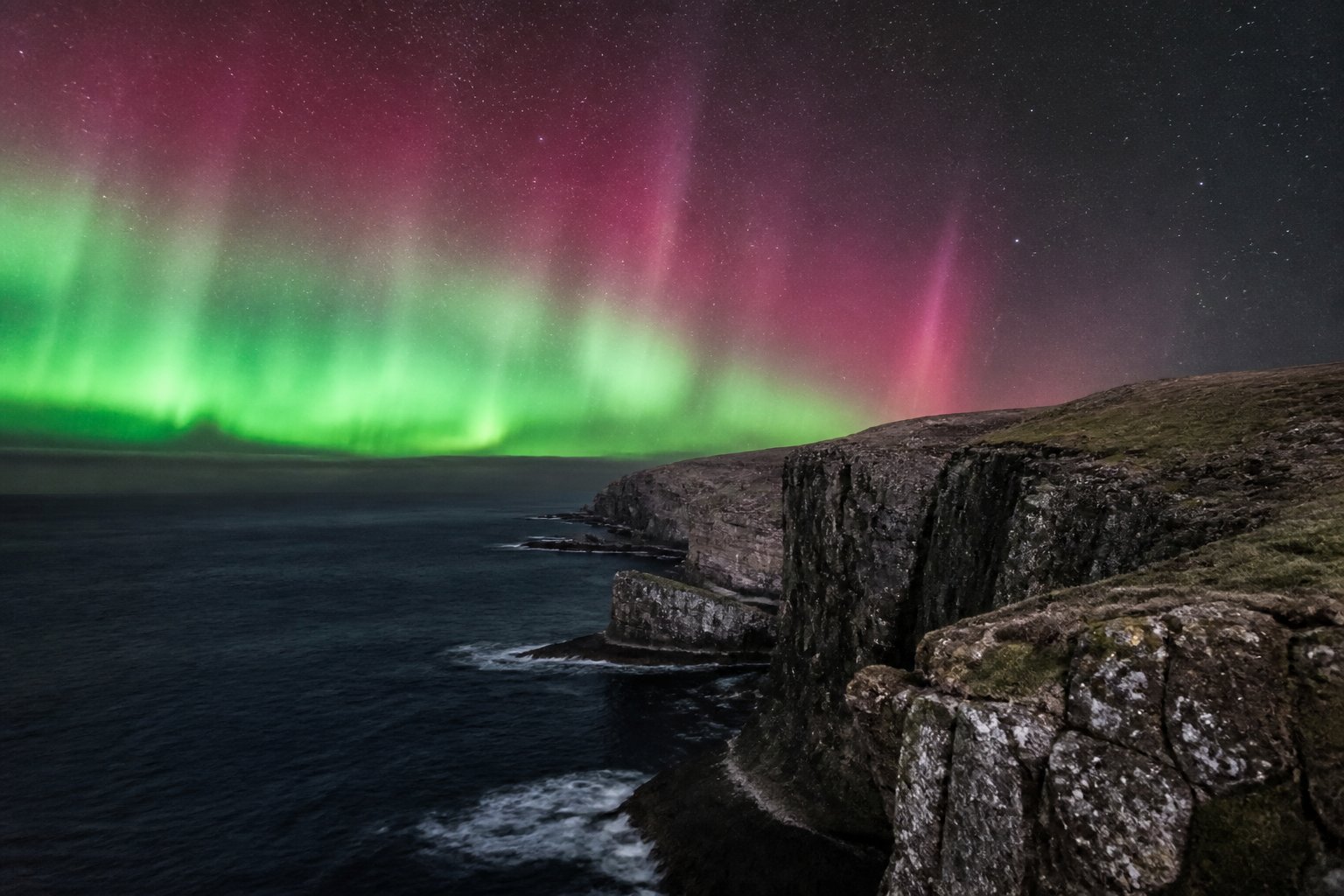
Halley Research Station, operated by the British Antarctic Survey, is one of those UK scientific facts that sounds fictional: a modular station on the Brunt Ice Shelf, under auroras, measuring the atmosphere and the space environment from a hemisphere most voters will never visit. The ice shelf's rifts have already forced operational drama. The dataset's value is the reason to keep arguing about how to stay. Scienception files Halley under space climate: the long variation of solar-terrestrial coupling, not tonight's Kp.
Conjugate physics is the idea that magnetic field lines connect north and south. Phenomena in the Antarctic ionosphere rhyme with Arctic ones, with a delay and a difference. A country that only watches Lerwick sees one end of the rhyme. Halley has been a way of seeing the other.
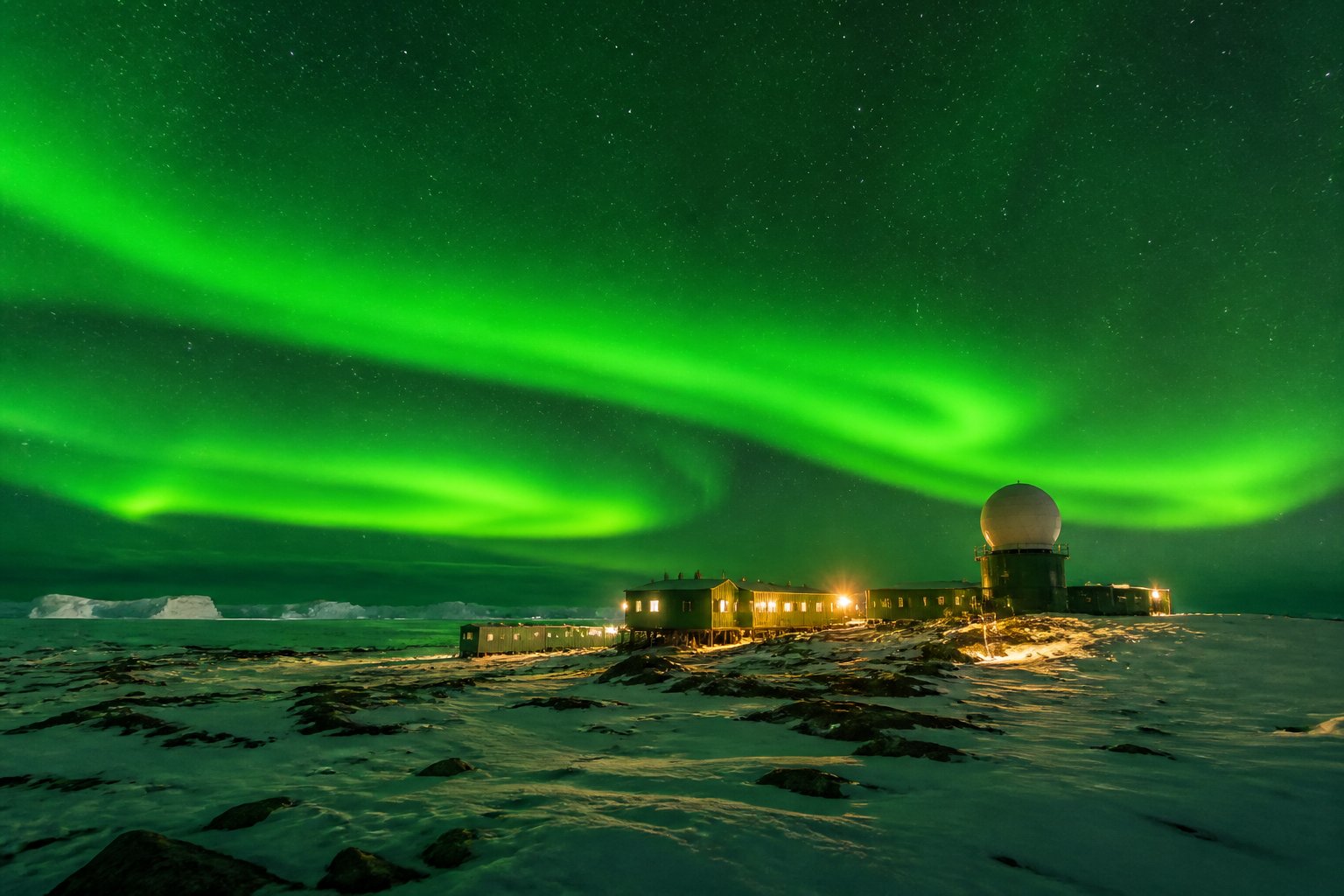
Ozone heritage at Halley is the famous story and should remain so. The same logistical stubbornness supports riometers, magnetometers and radiation measurements that solar-terrestrial physicists use. Cutting the quiet instruments because they are not the ozone hole would be a category error.
A station on a moving ice shelf
Wintering staff live a space-weather lifestyle without calling it that: isolation, radio, satellite links, and a sky that actually performs. Their safety case includes weather of both kinds. MOSWOC does not run Halley. The Sun still does part of the job.
Climate change and space climate are not the same, and sloppy headlines that merge them deserve a red pen. One is tropospheric. One is heliospheric and geomagnetic. They share a word and a need for long records. Halley has both kinds of record in its wider BAS family. Keep the words apart in the caption.
Space climate is the solar-terrestrial system in slow motion. You cannot see it from a single winter in Lancashire.
Funding Antarctic science is a choice about whether Britain is a polar nation in practice. The choice cannot be made only in a London studio on a launch day.
Why a southern magnetometer is a UK instrument
Students who winter with BAS come back with a professionalism that a three-year lab PhD does not always grow. That professionalism is a national asset in any crisis that involves remote operations.
Scienception will not romanticise the cold. We will romanticise a calibrated magnetogram from 75 degrees south, which is a rarer object.

If Halley has to relocate again, the scientific requirement is continuity, not an identical postcode. Continuity is hard. It is the entire subject of climate, space or otherwise.
The southern sky is part of the UK observing system. That sentence should sound normal. It still does not.
Further context for UK readers
Ice-shelf rifts are a logistics crisis that happens to occur under an auroral sky. Do not use the aurora to pretty a safety problem. Use the safety problem to explain why Antarctic data are expensive, and then pay.
Riometers measuring cosmic-noise absorption are space-weather instruments that look like nothing. They are how you see precipitation of particles without a camera. Halley's quiet instruments need champions who can stand next to an ozone legend without flinching.
Conjugate studies with Arctic observatories are how you test whether a model is hemispherically arrogant. Britain can still do both ends if it chooses. Choosing only the Arctic because it is easier to visit is a scientific laziness.
Wintering teams are a profession. Treat them as one in pay and in mental-health support. A magnetogram is not worth a broken person. That sentence belongs in a science story.
Space climate, unlike space weather, needs decades. A three-year grant cannot see a solar cycle properly. BAS's value is the decade. Budget like a decade.
Do not merge tropospheric climate change and solar-terrestrial change in a headline. The public deserves two nouns.
A calibrated southern magnetogram is a rare UK object. Rarity is not a reason to stop. It is a reason to continue.
Polar science is how a medium country stays in the first rank of Earth system measurement. Rockets are optional. Records are not.
How to read this on a UK science desk
What a careful UK reader should actually do with this story is slower than a social feed wants. The live wires are: Brunt Ice Shelf, riometers, conjugate physics, decade grants, two climates two nouns. If a paragraph does not touch one of those wires, it is probably colour. Colour is allowed. It is not a substitute for a product page at the Met Office, BGS, UKRI, ESA, the UK Space Agency, NATS, the CAA, Ofcom, UKAEA, NHS England or the laboratory named in the sources list. Scienception prints editorial snapshots on the left-hand rail so the homepage feels like a conditions desk in the old space-weather style. Those figures are not a live operational feed. If you are making a decision about aviation, the grid, a licence, a clinical pathway or a launch commit, leave this tab and go to the authority, then come back for the argument.
British geography keeps deciding supposedly global science. Magnetic latitude, Atlantic cloud, a coal switchyard, a dark-sky park, a Clyde clean room, a synchrotron on a former airfield, an ice-shelf station, a parish lighting rule: these are not decorations on bas halley space climate. They decide whether a result is operational for this country or merely interesting. A model that cannot be checked against a UK sensor is tourism. A policy that cannot be walked to a protocol is speech. We will keep dragging the global noun back to a named place.
There is a records problem in the background of this beat. Time series die when programmes end, when students leave, and when a dashboard is funded instead of a person who knows a sensor's quirks. The cheap way to look modern is a new visualisation. The expensive way that works is to keep the ugly log alive. Magnetograms, ionosondes, light curves, beam-test files, trusted research environments, licence PDFs and anomaly reports are how a democracy stays in the measurement business when the solar cycle, the debris environment or a carbon budget stops being polite.
The public conversation still swings between panic and shrug. Hold two true sentences at once. A minor geomagnetic watch is not a national blackout. A stored tonne of carbon is not a groundbreaking party. A nova that has not erupted is not a failure. A satellite train is not an invasion. Scienception will keep writing as if readers can cope with a caveat, a map, a table and a link. That is the minimum adult form of UK science news, and it is the house style for this article as much as for the conditions rail.
If you work in a school, use the primary links as a single homework: open the Met Office or BGS or ESA page, write down what the official product actually says, and compare it with our kicker. If you work in a control room, steal only the method: name the sensor, name the failure mode, name the British place that would feel it. If you only wanted a picture, look at the figures, then look at the sources. The figures are illustrations. The sources are how you check us. Corrections remain info@scienception.com at Scienception LTD.
Related on Scienception: SWIMMR is the quiet programme that taught Britain to model storms · RAL Space still builds the UK's eyes on the solar wind · Ariel is the UK's next long stare at other atmospheres

